

Batch Off Cooler Manufacturer Selection: Essential Criteria for Rubber Processing Plants
2026-10-22
Choosing the right batch off cooler manufacturer can quietly make or break your rubber processing line. Too often, plants overlook this workhorse until downtime hits—or product consistency slips. With SFC, the conversation shifts from guesswork to measurable criteria: cooling uniformity, footprint flexibility, maintenance access, and energy draw. This guide unpacks what actually matters when evaluating suppliers, so your next selection is built on engineering logic—not sales brochures.
Matching the Cooler to Your Rubber Compound, Not the Other Way Around
Rubber compounds don’t all behave the same when heat gets involved. Some start scorching at surprisingly low temperatures, while others need a long, steady heat history to build the right properties. Before you even look at cooling equipment, get a clear picture of how your specific compound reacts under thermal load. Pull the scorch time, viscosity curve, and filler dispersion data. A cooler that handles natural rubber without issues might wreck a fast-curing EPDM batch simply because the heat removal pattern doesn’t line up with the compound’s sensitivity.
Think about what happens with high-structure carbon black or silica-loaded stocks. They generate more heat during mixing, and if you reuse a cooler sized for a soft, low-filler compound, you’ll see batch-to-batch inconsistency in viscosity and cure state. Instead, measure the peak batch temperature your formula actually reaches and the cooling rate it needs to hit before the next processing step. Then match the cooler’s heat-exchange area, water temperature, and dwell time to that specific window. It’s a calibration problem, not a one-size-fits-all purchase.
The practical outcome is straightforward: you’re not forcing the compound to tolerate whatever cooler you already have. You’re choosing a cooling method that respects the compound’s thermal behavior. A high-viscosity stock might need a two-pass cooling line with controlled water flow, while a low-heat, slow-curing compound can get by with a simple dip tank. Get that match right and you’ll cut scrap rates, shorten overall mix cycles, and keep final physical properties stable from batch to batch.
Why Manufacturer Experience in Rubber Processing Can't Be Overstated
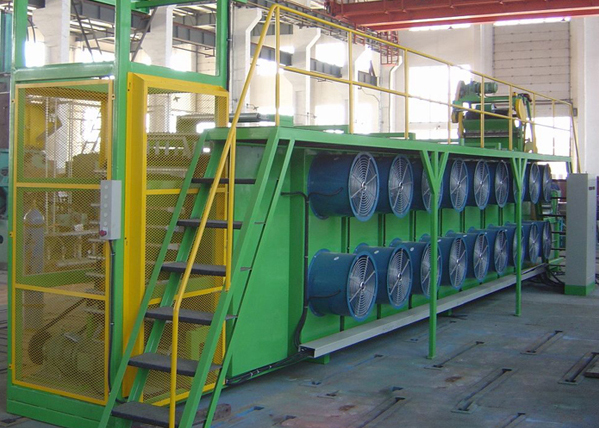
There is a certain rhythm to working with rubber that only comes from years on the floor. A seasoned manufacturer knows how a compound will behave before the mixer even starts—how it will warm, shear, and release. This isn't knowledge you can pull from a spec sheet. It's the accumulated feel for viscosity shifts, scorch times, and the subtle variations that arrive with every new batch of raw material. When a producer has spent decades troubleshooting everything from bloom to blowouts, that experience shows up in cleaner profiles, tighter tolerances, and far fewer rejected parts.
Consider what happens when a process drifts out of control. A novice might chase the obvious variables—temperature, pressure, cycle time—and still end up with surface defects or inconsistent durometer readings. An experienced team reads the cues differently. They know that a slight change in ambient humidity on a summer afternoon can alter how a sulfur cure proceeds. They recognize the faint smell of overworked stock before it becomes scrap. This kind of pattern recognition doesn't come from a manual; it is earned through thousands of hours of observation and correction.
Beyond the technical side, experienced manufacturers also bring a practical understanding of what customers actually need. They know when to push back on a design that looks good on paper but will tear in the field. They can suggest a slightly different compound or a modified mold flow path that saves money without sacrificing performance. That level of guidance only exists when someone has seen enough failures and successes to know which trade-offs are worth making. In rubber processing, the difference between a smooth production run and a costly headache often comes down to whether the people behind the machines have been there before.
The Real Difference Between Modular and One-Piece Frame Designs
Most people assume modular frames are just about easier repairs or upgrades, but the real difference lies in how stress distributes through the structure and how manufacturing tolerances stack up. A one-piece frame routes load paths continuously without seams, so there’s no micro-fretting at joints and no chance of a bolt loosening over time. The downside is that any crack or fatigue failure means scrapping the entire frame, since you can’t isolate the damage to a replaceable section.
Take drone frames as an example. A one-piece carbon fiber plate cut into a unibody delivers outstanding torsional stiffness, but after a hard crash the whole bottom plate often ends up in the bin. A modular frame with aluminum standoffs and detachable arms carries about 15% more weight, yet you can swap a broken arm in minutes with a hex key. The same logic shows up in bicycle frames: high-end carbon road bikes use one-piece molding to maximize pedaling efficiency, while commuter bikes often use a modular rear dropout so a bent derailleur hanger doesn’t total the frame.
So the real distinction isn’t whether you can take it apart—it’s how much performance you’re willing to trade for serviceability. If you chase the last gram or the stiffest possible chassis, one-piece is the only path. If you work in harsh environments or need field repairs without a full teardown, modular designs often have a lower total cost over time. Neither approach is universally better; it comes down to which failure mode you’d rather live with.
What High-Grade Components Actually Mean for Daily Uptime
Most people never see the inside of a server, so the difference between a machine that runs for years without a hiccup and one that needs attention every few months comes down to a handful of unglamorous parts. High-grade capacitors, enterprise-class SSDs, and power delivery modules rated for continuous load don't just push benchmarks higher—they quietly absorb voltage spikes, thermal stress, and the kind of slow degradation that turns a routine Tuesday into an emergency maintenance ticket.
Daily uptime isn't really about avoiding catastrophic failure; it's about eliminating the thousands of tiny marginal moments where a cheaper component stumbles. A marginal memory stick might pass a quick test but throw a silent error under heavy I/O. A consumer-grade fan can keep temperatures acceptable until a dusty afternoon pushes it past its comfort zone. When every link in the chain is built with headroom, the machine stops negotiating with its environment and simply stays available—even when the air conditioning in the colocation room isn't perfect or the workload spikes at 3 a.m.
The practical payoff is less time watching dashboards and more time assuming the infrastructure will still be there when you need it. Teams that insist on premium components aren't buying luxury; they're buying the right to ignore their hardware. That kind of confidence doesn't come from a spec sheet alone, but from knowing that the parts were selected to handle real-world abuse, not just to hit a price point.
Spare Parts, Service Techs, and the Cost of Waiting
A missing bearing can idle a production line for hours. Field service technicians often arrive with a standard kit, only to find the one component that failed isn't on the truck. The resulting delay isn't just an inconvenience; it's a compounding cost. Every minute a machine sits silent, labor hours burn without output, and delivery schedules slip further out of reach.
The relationship between spare parts availability and technician efficiency is rarely linear. A tech who spends half the day driving to a regional warehouse for a $40 seal has just turned a simple repair into a logistical failure. Smart operations teams track not just mean time to repair, but the split between wrench time and wait time. Reducing that wait time often yields more uptime than pushing technicians to work faster.
The true cost of waiting hides in places most spreadsheets miss: expedited shipping fees, duplicated service visits, and the lost trust of a customer who hears "the part will be here tomorrow" one too many times. Building a lean but responsive spare parts network requires knowing which components fail most often, where they're used, and how quickly they can be sourced locally. The goal isn't a warehouse full of everything; it's never having the right part be more than a short drive away.
Cutting Energy Use Without Sacrificing Cooling Performance
Variable-speed compressors are one of the most direct ways to cut energy consumption without giving up cooling power. Instead of cycling on and off at full capacity, these systems adjust their output to match the actual heat load. On a mild day, the compressor runs at a lower speed, drawing far less electricity while maintaining a steady indoor temperature. The result is tighter temperature control and lower monthly bills, without the uncomfortable swings that older single-speed units often cause.
Smart controls also play a critical role. Occupancy sensors and outdoor temperature monitors can tell the system when a room is unoccupied or when conditions outside are cooler. The system can then let the indoor temperature drift slightly or switch to a more efficient mode, rather than running at full blast all day. Pre-cooling in the early morning, when the outdoor air is cooler and electricity demand is lower, shifts the cooling load away from peak hours and reduces strain on the unit without affecting afternoon comfort.
Finally, regular maintenance and airflow improvement often deliver the biggest savings for the least effort. Dirty coils, clogged filters, and poorly designed ductwork force the system to work harder to move the same amount of heat. Cleaning or upgrading to microchannel heat exchangers, optimizing fan blade geometry, and sealing duct leaks can restore or even improve cooling capacity while drawing less power. In many buildings, these low-tech fixes are enough to trim energy use by double digits while keeping occupants just as cool.
FAQ
Start by looking at their track record with similar rubber compounds and line speeds. A manufacturer that has successfully handled high-tack or oil-extended rubber will understand the need for proper release coatings, adjustable cooling zones, and gentle handling to avoid sticking or distortion. Ask for reference plants running comparable throughput and confirm the equipment's uptime history.
Batch off coolers are not just about lowering temperature; they control the crystal structure and final tack of the rubber. If cooling is uneven or too rapid, you end up with scorched edges, moisture pickup, or inconsistent viscosity that wreaks havoc in milling and extrusion. A well-designed cooler should provide uniform air and water contact across the full loop, with enough residence time to reach a stable temperature before stacking.
Every rubber plant has different space constraints, compound behavior, and existing line configurations. Off-the-shelf coolers often force you to adapt your process to the machine, which is backward. The best manufacturers will modify loop length, dipping bath depth, spray nozzle placement, and conveyor width to match your specific compound range and production volume, rather than making you accept a standard design.
Look at the materials used in high-wear and high-corrosion areas. Stainless steel frames and shafts resist the acidic byproducts of rubber processing far better than painted carbon steel. The belt itself should have high temperature resistance and good anti-stick properties, and the bearings need to be sealed against water, talc, and rubber fines. Poor build quality shows up quickly as belt tracking issues, rusted dip tanks, and frequent bearing failures.
Contact two or three of their existing customers and ask how quickly they receive replacement belts, spray nozzles, or drive chains. A manufacturer that keeps common wear parts in regional inventory will save you days of downtime. Also check whether they offer remote troubleshooting and field service visits, because a batch off cooler that is down stops the entire mixing line. The warranty terms should cover structural defects for at least two years.
Modern systems need to communicate with your upstream mixer and downstream stacking equipment. Look for PLC-based control with recipe management that automatically adjusts dip time, air velocity, and conveyor speed based on the compound being run. Integration with plant-wide SCADA or MES allows real-time monitoring of energy use, fault alerts, and cooling curve data. This level of control reduces scrap and makes the line much easier to operate with less manual intervention.
The purchase price is only a fraction of what you will spend over 15 years. Efficient fan motors, variable frequency drives on the conveyor, and heat recovery from the cooling water can cut electrical costs significantly. Also consider accessibility for cleaning: dip tanks that require draining and manual scraping every week add labor and downtime. A well-designed cooler will have sloped tank bottoms, easily removable covers, and quick-change filters that keep maintenance under an hour per week.
Be wary of manufacturers that cannot provide detailed engineering drawings before the order, or that quote extremely short delivery times without a clear understanding of your compound. Another warning sign is limited in-house testing capability—if they have no pilot line to test your rubber, they are guessing at the cooling profile. Finally, avoid suppliers who answer all questions with generic marketing language and refuse to give you direct contact with their engineering team or past customers.
Conclusion
Choosing a batch off cooler isn't a matter of picking a standard model off a sheet. The machine has to be dialed in to the specific rubber compound you're running—its tackiness, scorch sensitivity, and cooling curve all dictate how air should move across the slab, how long it should dwell, and what type of conveyor surface will actually release the product without tearing or sticking. That's why a manufacturer with deep, hands-on experience in rubber processing matters far more than a vendor who simply welds steel together. They know that a cooler built for EPDM may fail on natural rubber. And when you look at frame construction, the difference between modular and one-piece designs shows up in installation, relocation, and long-term alignment. A rigid one-piece frame might seem simpler, but if your plant layout changes or you need to thread the cooler into an existing line, a well-engineered modular frame saves weeks of downtime and avoids the field modifications that often compromise structural integrity.
Daily uptime is less about glossy spec sheets and more about the unglamorous details: what brand of gearbox sits under the conveyor, whether the bearings are sealed for a dusty mill room, and how easily a technician can reach the drive chain without pulling apart half the machine. High-grade components mean fewer surprise failures at 2 a.m., but even the best components eventually need replacement. That's why you should ask hard questions about spare parts availability—not just the lead time for a motor, but whether common wear items are stocked locally or have to be air-freighted from overseas. The real cost of waiting isn't the part itself; it's a production line standing still. Finally, energy use deserves more than a passing glance. Modern coolers with variable-frequency drives on fans and intelligent airflow control can cut power consumption by a substantial margin while still hitting the target discharge temperature. The best manufacturer will show you actual duty-cycle data from similar compounds, not just a theoretical efficiency curve.
Contact Us
Contact Person: Chen Zhengwei
Email: [email protected]
Tel/WhatsApp: +86-13963975727
Website: https://www.sfcrubbermachine.com