
Best Water Pipe Cleaning Machine Company for Dependable Pipeline Maintenance
2026-09-03
Blocked pipes don't announce themselves politely. They cause pressure drops, unexpected shutdowns, and maintenance headaches that eat into your budget. When water lines get dirty, you need more than a generic flushing unit—you need equipment that can handle mineral scale, biofilm, and stubborn debris without constant breakdowns. That's exactly where AMJET has built its reputation: dependable water pipe cleaning machines that keep maintenance teams ahead of the next clog. Here's what to look for in a top-tier cleaning machine company, and why AMJET keeps earning the top spot.
Why Pipe Scale Demands More Than a Flush
A quick blast of water might knock loose some loose debris, but scale is a different animal entirely. It forms as dissolved minerals precipitate out and latch onto pipe walls, building up in hard, crystalline layers. A flush can’t dislodge those bonds; the scale is stuck there, often requiring physical scraping or chemical dissolution to break it free.
Over time, even a thin layer of scale narrows the inner diameter of pipes, which quietly strangles flow rates and forces pumps to work harder. In hot water systems, scale acts as an insulator, stealing efficiency and driving up energy costs. You won’t notice the loss until a valve sticks or a heat exchanger fails—by then, a simple flush is laughably inadequate.
So if you’re relying on routine flushing as your main defense, you’re only postponing a bigger headache. Real solutions mean removing the scale mechanically or with targeted acids, then adjusting water chemistry to slow its return. Otherwise, you’re just rinsing the surface while the real problem keeps growing underneath.
From Slimy Buildup to Full Blockages: One Machine, Multiple Heads
Most drain cleaning jobs start the same way: a slow sink, a gurgling toilet, or standing water that refuses to budge. That thin layer of slime coating the pipe walls might seem harmless at first, but left alone it hardens, traps debris, and gradually narrows the flow until only a trickle gets through. By the time a full blockage forms, the problem has moved far beyond a quick plunger fix. You need a tool that can adapt as the mess evolves.
That's where a modular drain cleaner with interchangeable heads makes all the difference. Instead of wrestling with one rigid attachment that only does half the job, you can switch between a spiral head for chewing through greasy sludge, a scraping head for scale and rust, and a cutting head for solid obstructions. The machine itself stays the same; only the business end changes. No awkward workarounds, no second trip back to the truck for a different tool.
Think of it like having a full toolkit in a single case. You clear the slimy buildup first to restore smooth walls, then step up to the more aggressive heads if you hit roots or compacted wipes. The transition is quick, the cleaning is thorough, and you never leave a job half-done because the machine couldn't keep up with what you found down the pipe.
The Build Details That Keep a Cleaning Unit Running for Years
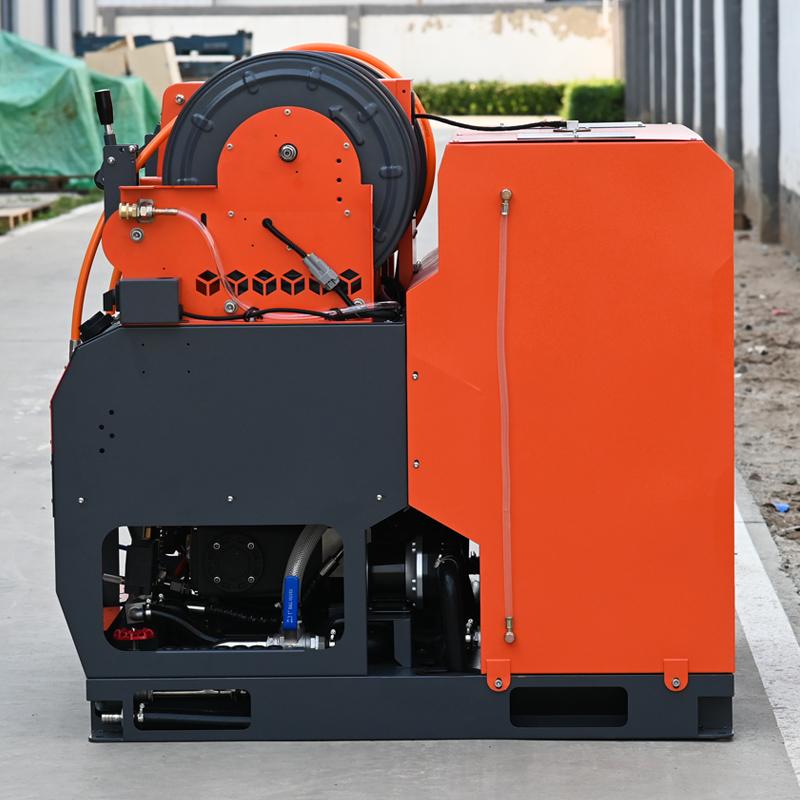
Most cleaning units don't die from a single catastrophic failure—they wear out from a thousand overlooked details. The difference between a unit that lasts three years and one that runs for ten often comes down to how the frame is joined. Look for fully welded seams instead of spot welds or bolts that loosen under vibration. A rigid, one-piece chassis keeps internal components aligned, reducing friction on belts, bearings, and hoses that otherwise fail early.
Another overlooked build detail is how the unit handles moisture and debris ingress. Sealed electrical connectors, gasketed access panels, and drainage channels that actually slope the right way prevent corrosion from creeping into terminals and motor windings. Cheaper units use open connectors and flat metal seams that trap water, causing intermittent faults long before the motor gives out. The best builds use stainless or coated fasteners and position electronics away from high-splash zones.
Finally, pay attention to serviceability built into the structure. Quick-release covers, labeled wear points, and standard-size replaceable parts mean a technician can swap a pump or valve in minutes without breaking plastic tabs or fighting hidden screws. Units designed for maintenance tend to stay on the job because small issues get fixed early, instead of snowballing into a full rebuild. That's the quiet engineering that separates a disposable cleaning unit from a long-term workhorse.
A Quick Look at Water Pressure, Flow, and Nozzle Choice
Pressure and flow are often treated as interchangeable, but they affect cleaning in distinct ways. Pressure (PSI) is the force that loosens dirt, while flow (GPM) is the volume that carries it away. A high-PSI machine with low flow can blast a stain but leave the loosened debris sitting on the surface. In many everyday jobs from clearing mud off a sidewalk to rinsing soap off a car, a balanced combo like 1500–2000 PSI at 1.8–2.2 GPM works better than an extreme rating on paper.
Nozzle choice acts as the multiplier. A 0-degree nozzle concentrates all the pressure into a tiny point, which is useful for concrete seams or metal rust, but it can etch wood, tear vinyl, and injure skin quickly. A 40-degree nozzle spreads the same pressure over a wide fan, reducing impact while covering more area in a pass. Instead of sticking with one nozzle, match the angle to the job: 15 degrees for tough grime on hard surfaces, 25 degrees for general decks and driveways, and 40 degrees for windows, vehicles, and other fragile finishes.
Another factor people overlook is how the machine behaves under load. Some pressure washers spike in PSI when the trigger is first pulled, which can damage paint before the flow stabilizes. If you are using an electric model with a built-in detergent tank, the nozzle you choose also affects siphon rate: too narrow a tip can prevent soap from drawing correctly. Testing the spray on an out-of-sight spot with your planned nozzle and pressure setting takes less than a minute and prevents most common surface damage.
Field Reports: Clearing Lines Without Digging Up the Street
Utility crews in older neighborhoods are increasingly turning to trenchless methods when a blockage or root intrusion threatens service. Instead of saw-cutting pavement and bringing in excavators, technicians now feed a rotating cable with a specialized cutting head through existing manholes or cleanouts. The debris is then vacuumed out, leaving the road surface untouched. Residents don't lose parking spaces, and the work often wraps up in a single afternoon.
One recent job involved a 60-year-old clay sewer line under a busy intersection. Rather than closing lanes for a week, the crew located the line with ground-penetrating radar, inserted a lining tube from a shallow pit at the curb, and cured it in place with steam. The only visible signs were two traffic cones and a small compressor. Businesses stayed open, and the asphalt never felt a jackhammer.
Even for electric and fiber upgrades, directional boring rigs can steer a new conduit beneath driveways and tree roots with millimeter accuracy. A technician watches a screen while the drill head transmits its position; adjustments are made in real time. No trenches means no spoiled landscaping, and the street's original base remains intact. The old cable is simply abandoned in place, and the new one takes over without a single pothole.
What to Ask Before You Buy or Lease a Cleaning Machine
Start by ignoring the glossy spec sheet for a moment and focus on the floors you actually have. Ask the dealer to bring the unit to your site and run it across your toughest stretch—polished concrete near loading docks, worn VCT in the breakroom, or tile with deep grout lines. If they hesitate, that tells you more than any brochure. Pay attention to how much water is left behind on your uneven surfaces, whether the squeegee actually follows dips without leaving puddles, and how long a full battery or tank truly lasts when operators move at a realistic pace, not a staged walk-through.
Then dig into the less obvious costs. Find out what a replacement battery costs today, not at signing, and whether you can swap it without a technician. Ask about the availability of common wear parts like squeegee blades, brushes, and vacuum filters in your region—not just from the manufacturer but from third-party suppliers. Also ask what happens when the machine faults mid-shift: can your crew clear a simple error code, or will every hiccup mean a service call? Finally, ask for the names of two customers with similar square footage and soil loads. Call them. Ask what they’d do differently.
FAQ
Pay attention to their experience with pipelines like yours, the range of cleaning methods they support, and how transparent they are about maintenance costs. A dependable company will ask detailed questions about pipe diameter, material, and the type of buildup before recommending any equipment.
A reliable company offers rapid response times, provides preventive maintenance plans instead of only emergency fixes, and keeps thorough records of past cleanings. They should also train your team on safe operation rather than leaving you to figure things out alone.
Common options include high-pressure water jetters, rotary drain cleaners, pipe inspection robots, and vacuum extraction units. The best fit depends on pipe diameter, the nature of the blockage, and whether you need routine flushing or heavy descaling.
Routine cleaning prevents mineral scale, grease buildup, and root intrusion from reducing flow capacity. It also lowers the risk of sudden failures, extends the life of the pipeline, and reduces energy costs by keeping pumps from working harder than necessary.
Top companies invest in ongoing equipment testing, adapt their machines to unusual pipe layouts, and offer honest advice even when it means recommending a simpler or cheaper solution. They build long-term relationships through consistent parts availability and field support.
Many can, but you should verify that they have the equipment range and safety certifications for both. A company that mainly serves industrial clients may not carry smaller machines suitable for tight home plumbing, while a residential specialist might lack the power for large municipal mains.
Ask about typical wear parts and their replacement frequency, what training is included, how quickly spare parts ship, and whether the machine has built-in safety features like pressure relief valves. Request a demo on a similar pipe condition rather than relying only on brochure specifications.
Conclusion
A dependable pipeline maintenance program rarely starts with the machine itself—it starts with knowing what is actually coating the pipe walls. Hard water scale, grease, and biofilm do not let go with a simple flush, and by the time flow slows noticeably, the deposit is often layered and compacted. The best water pipe cleaning machine companies design units that treat this reality as a mechanical problem, not a chemical afterthought. One machine paired with multiple heads—chain knockers for scale, plunger nozzles for slime, and lateral cutters for root intrusion—lets a crew move from routine soft buildup to a near-total blockage without switching platforms. What separates a long-term asset from a short-lived rental is the build underneath: stainless steel frames, ceramic nozzle inserts, and easily serviceable pumps are the details that keep a cleaning unit running through thousands of hours of wet, gritty work.
Field crews consistently report that the real test comes when a line is fully obstructed under a street or parking lot. Trenchless recovery with the right combination of water pressure, flow volume, and nozzle angle can clear a 150-foot run of cast iron without opening the pavement—if the machine holds pressure at the nozzle, not just at the gauge. That difference is why asking about flow at operating pressure, not just maximum PSI, matters before you buy or lease. Before buying or leasing, ask what wear parts are stocked locally, what training is included, and whether the warranty covers pump seals and hose reels under daily commercial use. The best water pipe cleaning machine company is not simply the one with the highest spec sheet, but the one whose equipment keeps municipal and industrial crews on schedule when a blocked line cannot wait.
Contact Us
Contact Person: Mike
Email: [email protected]
Tel/WhatsApp: +86 19545555505
Website: https://www.amjeting.com/