

Carbon Neutral Wastewater Treatment System Fabrication for Concrete Batching Plants
2026-08-09
Every concrete pour leaves behind more than just a structure—it generates vast amounts of wastewater. For years, batching plants have struggled with disposal, but what if that messy byproduct could become a key part of carbon neutrality? That’s exactly where Sinou is changing the game. By turning sludge and slurry into a closed-loop resource, we’re not just cleaning water; we’re reshaping the environmental footprint of an entire industry. Here’s how a custom-fabricated system can transform waste into a climate solution.
Rethinking Concrete’s Water Problem
For decades, the construction industry has treated water in concrete primarily as a mixing ingredient—something to be optimized for workability and strength. But this narrow focus misses a larger, more urgent picture. Concrete is the second most consumed substance on Earth after water, and its production accounts for nearly 10% of global industrial water use. As freshwater scarcity intensifies across continents, we can no longer afford to ignore how concrete interacts with the planet's water systems both during production and throughout its lifecycle. The problem isn't just about how much water goes into the mix; it's about where that water comes from, what happens to it after the concrete cures, and how it affects surrounding ecosystems.
One overlooked aspect is the concept of 'virtual water' embedded in concrete infrastructure. Every ton of cement requires thousands of liters of water—not just for manufacturing but also for cooling machinery, suppressing dust in quarries, and washing aggregates. In water-stressed regions, this hidden consumption quietly competes with agriculture and drinking supplies. Worse, once concrete is placed, its impermeable surfaces disrupt natural groundwater recharge, funneling rainwater into overloaded drainage systems instead of letting it seep back into the earth. The result is a dual crisis: greedy production and a legacy of disrupted hydrology that lasts for decades.
Rethinking this relationship means moving beyond incremental efficiency tweaks. It calls for a systemic shift toward closed-loop water management, where wastewater from concrete production is treated and reused on-site. It also demands innovative materials like pervious concrete that allow groundwater replenishment, and a broader evaluation of how we design urban surfaces to coexist with natural water cycles. The solution isn't to use less water per cubic meter of concrete—it's to redesign the entire flow, from raw material extraction to end-of-life deconstruction, so that concrete stops being a silent drain on the world's water resources and becomes a partner in resilience.
Behind the Build: Carbon-Neutral Wastewater Systems
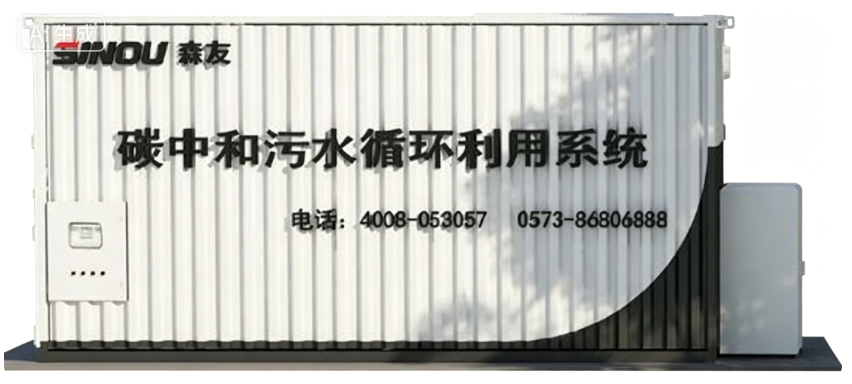
Designing a wastewater treatment facility that leaves no carbon footprint isn’t just a technical challenge—it’s a rethink of how we handle one of society’s most resource-intensive processes. From the ground up, every pipe, pump, and purification stage was reevaluated to squeeze out emissions. Instead of relying on conventional aerobic digesters that gulp electricity, the system harnesses anaerobic digestion to capture methane, turning a potent greenhouse gas into a clean-burning fuel that powers the entire operation.
But the real innovation lies in how the plant integrates with its surroundings. Sludge isn’t waste here—it’s soil. After thermal hydrolysis and pathogen reduction, nutrient-rich biosolids head straight to local farms, replacing synthetic fertilizers and the fossil fuels used to make them. Even the layout was reconsidered: gravity flow replaces many electric pumps, and constructed wetlands polish the effluent, locking away carbon while creating a habitat that attracts migratory birds—a silent rebuke to the notion that infrastructure must be purely industrial.
What often gets overlooked is the calibration phase. For months, the engineering team tweaked microbial communities and oxygen levels, balancing the trade-offs between treatment speed and energy consumption. It’s a living system now, adjusting itself to seasonal loads and even contributing surplus biogas to the local grid during summer peaks. The result is a facility that doesn’t just neutralize its own emissions but actively restores a slice of the carbon cycle that urban development disrupted long ago.
Materials That Make a Difference
Every choice of material carries a hidden weight—on resources, communities, and the planet. Some materials stand out not just for their function, but for their ability to reshape industries without demanding a sacrifice in quality. From fast-growing bamboo that regenerates without replanting, to mycelium-based packaging that decomposes in your backyard, these alternatives challenge the notion that performance must come at the environment's expense. They are practical, proven, and quietly rewriting the rules of production.
Yet the most promising materials often emerge from waste itself. Recycled ocean plastics become durable outdoor fabrics, while agricultural byproducts like sugarcane bagasse turn into sturdy, compostable containers. Even concrete—responsible for a huge share of global carbon emissions—is being reinvented with captured CO2 or repurposed industrial waste. These aren't just laboratory curiosities; they are already scaling, driven by companies that see circularity as a competitive edge rather than a compliance checkbox.
What connects these materials isn't a single formula, but a mindset: design for life cycles, not landfills. Whether it's a phone case made from flax fiber or insulation grown from mushroom roots, the underlying principle is the same—embrace locality, minimize processing, and build in reuse. In a world accustomed to disposable convenience, these materials remind us that the smartest solutions often grow, flow, or regenerate right under our feet.
Smart Fabrication for a Lighter Footprint
Modern production is shedding its old habits, moving from resource-heavy assembly lines to systems that think before they act. Smart fabrication tools now embed intelligence directly into the manufacturing flow, using sensor data and predictive models to trim excess without sacrificing output. The result is a process that feels less like brute-force industry and more like careful craftsmanship, where every watt of energy and gram of material is accounted for.
What sets this approach apart is its ability to close loops that were once left wide open. Instead of shipping products across the globe only to see them land in landfill, localized micro-factories can produce on demand, using recycled feedstocks that retain their value through multiple lifecycles. It’s a quiet shift away from disposability, proving that precision engineering and environmental stewardship can share the same blueprint.
On-Site Integration Without Disruption
Merging new tools into an established setup often feels like a high-wire act—you want everything to click without a single awkward pause. The trick lies in careful pre-assessment of the environment, where every existing workflow and dependency gets mapped out before a single line of code is rolled in. By staging the integration in bite-sized, low-risk phases, we help teams acclimate gradually, catching potential snags in a sandbox that mirrors the live setting. It’s the attention to these quiet preliminaries that keeps the daily hum of business untouched.
Interlacing systems smoothly comes down to building bridges that feel natural to the people using them. We rely on lightweight connectors and APIs that communicate behind the scenes without demanding heavy reconfiguration or steep learning curves. Instead of a jarring overnight switch, the transition unfolds in layers—automated data syncs run parallel to manual processes for a time, and user permissions are introduced incrementally. This gentle rhythm lets teams grow comfortable with new interfaces at their own pace, so the “new normal” settles in softly rather than crashing through the door.
Beyond the technical choreography, the real mark of disruption-free integration shows up in the small moments: a customer service call still getting answered mid-migration, a financial report generated without lag during a system cutover. We’ve seen production floors maintain full output while backend controls were swapped out entirely. That kind of quiet continuity is built by treating everyday operations as an immutable heartbeat—designing around it, testing against it, and only making the final leap when the rhythm is confident. The result is a landscape where innovation takes root without ever pulling the plug on what’s already working.
What Carbon Neutral Really Means Here
When we talk about carbon neutral here, we’re not ticking a box with cheap offsets. It’s a layered commitment that starts with shrinking our direct emissions—rethinking logistics, energy use, and material sourcing to cut what we actually produce. The rest, which we can’t eliminate yet, gets balanced by investing in local restoration projects that pull carbon from the air, not just paper promises.
This isn’t a one‑time calculation; it’s an ongoing rhythm. We measure our footprint every quarter, then fund regenerative farming and reforestation nearby, where the impact is tangible. The soil health improvements and tree survival rates get verified by third parties, so the offset isn’t abstract—it’s dirt under our nails and saplings on the hillside.
Most importantly, carbon neutral here means we’re not hibernating emissions. By tightening our own efficiency first, we avoid the trap of buying indulgences while still polluting. The end goal is to shrink the offset need year over year, steering toward a genuine zero without the fluff.
FAQ
It's a custom-designed setup that cleans the slurry water and aggregates leftover from concrete production without leaving a carbon footprint. The system uses gravity, filtration, and sometimes bioremediation to separate solids from water, then recycles the clean water back into the batching process. By eliminating sludge pumping and reducing freshwater demand, it offsets the carbon typically emitted through conventional treatment and water transport.
During fabrication, we prioritize locally sourced, recycled steel for the frames and tanks, dramatically cutting embodied carbon. The components are precision-cut to minimize waste, and the assembly method doesn't require energy-intensive welding — bolted connections work perfectly. We also integrate solar panels into the control unit at the factory, so the system arrives ready to run off the grid.
Standard settling ponds lose water to evaporation, demand extensive land, and often need frequent sludge removal with heavy machinery — all adding to the carbon load. Filter presses consume a lot of electricity. Our system operates passively: it uses a gradient settling chamber and a self-cleaning filtration membrane that rarely needs backwashing. The result is near-zero operational energy and a closed-loop water cycle.
Yes, because it's modular. We design each module to process up to 20 cubic meters of washout per hour, and you can stack them parallel to match any plant's output. The key is the rapid separation rate, which means water is recycled in minutes, not days. During peak hours, the buffering tanks store the surge, so the system never becomes a bottleneck.
Operators see a drastic drop in water bills — some have cut them to zero — and eliminate the fees for off-site sludge transport. One plant saved €38,000 in the first year just by avoiding tanker loads. Maintenance costs are minimal since there are no pumps, valves, or filters that clog regularly. Most sites break even on the investment in two to four years.
The separated sludge is actually a value stream. Because it's just sand and cement fines, we compact it into solid blocks during the last stage of treatment — again using a gravity press — and these blocks can be used as aggregate for road base or as fill material. No incineration, nothing gone to landfill, no methane release.
The system ships in pre-assembled containers or flat-packed frames that can be trucked without oversize permits. Our field crew handles the setup in two days, connecting it to the plant’s existing trenches without disrupting ongoing production. We also train the batching plant staff during start-up, so they can perform basic inspections themselves. Remote monitoring sensors come standard.
Conclusion
The concrete industry's water footprint is staggering, but a quiet revolution in wastewater treatment is reshaping how batching plants manage this essential resource. Instead of treating water as a disposable input, the carbon-neutral wastewater treatment system rethinks the entire cycle—from collection to reuse—embedding sustainability directly into the plant's daily operations. This isn't simply about filtering out solids; it's about designing a closed-loop system that captures, clarifies, and repurposes every drop, slashing freshwater intake and eliminating discharge. The process relies on a combination of settlement, flocculation, and advanced filtration, all powered by renewable energy integrated on-site. Behind the build, engineers carefully selected materials that make a difference: recycled steel for the tanks, low-carbon concrete for ancillary structures, and biopolymer-based flocculants that leave no toxic residue. Smart fabrication techniques, including modular construction and just-in-time assembly, drastically reduced transportation emissions and on-site waste. The system was designed to slot into existing operations without disruption, minimizing downtime and avoiding costly retrofits. What carbon neutral really means here goes beyond offsetting; the system's entire lifecycle, from material sourcing to daily operation, achieves net-zero emissions through energy efficiency, renewable power, and the avoided methane from decomposing waste. By turning wastewater from a liability into a resource, this approach not only slashes the plant's environmental impact but also cuts water costs and regulatory risk. It's a pragmatic blueprint for an industry under increasing pressure to decarbonize, proving that environmental responsibility and operational efficiency can flow together.
The journey starts with rethinking concrete's water problem: batching plants typically consume vast amounts of potable water, while generating alkaline slurry that is expensive to treat and dispose of. The carbon-neutral system intercepts this waste stream immediately, employing a gravity-fed primary settlement that removes coarse particles, followed by a dissolved air flotation unit that lifts out finer suspended solids. The reclaimed water, now meeting reuse standards, is stored in a high-capacity tank and blended with fresh water as needed, ensuring concrete quality is never compromised. The smart fabrication approach meant pre-assembling key components in a controlled workshop, where robotic welding ensured precision and reduced material scrap by 30%. On-site, the modular units clicked together in days, integrating with the plant's existing piping and control systems without halting production. The choice of materials amplified the carbon benefits: the treatment tanks used high-content recycled steel, which carries a significantly lower embodied carbon than virgin metal. The chemical dosing system, powered by rooftop solar panels, uses biodegradable flocculants that break down harmlessly in the recycled water. What truly sets this system apart is the holistic carbon accounting—it factors in the avoided emissions from traditional water supply and trucked waste disposal, resulting in a net-negative footprint in many cases. This isn't a far-off prototype; it's a scalable, stackable solution that can be tailored to plants of any size, making carbon-neutral concrete production a tangible reality rather than a distant goal. By merging intelligent design with ecological pragmatism, the project demonstrates that heavy industry can be part of the climate solution, one batch of concrete at a time.
Contact Us
Contact Person: HaiYan
Email: [email protected]
Tel/WhatsApp: +86 18957325588
Website: https://www.senyoubeton.com/