

China Dropper Bottles Are Redefining Precision Dispensing for Modern Brands
2026-10-29
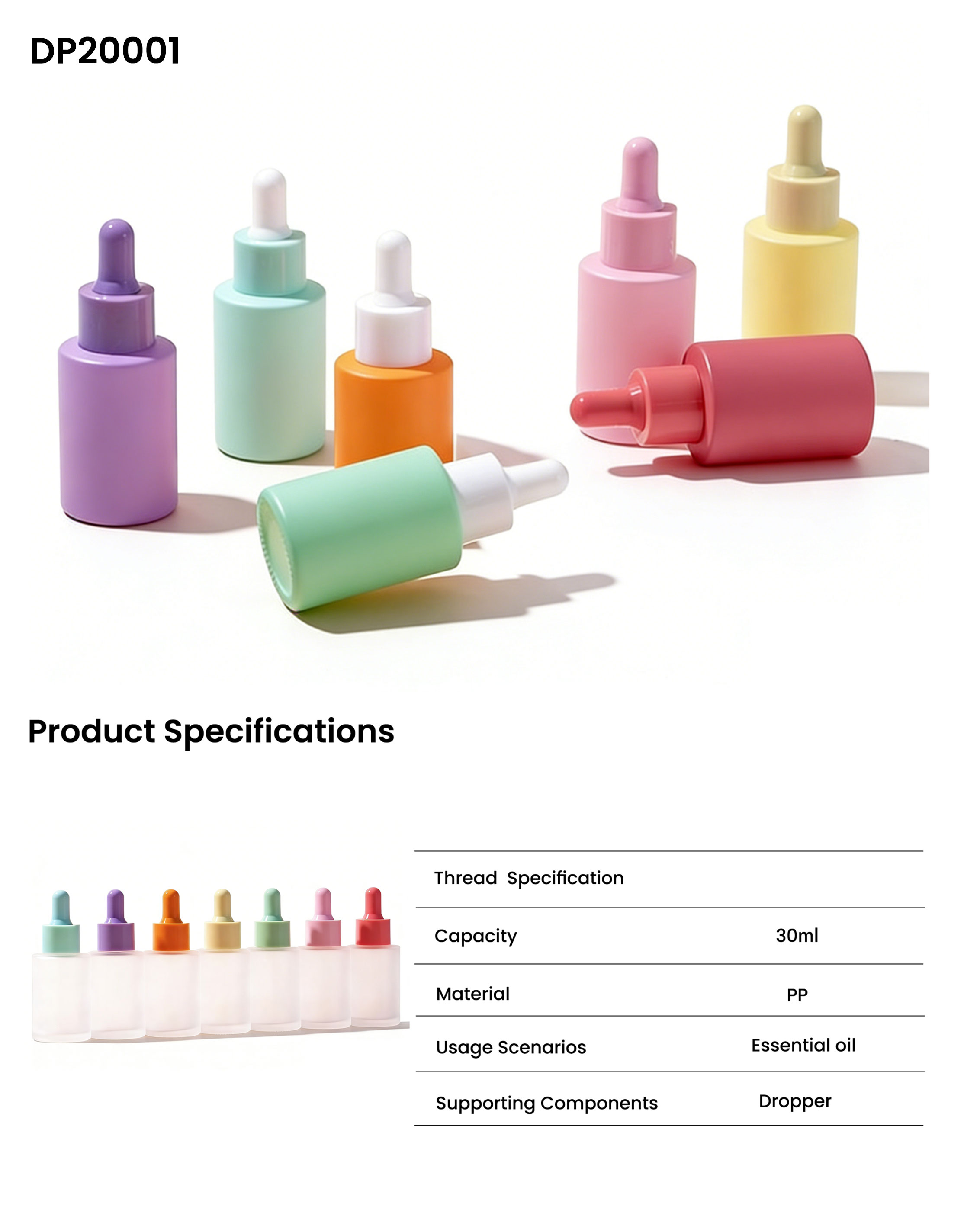
China dropper bottles are quietly reshaping how modern brands think about precision dispensing. Instead of settling for bulky pumps or messy pour caps, brands are turning to these sleek, control-focused bottles to deliver exact doses—from serums to tinctures. At Imagine Craft Packaging, we see this as more than a packaging trend; it’s a practical upgrade that elevates both user experience and brand perception.
The Art of Releasing One Perfect Drop
There's a quiet ceremony in the way a drop separates from its source, hesitating for a fraction of a second before gravity claims it. That moment holds everything—the angle of the wrist, the stillness of the breath, the exact pressure needed to let go without a splash. Most people rush this, treating release as an afterthought. But the ones who understand know that a perfect drop isn't poured; it's surrendered.
Think of it as listening rather than doing. The liquid has its own language, and your job is to hear when it's ready to fall. Too much tension in the fingers, and the drop shatters on impact. Too little, and it clings, refusing to leave. The art lies in that middle space—neither forcing nor withholding, just a steady patience that lets the surface tension decide its own breaking point.
What makes it perfect isn't the size or the symmetry. It's the absence of hesitation after the release. Once the drop is gone, there's no second-guessing, no reaching back. You trust that the conditions were right, that the timing was yours to hold and yours to give away. And in that trust, the single drop becomes enough—not because it was more than one, but because it was exactly what the moment asked for.
When a 0.5 mm Tolerance Becomes Your Brand Promise
Half a millimeter doesn't sound like much until you hold two parts that refuse to fit. That tiny gap, or the lack of it, is where trust starts. We made it our baseline, not a target.
Every batch gets checked against the same number, whether it's the first run or the five-hundredth. No exceptions, no "close enough." The machines don't care about deadlines, and neither do we when it comes to that measurement.
Customers might never see the tolerance on a drawing. They'll feel it when a drawer slides shut without a hitch, or when a bracket locks into place on the first try. That's the promise, delivered in half a millimeter.
China's Dropper Bottles Are Outgrowing the Laboratory
For decades, a dropper bottle was about as exciting as a beaker: standard amber glass, a rubber bulb, and a job that ended at the lab door. That picture has changed fast. Chinese manufacturers now fill orders for matte black dropper bottles headed to cosmetics counters, slim frosted vials for face oils, and pocket-size amber bottles for herbal tinctures. The same production lines that once churned out reagent containers are now running short batches with custom caps, colored glass, and even laser-etched logos—because the buyer is no longer a lab manager but a brand founder.
The shift goes deeper than looks. Dropper bottles are being designed around how people actually use them at home: wider necks for easier filling, drip-resistant inserts for thicker serums, and child-resistant closures that still feel smooth. Some factories in Jiangsu and Guangdong have added cleanroom assembly and food-grade silicone sourcing to meet cosmetics and supplement standards, not just lab specs. It’s a quiet industrial evolution—one that turns a humble piece of lab glass into a consumer product with real shelf appeal.
Custom Tips That Handle Everything from Serums to Tinctures
The right tip shape changes how a product feels in use. Serums need a smooth, controlled flow without dripping or clogging, while tinctures often call for a steady drop-by-drop release. Custom tips let you fine-tune the orifice size and taper so each formula dispenses exactly as intended, whether it’s water-thin or slightly viscous.
Materials matter just as much as geometry. Glass and high-grade plastics can be paired with different sealing methods to protect sensitive ingredients from air and moisture. For thicker botanical extracts, a wider channel prevents blockages, while a narrow, elongated tip works better for precise application to the skin or under the tongue.
Beyond function, custom tips also shape brand identity. The length, angle, and finish of the tip can echo the design language of the bottle and cap, creating a more considered unboxing moment. It’s a small part that often goes unnoticed when done well—but quickly becomes a frustration point if the flow isn’t right.
How Smart Molding Keeps Doses Consistent Across Oceans
A mold cavity in one plant can behave differently from the same cavity design in another if temperature, humidity, or machine wear drift even slightly. Smart molding tackles this by embedding pressure and temperature sensors directly in the tool, then using closed-loop controls that adjust injection speed and hold pressure in real time. The result is a part with the same internal stress profile and dimensional stability whether it is produced in Singapore, Ohio, or Barcelona.
Rather than relying on a fixed recipe that operators copy from one site to another, these systems share validated process signatures through secure cloud links. When a batch starts, the controller compares live sensor curves against the master reference and compensates for local material lot variations before a single bad part can be made. That matters for dose-critical components like inhaler bodies or auto-injector housings, where a few microns of warp can alter the delivered volume.
The consistency also comes from molding simulation tied to the sensor data. Engineers can re-run virtual trials with the exact resin lot and ambient conditions of a distant facility, then push updated parameters to the press without stopping production for trial-and-error setup. Over time, the system learns from every shot and tightens the acceptable window, so a dose measured in Frankfurt matches one measured in São Paulo within the same narrow tolerance.
The Unseen Precision Behind Every Skincare Routine
Most people think a skincare routine is just cleanse, tone, moisturize, repeat. But the real difference between glowing skin and irritation often comes down to details you'd never notice from the outside. Water temperature, for instance, changes how a cleanser's surfactants bind to oil and debris. Run the tap too hot and you strip more than makeup—you lift away the skin's own ceramides. Even the pH of your toner matters more than its botanical extracts, because the acid mantle you just disrupted with tap water needs to rebalance within about a minute, not ten.
Layering products is rarely about the old "thinnest to thickest" rule. It's about molecular weight and polarity. A hyaluronic acid serum works by pulling water into the stratum corneum, but only if that water is already on your skin. If you wait until your face is bone dry, the serum pulls moisture from deeper layers and leaves you tighter than before. And if you seal a water-based serum with a heavy oil too quickly, you trap it without giving it time to absorb. The real precision is in the 30-second pause no one posts about.
Then there's the unseen math of timing and amount. Retinol doesn't just prefer dry skin; it becomes more irritating on damp skin because penetration doubles. Vitamin C needs an acidic environment around pH 3.5 to stay stable and actually cross the lipid barrier, which is why it often tingles. Even body temperature shifts how fast a moisturizer spreads, so applying products after a hot shower versus a cool splash changes the entire finish. None of this is printed on the label, but it's the quiet architecture of every routine that actually works.
FAQ
The newest lines use molded tips with tighter diameter tolerances, matched with bulb volumes that release consistent drop sizes. Many also include tamper-evident caps and internal seals that prevent leakage, so brands don't have to worry about dose drift between the first and last use.
From facial serums to CBD tinctures and laboratory reagents, teams need packaging that won't compromise an active ingredient or ruin a user's routine. These bottles offer repeatable drop counts, which means fewer support complaints and a more professional feel on the shelf.
Rather than treating the dropper as an afterthought, many suppliers now run automated optical checks on every tip and bulb. They also test under varying temperatures and viscosities, so the same bottle works consistently whether it holds a watery toner or a thick oil.
You can choose from glass or PET bodies, colored or frosted finishes, custom collar and cap colors, and even screen-printed dosage lines. Some factories will also match a brand's existing color palette to keep the whole line visually cohesive.
Because minimum order quantities have dropped and tooling costs are more accessible, a startup can get precision droppers without committing to huge inventory. That levels the playing field and lets a newcomer focus on formulation instead of fighting packaging inconsistencies.
Yes, many producers now offer recycled glass or PCR plastic options, and the improved seals reduce product waste from leaks. Refillable designs are also becoming common, which fits brands that want to promote a circular routine without sacrificing accuracy.
Ask for samples with the actual liquid you plan to package, not just water. Check the dropper's orifice size, bulb material, and closure torque. A reliable supplier will share drop-weight data and be willing to adjust the tip geometry to match your target dosage.
Conclusion
China's dropper bottle manufacturers have quietly moved from making simple lab disposables to engineering fluid-control systems that luxury beauty and wellness brands now depend on. The goal is no longer just moving liquid from vial to palm; it's releasing one perfect drop every time, whether that means a feather-light facial serum or a viscous herbal tincture. This hinges on tooling precision down to a 0.5 mm tolerance in the dropper tip and cap threading, so the seal stays airtight and the dose stays exact. That tolerance has become a brand promise in itself—customers learn to trust that a single drop delivers the same potency as the last one, no matter where in the world the bottle was filled.
Much of this capability comes from smart molding techniques that control cavity pressure, cooling rates, and material flow across multi-cavity molds. The result is a batch of dropper tips that vary less than the width of a human hair, keeping doses consistent across oceans and between production runs. Custom tip designs now handle everything from water-thin serums that need a narrow orifice to oil-based tinctures that require a wider, slower release to prevent clogging. These bottles are outgrowing the laboratory and appearing inside everyday skincare routines, where their unseen precision decides whether a product feels wasteful or exactly right. For modern brands, the dropper bottle has become a quiet partner in product performance, not just packaging.
Contact Us
Contact Person: Sunnie
Email: [email protected]
Tel/WhatsApp: +8615818596517
Website: https://www.imagine-craft.com/