

China Octagonal Cage Fighting Is Taking the Martial Arts World by Storm
2026-09-04
Inside the cage, ancient forms meet modern violence — and the world can’t look away. China’s octagonal cage fighting scene has exploded from underground spectacle to global phenomenon, reshaping how martial arts are practiced, watched, and monetized. At PandaWin Sports, we’ve followed every jab, takedown, and cultural collision. Here’s why this storm is just getting started.
When the Octagon Met China
The arrival of the UFC in China wasn't just another market expansion—it was a cultural collision. Long seen as a brutal, Western spectacle, mixed martial arts had to win over a nation that prized discipline and tradition in combat sports. Early promotional efforts leaned heavily on education, introducing the ruleset and safety records to skeptical audiences.
The tipping point came with a wave of homegrown talent. Fighters like Zhang Weili and Li Jingliang didn't simply compete; they carried national pride into the cage. Their victories sparked a broader conversation about what Chinese athletes could achieve in a sport long dominated by Americans and Brazilians, slowly turning curiosity into fandom.
By the time the Octagon landed in Shanghai and Shenzhen, the atmosphere had shifted. Local fans no longer saw an imported oddity but a legitimate proving ground. The blend of Bruce Lee nostalgia, modern production values, and genuine Chinese contenders gave the UFC a foothold that felt less like an invasion and more like an invitation.
Sanda's Second Act: Dominating the Cage
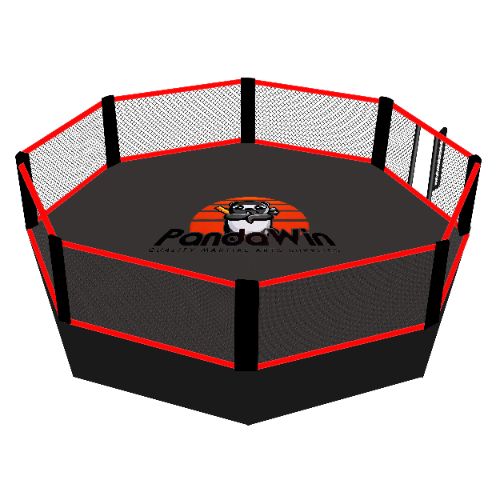
Many fighters treat sanda as a stepping stone, but a rare few carry its rhythm into the cage without missing a beat. The sidekick lands before opponents expect it, the catch-and-sweep flows into ground control, and the constant lateral movement makes takedown attempts feel like grabbing smoke. This isn't just kickboxing with small gloves; it's sanda's unorthodox angles finding new targets under MMA rules.
The second act starts where traditional competition ends. Instead of resetting after a throw, the fighter follows to the mat and hunts for chokes or hammerfists. That seamless bridge—from striking to throw to submission—turns cage walls into tools rather than barriers. Opponents trained for western boxing or Muay Thai often freeze when a leg is caught mid-kick and their balance disappears.
What makes this version of sanda so effective is its lack of wasted motion. Every sweep doubles as a takedown, every clinch break opens elbows, and the constant stance switching hides the next entry. Fans expecting a slow, point-fighting style get a shock: the cage shrinks, pressure mounts, and the fight ends before the game plan ever gets going.
The Young Fighters Redefining Chinese Combat
Inside the cages of Shanghai and Chengdu, a new crop of fighters is trading tradition for tempo. They grew up watching the UFC on bootleg streams, drilling wrestling in school gyms before mastering the sharp elbows of sanda. Their style doesn't fit the old molds — it's a restless blend of catch wrestling scrambles, Muay Thai clinch work, and the kind of fast-twitch footwork that makes older coaches wince. What marks them isn't just technique, but a refusal to perform humility for the cameras. They talk trash in Mandarin with the same ease as switching to a southpaw stance.
Gone are the days when Chinese combat meant rigid forms and deference to lineage. These fighters are building gyms in converted warehouses, filming sparring sessions for short-video apps, and borrowing strength coaches from provincial track teams. They analyze opponents through data dashboards, not just fight tape. The result is a generation that can bait a takedown, slip a head kick, and still have the lungs to push a relentless pace in the third round. For them, the ring isn't a temple — it's a laboratory, and every bout is another experiment in what Chinese fighting can become.
Why China's MMA Boom Feels Different
Walk into any combat gym in Shanghai or Chengdu these days and you'll notice something that wasn't there a decade ago: a crowd that isn't just there to learn self-defense or get in shape. They're studying footwork, drilling transitions, and asking about fight camps in Thailand. That shift in mindset is what separates this wave from previous martial arts crazes. It's not about mimicking a movie star or chasing a belt for the wall—it's about actually building a fighter's toolkit, one session at a time.
What makes it feel different is the grassroots energy behind it. Unlike past booms driven by government-backed wushu programs or kung fu tourism, today's scene is powered by independent gym owners, former competitors, and online communities that swap sparring footage and training logs. There's less emphasis on tradition for tradition's sake and more on what works under pressure. That practical bent has pulled in a wider audience—software engineers, university students, even middle-aged office workers who never saw themselves as combat athletes.
Another layer is the global context. Chinese fighters are no longer isolated anomalies on international cards; they're regulars in promotions across Asia and beyond. Fans at home can follow a local prospect's rise from regional shows to major platforms, and that visibility feeds the gyms. When a 22-year-old from a second-tier city signs with a major organization, it doesn't just make headlines—it sends a message to every person training after work that the path is real. That sense of possibility, more than any single event or celebrity, is why this boom has legs.
Inside the Camps Where Chinese Fighters Are Made
The air inside the gym is thick with sweat and the rhythmic thud of gloves hitting heavy bags. By 6 a.m., dozens of young fighters are already running laps around the cracked concrete courtyard, their breath visible in the cold morning light. Coaches pace between the rows, correcting stances with a sharp word or a tap of a bamboo stick on a lagging shoulder. There is no music, no chatter—only the steady percussion of fists and feet against leather and wood.
Training here blends old and new without apology. On one side of the hall, students drill the same horse stance their grandfathers might have practiced, holding it until their thighs tremble. On the other, they work combinations on modern boxing mitts, the coach calling out numbers like a metronome. Conditioning is brutal and unglamorous: rope climbs, stone lock lifts, endless push-ups on gravel. The goal is not to look impressive but to make every movement automatic, so that in a fight, the body reacts before the mind hesitates.
What keeps these camps alive is not just technique but a quiet code. Fighters bow before entering the ring, clean the equipment after use, and address coaches with formal respect. Many arrive as restless teenagers, some with nowhere else to go; they leave—if they stay—with sharper reflexes and a thicker skin. The best ones earn a chance to compete in regional tournaments, but even those who never step into a professional ring carry something with them: the knowledge that they can endure far more than they once believed.
From the Silk Road to the Octagon: A New Legacy
Trade winds once carried more than silks and spices across sprawling desert routes. They moved ideas, craftsmanship, and an appetite for the unexpected. That same spirit of exchange breathes through the Octagon, where distant influences meet modern discipline. The structure itself echoes a crossroads: eight sides, open to every approach, built not as a fortress but as a stage for those willing to test what they brought from elsewhere.
Inside those eight walls, technique is not a museum piece. It bends under pressure, adapts to unfamiliar angles, and learns from the floor up. Fighters who trace their lineage to mountain villages or coastal trading towns now drill under the same lights, their footwork shaped by journeys their grandparents could not have imagined. The result is not a fusion for its own sake, but a living argument that what travels well is worth keeping.
The legacy being written here is not measured in titles alone. It lives in the adjustments made between rounds, the quiet moments before the first strike, the respect shown to a tradition that refuses to stay still. From ancient caravans to this eight-sided arena, the lesson remains: what endures is what can change without losing its core.
FAQ
It's a hybrid combat sport that blends traditional Chinese martial arts techniques with modern mixed martial arts rules inside an eight-sided cage. Fighters use strikes, throws, and submissions, but the cage itself adds a new tactical layer you don't see in a standard ring.
Over the past decade, a few promoters in cities like Shanghai and Chengdu wanted to give Chinese martial arts a modern competitive platform. Instead of point-based forms or sanda bouts, they put skilled practitioners into an octagonal cage and let them fight under unified MMA-style rules.
It offers something fresh. Traditional wushu tournaments often feel slow or scripted, while Western MMA can ignore the depth of Chinese techniques. This format shows that kung fu, shuai jiao, and chin na can hold their own in a high-pressure cage, and that's caught global attention.
The eight angles create corners that are harder to escape from, so fighters must learn to use the cage for defense, takedowns, and even footwork. It punishes hesitation and rewards fighters who can control their positioning constantly.
Many come from provincial sanda teams, traditional kung fu schools, or even retired military combat units. Some notable names include former national sanda champions and a few cross-over stars from other MMA promotions who want to test their skills against Chinese stylists.
Yes, certain traditional strikes like open-palm techniques and specific throws are allowed, but eye gouging, groin strikes, and small joint manipulation are banned. Also, there's a stronger emphasis on standing exchanges before the fight hits the ground.
Major events are often livestreamed on Chinese sports platforms like Migu or streamed internationally through partner promotions. Smaller regional shows sometimes upload full fights to video-sharing sites a few days after the event.
It could push more traditional martial arts to evolve into full-contact competition. If Chinese cage fighting keeps growing, we might see more international fighters learning kung fu or shuai jiao as part of their MMA training, which would change the sport's technical landscape.
Conclusion
China’s octagonal cage fighting has moved beyond novelty. When the cage first arrived, it collided with a deep well of traditional striking—Sanda’s rapid kicks, sweeps, and side kicks translated almost too well into MMA. Fighters who spent years in wushu academies suddenly found a stage where their unorthodox angles and catch-and-pitch takedowns left opponents guessing. That transition wasn’t just about borrowing moves; it forced a rethink of what Chinese combat could be. The result is a style that feels less like a copy of Western MMA and more like Sanda’s second act, with elbows, chokes, and ground control bolted on without losing its snapping, circular footwork.
The real engine is a generation of young fighters trained inside sprawling camps run by former Sanda champions and imported BJJ black belts. These gyms mix iron-palm conditioning with modern periodization and film study, producing athletes who enter the cage with a rare blend of traditional discipline and tactical patience. What makes this boom different is the grassroots hunger—regional promotions fill arenas in second-tier cities, and teenagers sign contracts before finishing high school. The old Silk Road traded silk and tea; today it trades fight footage, coaching methods, and a new combat identity. China isn’t just participating in MMA anymore—it’s reshaping the sport’s vocabulary one cage at a time.
Contact Us
Contact Person: Fei Xu
Email: [email protected]
Tel/WhatsApp: +8618631245578
Website: https://www.pandawinsports.com/