

China Vibration Motor Reliability Features Worth Evaluating Before Purchase
2026-11-16
If a vibration motor fails early, the problem usually starts long before installation—in the materials, assembly, and testing decisions made at the factory. This post looks at the China vibration motor reliability features that matter most before purchase, and what Guangling does differently to keep those failures rare.
Bearing Choices That Quietly Decide Motor Lifespan
Bearings rarely get the attention they deserve until a motor starts humming a little too loudly or locks up altogether. The decision between a standard deep-groove ball bearing and a cylindrical roller bearing, for instance, shifts depending on whether the shaft sees mostly radial load or a mix of axial and radial forces. Picking by bore size alone is the quiet killer here: it is how an otherwise well-built motor ends up with a lifespan measured in months instead of years.
Internal clearance and sealing often matter more than brand names. A C3 clearance can absorb thermal expansion during heavy starts and hot running conditions, but the same clearance can introduce vibration in a lightly loaded, high-speed application. Seals and shields work the same way; they keep grease in and dust out, yet they add drag and trap heat if selected without considering operating speed and ambient contamination.
Material choice has grown more important with variable-frequency drives. High-frequency shaft currents can pit steel raceways, producing a washboard effect that turns a smooth motor into a noisy failure. Ceramic hybrid bearings or insulated coatings break that current path and often pay for themselves in extended service. Cage design, lubricant type, and fill amount all stack on top of this, so a bearing choice is less a single component selection than a small system tune that sets the motor's actual life.
Sealing Against Real Plant Conditions, Not Just IP Ratings
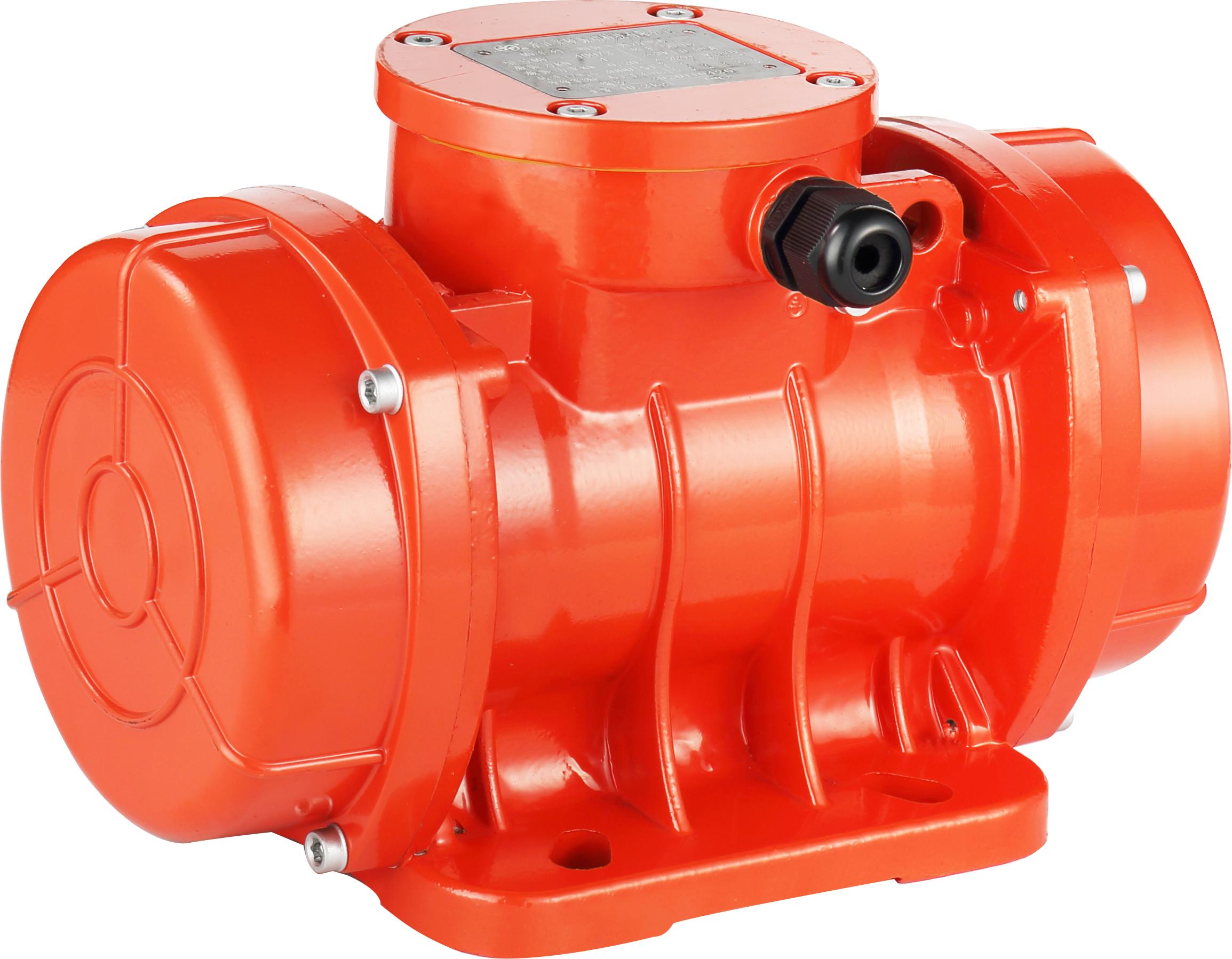
An IP rating tells you what a housing can survive in a short, clean laboratory sequence. A plant floor is rarely that polite. Dust works into bolt holes, washdown water hits from odd angles at pressure, and the same enclosure that looked sealed on a spec sheet starts drawing in damp air after a few hundred thermal cycles.
The real test is usually breathing. As a cabinet warms during a shift and cools overnight, the pressure inside moves. That pumping effect pulls contaminants past any seal that has lost a little compression. Gasket material choices then matter as much as the enclosure design. Nitrile may handle oil mist but harden near ozone from motors. Silicone can take heat but swells when exposed to some cutting fluids. EPDM often works well with washdown chemicals but can be torn during assembly if the flange edge is sharp.
Installation decides what actually lasts. Uneven bolt torque, a twisted cable gland, or a door that gets slammed twice an hour can defeat a well-chosen gasket. Sealing should be treated as a system: flange stiffness, groove depth, compression stops, and surface finish all shape whether the seal stays put. When the line is running through temperature swings, dust, and aggressive cleaning, the only rating that matters is whether the inside stays dry over months, not whether it passed a one-time dunk in still water.
Eccentric Weight Tolerance and the Drift You Can Measure
Eccentric weight tolerance rarely shows up as a sudden failure. More often it appears as a slow, almost stubborn shift in the reading when a load sits off-center, and that shift is easy to mistake for electronic drift. The moment the weight moves a few millimeters away from the expected loading axis, the internal strain pattern changes enough to produce a repeatable offset. If you only watch the display, it looks like the instrument is wandering. Move the same weight back to the same spot, and the offset returns, which tells you the drift is geometric rather than random.
What you can actually measure depends heavily on the platform, the mounting points, and how rigid the surrounding structure is. A thin deck may turn the same off-center load into dozens of extra counts, while a heavier platen masks the effect down to a few grams. Instead of relying only on a published tolerance, it helps to run a simple eccentric test at a fixed radius from center and record the change at several orientations. That gives a system-level number, and it usually reveals more than any single component specification because the drift comes from how the parts bend together.
In practice, temperature changes and fastener tension can also alter the off-center response, which makes the drift seem worse in the morning and smaller by afternoon. What actually changes is not always the sensor electronics but the load path through the frame. Keeping a short note of where the weight was placed, and in which order, makes it possible to separate true time-based drift from the offset caused by eccentric loading.
Loaded Runtime Tests That Expose Catalog Spec Gaps
Runtime tests do something static validation rarely attempts: they push catalog endpoints through realistic request patterns and inspect how the responses shift under load, pagination, and partial data. Those runs often surface places where the catalog specification stays quiet. A field may be listed as required, yet some implementations omit it after filtering. Pagination tokens may be described loosely, leaving clients to guess whether the same token can survive retries or session expiry. Runtime tests make those omissions visible instead of allowing them to stay buried in a conformance checklist.
The most revealing gaps tend to appear when multiple consumers hit the same catalog with different expectations, or when a long-running query crosses into edge territory that the spec never defined. Error responses come back with conflicting shapes, date fields arrive with different precision, and nested collections show inconsistent ordering. These are not failures of individual implementations as much as symptoms of a specification that left too much room for interpretation. Once the test suite records the actual responses side by side, the missing rules become hard to ignore.
Closing those gaps works best when the runtime results feed back into the spec instead of being used to justify test exceptions. Recording the raw responses, the retry behavior, and the exact boundary where the catalog begins to diverge gives spec authors concrete material to tighten language around pagination, field stability, and error contracts. The tests stay valuable precisely because they keep exposing the distance between what the catalog spec promises and what running systems actually return.
Winding Insulation Behavior Under Sustained Heat
If you strip back a winding after years of steady operation, the insulation rarely looks like the datasheet promised. The varnish has darkened, the enamel has lost its snap, and the flexible tape layers crumble at the edges. Sustained heat does not need to exceed the insulation class limit to cause this; it just has to sit below the surface long enough for oxidation and solvent loss to outpace whatever small margin was built into the design.
The arithmetic of thermal aging looks tidy in standards, but real hot spots ignore it. A blocked cooling duct or a tightly packed end winding can run 20 or 30 degrees hotter than the embedded sensors suggest. In those zones the insulation system ages on a sharply shortened curve, so the winding may already be brittle near the core while the overall temperature rise still reads within normal limits.
What finally turns aged insulation into a fault is usually mechanical, not purely thermal. A direct-on-line start, a load step, or even repeated magnetic pulsing flexes the coils. Insulation that has lost its elasticity cracks along that flex line, and once a turn-to-turn path opens, the next voltage transient can finish what years of heat started.
Rotor Balance Clues Hidden in the Supply Chain
A rotor that leaves the balancing stand in perfect condition can still arrive at the assembly line with enough residual imbalance to cause warranty headaches. The usual suspects—fixture wear, operator inconsistency, or a drifting machine setting—get checked first. Less obvious is what happened upstream: a batch of shafts with slightly different center-hole geometry, or a supplier that changed its heat-treatment sequence without updating the print. These variations don’t always show up in final inspection, but they quietly shift the correction process and leave clues in the data if someone knows where to look.
Procurement records and incoming material certificates often contain the earliest signals. A shift in raw material density from one coil to another, a new deburring method, or even a different packaging route can alter how a rotor reacts to the balancing operation. When the same balance machine suddenly needs larger corrections on parts from one vendor but not another, the problem is rarely the machine. Tracing those correction trends back through lot codes and delivery dates tends to reveal a process change that no one mentioned on the line.
The practical fix is to stop treating rotor balance as a standalone operation. Keep a running history of correction amounts, tooling used, and supplier lot numbers, then compare them before blaming the balancer. A small, consistent drift across multiple batches often points to a material or machining change rather than an equipment fault. In many plants, the fastest route to a stable rotor isn’t another round of calibration—it’s a phone call to whoever changed the blanking die or the centerless grinder setup two weeks ago.
FAQ
Start with the stator insulation class and varnish treatment. Many lower-cost units use Class B winding, but for continuous operation in warm environments an F or H rating with double-dip vacuum impregnation is much safer. Ask for photos of the winding before housing assembly.
The weight set matters more than people expect. Fixed or bolted weights can shift if the clamping surfaces are not machined flat. Better designs use keyed shafts, graduated weight plates, and clearly marked overlap percentages. Ask how many set screws are used and whether thread locker is applied during assembly.
Not automatically. A known bearing brand helps, but the real issue is fit tolerance and preload. If the housing bore is loose or the shaft seat is undersized, even a premium bearing will fail early. Request bearing brand, clearance class, and the actual shaft and housing tolerance values.
A surface temperature of 70-80 degrees Celsius after thermal stabilization is common for many small vibrator motors. If a supplier claims much lower under full load, ask about ambient conditions and measurement point. Sudden hot spots near the bearing seats usually indicate poor alignment or excessive grease fill.
It helps in dust or washdown environments, but IP65 or IP67 is not meaningful if cable entry and end cap seals are not tested after assembly. Ask for a sample with the actual cable gland and mounting position used in production, not a generic enclosure test.
Ask for per-unit no-load current, rated current, insulation resistance, vibration amplitude, and a short-run temperature curve. Batch test summaries are weaker than serial test records. Some factories will share raw test sheets with handwritten values if you request them.
A poorly machined mounting face transfers extra stress into the housing and bearings. Check flatness and perpendicularity of the foot or flange. A 0.05 mm shim gap under one foot can change bearing load and shorten service life noticeably.
Conclusion
Reliability claims for Chinese vibration motors often hinge on details that data sheets rarely expose. Bearing selection is one of the first places where short-term savings surface: shielded or sealed bearings may look interchangeable, but their grease retention and cage material directly shape how long a motor tolerates continuous eccentric loading. Equally important is how well the housing seal matches actual plant conditions. An IP66 label does not promise survival around fine dust, washdown spray, or humid aggregate lines; gasket compression and breather placement matter more than the rating alone. Eccentric weight tolerance adds another measurable drift risk—small variations from unit to unit can shift vibratory force enough to alter stroke or feed consistency, so asking for a tolerance band and checking weight-to-raceway alignment is more useful than trusting a catalog number.
Beyond design, loaded runtime testing separates motors that work from those that only spin unloaded. Running a sample at near-service vibration amplitude and temperature for extended periods often reveals insulation weakness, bearing clearance growth, or grease breakdown that static checks miss. Winding insulation behavior under sustained heat deserves particular scrutiny because class ratings assume clean cooling conditions, not a hot, dust-caked motor buried in a vibratory feeder. Finally, rotor balance clues are frequently hidden in the supply chain: raw casting consistency, machining datums, and whether balancing is done before or after bearing assembly all influence residual unbalance. Buyers who request test reports, tolerance evidence, and a few sample teardowns typically get closer to repeatable field life than those who rely on brochure language.
Contact Us
Contact Person: ZHUO
Email: [email protected]
Tel/WhatsApp: 86-576-86320988
Website: https://www.cnguangling.com