

Complete Corrugated Box Die Making Creasing Cutting Machine: Key Features and Benefits Explained
2026-08-19
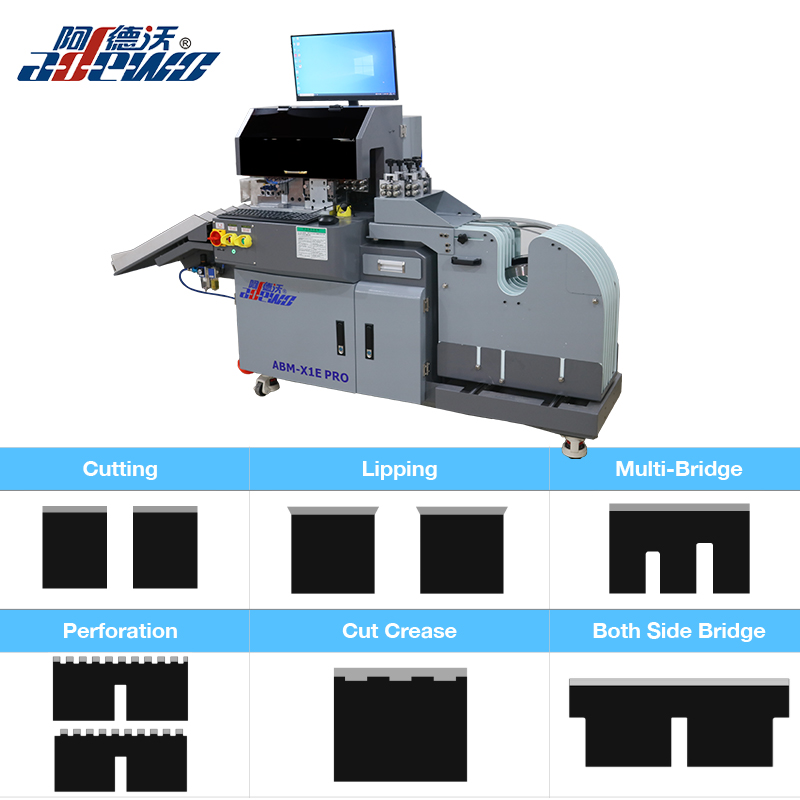
Ever watched a corrugated box come together and wondered what it takes to achieve perfect creases and cuts every single time? The die making creasing cutting machine is the unsung hero behind those crisp folds and clean edges. But not all machines are built the same. If you're looking to understand what sets a truly complete system apart, you're in the right place. Here, we break down the key features and real-world benefits that matter, with a close look at how ADEWO tackles the challenges modern box makers face.
How Integrated Die Making Cuts Setup on Corrugated Lines
Traditionally, a corrugated converter would design structure in one place, send files out for die board production, then wait for physical delivery before any setup on the line. This gap forced operators to compensate with manual adjustments, extra impression testing, and duplicate sample runs. Integrated die making pulls that step into the same digital flow as the converting line. The CAD file used for the blank layout also drives the laser cutting, rule positioning, and stripping pin placement. Because the die is built from the same geometry that the machine will run, the first setup starts closer to a production-ready state.
The practical effect shows up in reduced setup time and less material waste. When the die arrives, the cutting, creasing, and stripping functions are already matched to the board grade and flute profile because those parameters were embedded in the design file before manufacturing. On the corrugated line, operators can load the tool, register it against the print and slotting stations, and move to a running condition with fewer stroke adjustments. The old cycle of "cut a sample, compare it to the proof, re-knife the die, repeat" shortens noticeably. This also helps when there are repeat jobs: the stored digital tooling data means the next run starts from the last validated setup instead of starting over.
Beyond that, the die also lines up better with downstream converting steps. In corrugated packaging, the die does not work alone; it has to interact with folding, gluing, and stacking equipment. Integrated die making captures the intended crease channels, waste stripping zones, and blank edge quality from the same source that defines those downstream requirements. As a result, setup on the corrugated line becomes less about correction and more about confirmation. Maintenance and scheduling also benefit because tooling specifications are predictable, and a replacement die can be produced without reverse-engineering the original.
Crease Depth Control Without Crushing Flute Tips
Controlling crease depth in corrugated board is less about hitting a single number and more about reading how the material responds under pressure. Flute tips are the first point of failure when a creasing rule descends too far, and once those tips collapse, the board loses a significant share of its stacking strength. The trick is to set the crease depth just deep enough to create a reliable fold line while leaving the flute structure intact beneath the surface.
One practical approach is to work from the liner outward rather than forcing the rule into the corrugated medium. By adjusting the crease channel width in tandem with the board caliper, you can redistribute the folding stress across a wider area instead of concentrating it on a narrow line. This allows the outer liner to deform gradually, while the flute tips remain cushioned by the uncreased medium. Operators who rely solely on machine presets often overlook how variations in moisture content or liner weight affect the amount of give in the material, so small manual adjustments at the point of creasing can make a measurable difference.
Testing the result without cutting into every sheet is possible by back-bending a creased sample and feeling for a soft, even hinge. If you hear cracking or see the fold line springing back sharply, the depth needs to be backed off slightly. A well-set crease leaves a visible line on the inner liner but no crushed flutes when viewed from the edge, and the board should fold with steady resistance rather than snapping or turning spongy.
Cutting Registration That Stays Tight on Pre-Printed Board
Registration on pre-printed board can drift when heat, humidity, or inconsistent feed rates throw off alignment mid-run. The trick is to treat the board itself as a static reference—not just rely on edge guides that may flex under pressure. A sharp optical sensor reading a small fiducial mark near the cut line keeps every stroke locked to the actual artwork, even if the sheet shifts slightly.
The blade path must be programmed with a backlash compensation curve, because any mechanical slack gets amplified at the corners of tight graphics. Instead of conventional corner rounding, use a micro-dwell at each vertex to let the cutting force settle before changing direction. This leaves clean intersections without tearing the top laminate or leaving ragged fibers along the pre-printed edge.
Finally, stage the vacuum zones so the offcut is pulled away before it can nudge the remaining sheet. If the waste strip curls upward after the first pass, it catches on the tool head and throws the next pass out of alignment—often by just enough to break the border around your print. A narrow blow-off stream set at 45 degrees to the cut line prevents that interference without lifting the whole board.
Short-Run Changeovers That Do Not Stall Production
Short-run changeovers live or die by how much preparation happens before the line stops. On well-tuned lines, the next job’s tooling, materials, and settings are staged at the machine while the current run is still moving. Operators preheat barrels, preset offsets, and preload feeders so the actual switch involves little more than clamping a fixture and pressing cycle start. The line might pause for a minute, but it never idles long enough to lose its rhythm.
Another trick is to split the changeover into parallel tasks instead of one long sequence. While one operator removes the old tool, another is already setting guides or checking the first-off dimensions on a duplicate fixture. Quick-release couplings, color-coded hoses, and sensor-based position checks remove guesswork, so even a short batch run doesn’t eat the shift. The goal isn’t just speed—it’s repeatable, boring consistency that keeps production from stalling.
Worth noting is that not every changeover needs to be lightning fast. The real enemy is variability. Timing each step, even informally, reveals where crews lose minutes to a stuck bolt or a misplaced die. Fix those friction points with dedicated carts, preset torque tools, or simple visual markers, and short runs become a normal part of the schedule rather than a weekly scramble.
Wear Resistance in Creasing Rules for Recycled Medium
Anyone running long creasing jobs on recycled medium knows the rules dull faster than you'd expect. The short fibers, residual inks, and mineral fillers in the sheet act like a fine abrasive paste once the creasing rule starts pressing in at speed. Tip wear shows up first as a widening radius, which then demands higher pressure to hit the same fold depth, and before long the crease line turns fuzzy or the board cracks along the fold.
Material choice matters here but not in the way suppliers often pitch it. Tungsten carbide coatings help, though they're not magic; a hardened steel rule with the right profile can last nearly as long if you keep the strike depth conservative. Overdriving the rule into the recycled medium just grinds the tip faster and loads the cutting die unevenly.
It's also worth tracking wear by position rather than by total impressions. Creasing rules near heavily printed areas or cross-machine edges often wear first because those zones carry more abrasive residue. Rotating or spot-replacing the worst sections between full changeovers keeps crease quality consistent without throwing away good rule segments.
Operator Controls and Maintenance Points Built for Daily Use
Every switch, dial, and grease fitting on this unit sits where your hand naturally lands after a shift. The control panel angles toward the operator's standing position, and the main power disconnect is within arm's reach without bending or stretching. Daily checks like the coolant level sight glass, air filter restriction indicator, and hydraulic oil dipstick are grouped on the left side, so you can run through them in under two minutes without opening a single panel.
Maintenance points are marked with recessed, high-contrast labels that don't rub off after repeated wiping. The central lube block is mounted at knee height and accepts a standard grease gun from either side. Drain valves for the fuel-water separator and air tank sit just behind a hinged cover, but the cover stays open on its own, leaving both hands free to hold a catch pan. No tools beyond a 3/8-inch drive ratchet are needed for the daily service routine.
FAQ
It handles die cutting, creasing, and cutting in one pass so corrugated board turns into flat, foldable box blanks without needing separate machines.
Creasing creates clean fold lines that let the board bend neatly, which reduces cracking along the edges and gives the finished box better stacking strength.
Packaging converters, e-commerce fulfillment centers, food and beverage suppliers, and any manufacturer that needs custom-sized corrugated boxes on a regular basis.
Look for accurate die positioning, adjustable creasing depth, cutting speed that matches your volume, quick job changeovers, safety interlocks, and compatibility with different flute profiles.
Most heavy-duty models allow you to adjust pressure and die height, so they work with single, double, and sometimes triple wall board, but you should confirm the machine specs first.
By combining multiple operations into one pass it lowers labor, cuts down on material waste from misaligned creases, and speeds up short-run or custom box turnaround.
Regular cleaning of the cutting area, lubrication of moving parts, checking die wear, and recalibrating crease depth all help extend the machine's working life and keep cuts precise.
Yes, especially if the machine has quick die change or digital positioning features, because it can switch between sizes with minimal downtime and still hold good accuracy.
Conclusion
A complete corrugated box die making and creasing cutting machine changes how plants handle setup and run quality. Instead of juggling separate die preparation steps, the integrated system lets operators move from CAD layout to finished cutting die without leaving the production flow. That alone trims hours from job setup on busy corrugated lines. Crease depth is set against the actual flute profile rather than a generic pressure value, so the board folds cleanly while flute tips stay intact—important when customers reject crushed corrugated. On pre-printed stock, cutting registration holds to the printed image across the full sheet, not just at the lead edge, which reduces misaligned glue tabs and keeps brand graphics from drifting into cut or score lines.
Short runs no longer force a choice between speed and accuracy. The machine’s changeover sequence resets key positions from stored job data, and tooling swaps are designed so one operator can handle them in minutes without blocking the line. Wear resistance in the creasing rules matters more as recycled medium becomes standard; hardened rule edges and controlled clearances prevent premature rounding and score cracking over long runs. Daily maintenance follows the same practical logic—lubrication points, blade locks, and registration sensors are placed where crews can reach them without removing guards or waiting for a specialist. The result is a die making and creasing system that holds its settings shift after shift, supports the full range of corrugated work, and keeps output moving without constant adjustment.
Contact Us
Contact Person: KAELYN LEE
Email: [email protected]
Tel/WhatsApp: +86 15012673758
Website: https://www.china-adewo.com