
Custom ADA Sign Material Manufacturer: Expert Craftsmanship for Compliant, Durable Signage
2026-07-22
Navigating ADA signage requirements can be a challenge, but finding a partner who blends compliance with artistry shouldn't be. At LYSHIRE, we craft custom ADA signs that go beyond mere functionality—each piece is a testament to expert craftsmanship, built to last and designed to welcome. Discover how our dedication to quality materials and precise manufacturing ensures your signage is not just compliant, but a lasting asset to any environment.
Material Mastery: The Foundation of Accessible Signage
The silent conversation between a sign and its reader often hinges on the materials chosen long before the first letter is embossed. For individuals who rely on touch or low vision, the tactile qualities of a surface—its texture, warmth, and resistance—carry the full weight of the message. A braille dot crafted from photopolymer might deliver crisp legibility indoors, but it can become brittle under direct sunlight, while a stainless steel equivalent withstands weather but demands a softer touch to avoid sharpness. This nuanced material vocabulary separates merely compliant signs from truly inclusive ones, turning every material choice into a deliberate act of communication.
Durability is more than a maintenance concern; it’s an accessibility lifeline. A sign installed in a high-traffic corridor, where countless hands will trace its path, requires surfaces that resist wear without losing their tactile clarity. Anodized aluminum with a matte finish, for instance, can preserve the integrity of raised text and braille while reducing glare for those with partial sight. Similarly, substrates like acrylic or phenolic resin offer a palette of contrasts and depths that can be tailored to specific environments—from the humidity of a poolside restroom to the sterile calm of a hospital ward. Here, material mastery means anticipating the unspoken needs of every user who will encounter the sign, ensuring the message remains accessible for years, not just months.
Beyond performance, the most effective signage materials create a seamlessness between function and architecture, inviting touch without drawing unwanted attention. A brushed bronze plaque can blend into a historic foyer while offering engraved tactile information that feels as permanent as the building itself. In modern office spaces, layered laminates allow for subtle variations in height and texture, guiding fingertips with a gentle precision that feels intuitive rather than institutional. Ultimately, mastering materials isn’t about achieving a checklist of standards; it’s about understanding that every pitted surface, every chamfered edge, and every intentionally muted finish plays a role in making public spaces genuinely welcoming to all.
Customization Without Compromise
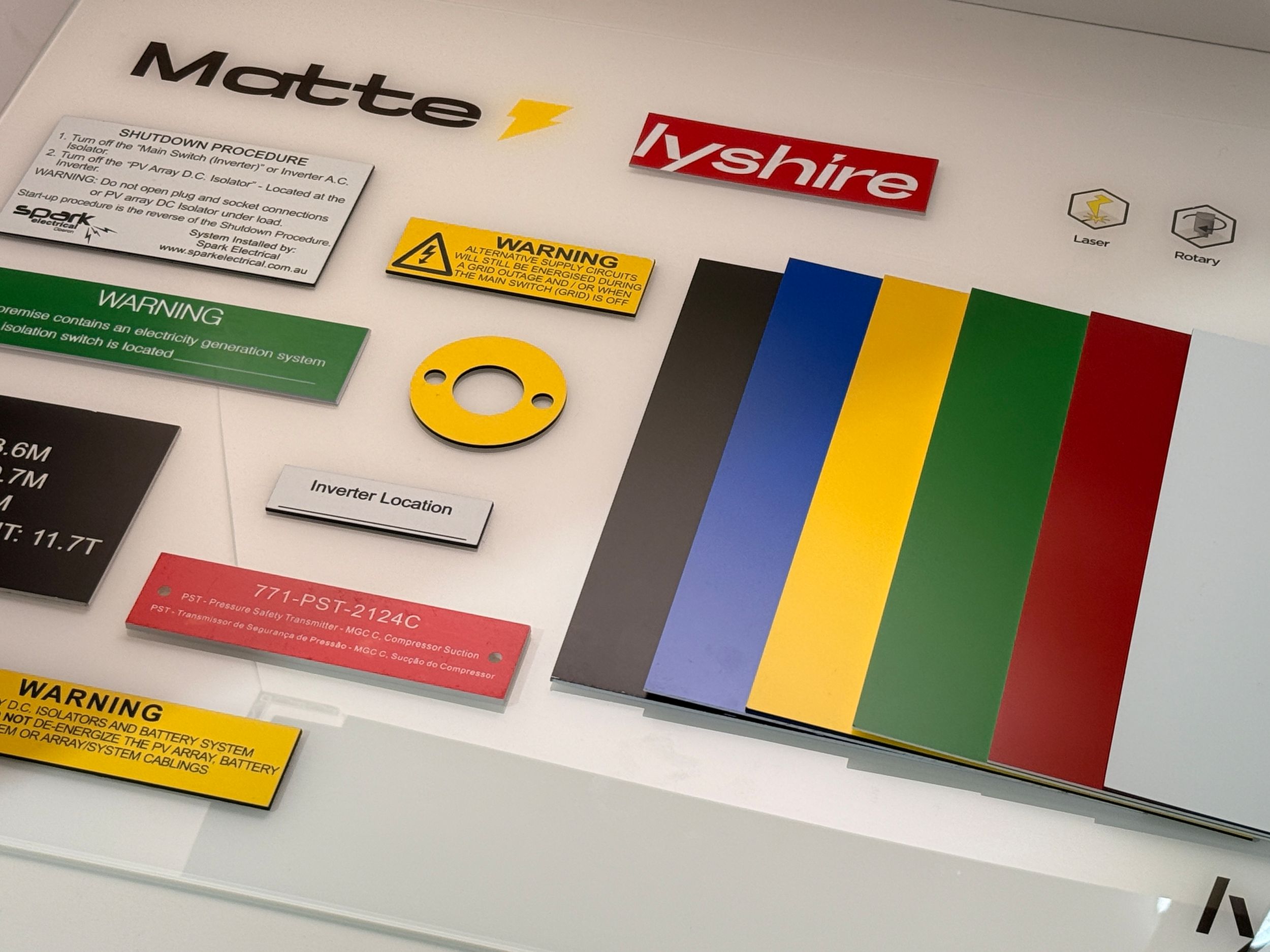
True personalization shouldn't force you to choose between form and function. We believe you can have precisely what you need without sacrificing performance, reliability, or ease of use. Every adjustment we make is designed to elevate your experience, never diminish it.
From fine-tuning interfaces to adapting core workflows, our approach ensures that every tweak aligns with your goals while maintaining the stability you depend on. It's about crafting a perfect fit—not just adding features, but integrating them in ways that feel natural and invisible.
The result is a solution that feels like it was built just for you, yet still evolves with your changing needs. No trade-offs, no hidden compromises—just pure, uncompromising customization.
Built to Last: Durability in Every Detail
Durability isn’t an afterthought—it’s woven into the very fabric of our design philosophy. Every component, from the reinforced stitching to the high-grade materials, is selected to withstand the tests of time and use. We believe that true quality reveals itself not on day one, but years down the road when lesser products have already been replaced.
Attention to detail means examining the weak points that others overlook. Our zippers are tested beyond industry standards, our fasteners are engineered to resist corrosion, and even the smallest seams are double-locked for extra strength. It’s this meticulous approach that turns ordinary items into lifelong companions.
Ultimately, building something to last is a commitment to reducing waste and honoring the resources that go into creation. When you hold one of our products, you’re experiencing a philosophy that values endurance over trends, and permanence over convenience.
Compliance Simplified: Navigating ADA Standards
Meeting ADA standards often feels like untangling legal jargon, but compliance doesn’t have to be a headache. Instead of fixating on every clause, start by viewing accessibility as a way to open your doors to a wider audience. Break down the guidelines into core principles: perceivable content, operable interfaces, understandable navigation, and robust code. This mental shift turns a list of requirements into a practical roadmap that actually improves user experience.
A smart first move is to see your space or website through the eyes of someone with a disability. Move beyond automated checkers and actually try navigating with a keyboard, using a screen reader, or temporarily reducing motor control. Document every friction point you encounter—unlabeled buttons, forms that lose focus, or video content missing captions. Address the issues that block essential tasks first, and you'll often find that fixing those solves a cascade of smaller problems, making the rest of the standard fall into place almost by itself.
True simplicity comes from building compliance into daily routines rather than treating it as a one-and-done project. Involve your team in short, regular reviews of new content or layout changes. Encourage questions about whether a feature works for everyone. Over time, this habit transforms ADA navigation from a reactive scramble into a proactive, low-effort rhythm—one that quietly keeps your organization inclusive and out of legal gray areas.
Craftsmanship That Speaks Volumes
In a world flooded with mass-produced uniformity, true craftsmanship whispers its presence before it ever shouts. It’s not about loud branding or fleeting trends—it’s the quiet confidence of a perfectly dovetailed joint, the almost imperceptible weight of a hand-stitched hem, the way light catches a brushstroke that no machine could replicate. Such details don’t merely exist; they communicate. They tell stories of patience, of hands that prioritized precision over pace, and of a deeply personal relationship between maker and material. This is the language of the exceptional, understood without a single word.
What sets this level of work apart is its uncompromising honesty. There’s no hiding behind veneers or shortcuts—every surface, every edge, every hidden corner is a testament to integrity. The satisfaction comes not just from admiring the finished piece, but from the subtle realization that someone, somewhere, cared enough to get even the unseen parts right. That commitment transforms the ordinary into heirloom, function into ritual. It’s why a hand-thrown mug feels warmer in your palms, and why a tailored jacket fits not just your body, but your posture. The difference is felt rather than explained.
Ultimately, craftsmanship that speaks volumes does so through the void it fills—a craving for authenticity in an age of artifice. It invites you to slow down, to notice, to connect. It’s a quiet rebellion against disposability, a celebration of the imperfect, time-intensive process that yields objects with soul. When you choose the hand-wrought over the hurried, you don’t just acquire a thing; you become part of a lineage of makers and keepers who understand that some things are worth the wait. That’s a conversation worth having, and it never gets old.
From Concept to Creation: Our Process
Every project begins with a conversation, not a checklist. We sit down, listen closely, and uncover the core intent behind your vision—what problem it solves, who it speaks to, and why it matters. This early exchange shapes a collaborative blueprint where raw ideas are molded into a clear, shared direction. No rigid templates, no cookie-cutter stages. Instead, we let the specific needs of the project dictate the flow, ensuring the journey from first sketch to final output remains fluid, responsive, and uniquely yours.
From there, we move into a phase of thoughtful experimentation. Prototypes emerge, get stress-tested, and evolve through continuous feedback loops that keep you in the driver’s seat. Unexpected discoveries often lead to breakthroughs—an offhand comment, a shift in perspective, or a surprising technical possibility that redefines the outcome. We embrace these detours, treating each iteration as a learning moment rather than a milestone to check off. This isn’t about following a map; it’s about exploring the territory together, adapting as new insights surface.
The final stretch is all about refinement and delivery—polishing every detail until the result feels inevitable. We obsess over the subtleties: how a piece of animation eases in, the weight of a line of text, the silent harmony between elements. But we also know when to let go, handing over something that not only meets the brief but resonates on a deeper level. The process itself becomes part of the product’s story, leaving you with a creation that feels both deliberate and alive.
FAQ
We work with a variety of high-quality materials including acrylic, metal, wood, and photopolymer. Each material is chosen for its durability and ability to hold precise tactile details. We can guide you to the best option based on your project’s aesthetic and functional needs.
Our process involves meticulous attention to tactile lettering, Braille, and consistent raised characters that meet strict spacing and size requirements. We use specialized tooling and rigorous quality checks at every stage to guarantee full compliance with federal ADA standards.
It starts with your ideas—we discuss your layout, font preferences, color choices, and material selection. From there, our team creates digital proofs for your approval before moving into precise manufacturing. We keep you involved until the final product matches your vision.
Absolutely. We engineer our outdoor signs with UV-stable backgrounds, weather-resistant finishes, and robust substrates. They’re built to withstand rain, sun, and temperature shifts without fading or warping, maintaining their legibility for years.
We supply detailed, easy-to-follow installation instructions with every order. For larger or more complex projects, we can recommend certified professionals in your area to ensure proper mounting and alignment.
No, we handle projects of all scales—from single door signs to entire wayfinding systems. You get the same craftsmanship and attention regardless of order size.
We offer a range of finishes including matte, gloss, satin, and brushed metal. Our team can also apply custom color matching or protective overcoats to suit your design intent.
Production timelines vary with complexity and volume, but most orders are ready within 10 to 14 business days after design approval. We’ll give you a clear schedule upfront and keep you updated on progress.
Conclusion
Every sign begins with a deep understanding of materials—acrylic, metal, wood, or photopolymer—chosen not just for looks but for how they feel to the touch and hold up over time. Customization doesn’t mean cutting corners on compliance; raised characters, Braille, and precise color contrast are seamlessly integrated into designs that reflect brand identity without sacrificing functionality. And these aren’t signs that fade or warp. High-grade substrates, UV-resistant finishes, and rigorous fabrication techniques ensure they withstand heavy use, humidity, and cleaning chemicals, maintaining clarity for years.
Navigating ADA requirements becomes second nature when expertise is built into every step. From the initial concept sketch to the final installation, each sign is crafted with meticulous attention to tactile readability, mounting height, and finish—translating complex regulations into elegant, durable solutions. It’s not just about meeting codes; it’s about creating signage that communicates with dignity and precision, turning a mandatory element into an asset for any space.
Contact Us
Contact Person: Tina Hou
Email: [email protected]
Tel/WhatsApp: +86 17816238685
Website: https://www.lyshire.com