

Custom Motorcycle Seat Cushions That Make Every Ride Feel Like First Class
2026-11-30
Long rides have a way of exposing every flaw in a motorcycle seat—pressure points, numbing foam, and the slow creep of lower-back fatigue. Kunbao treats that as a design problem worth solving. Their custom motorcycle seat cushions are shaped around your body and riding posture rather than a one-size-fits-all mold, so every mile carries the calm of a first-class seat. Here's how they make that comfort feel personal.
Why Your Tailbone Knows the Difference by Mile 80
Most riders don’t notice their sit bones until the saddle has gone quiet under them. Somewhere after the first sixty miles, the body stops adjusting in small, polite ways. The pelvis settles, the lower back slackens, and the tailbone begins to register every bump, every shift in cadence, every half-inch of bad position that earlier disappeared into fresh muscle.
By mile eighty, that small bone is less about anatomy and more about honesty. It tells you whether your saddle shape actually fits the way you sit when you are tired, not the way you sit in the parking lot. A saddle that felt neutral at twenty miles can become a hard ledge because your hips have rotated forward just enough to change the contact point.
What the tailbone knows at that distance is cumulative. It is not one impact but the repetition of thousands of small pressures, the slow creep of fatigue through the hamstrings and glutes, and the way the spine stops helping when the core gives up. Riders who listen to it usually change something small: saddle height, tilt, or the way they sit. Riders who ignore it discover that the last twenty miles are very long.
The Foam and Stitch Work Behind First-Class Support
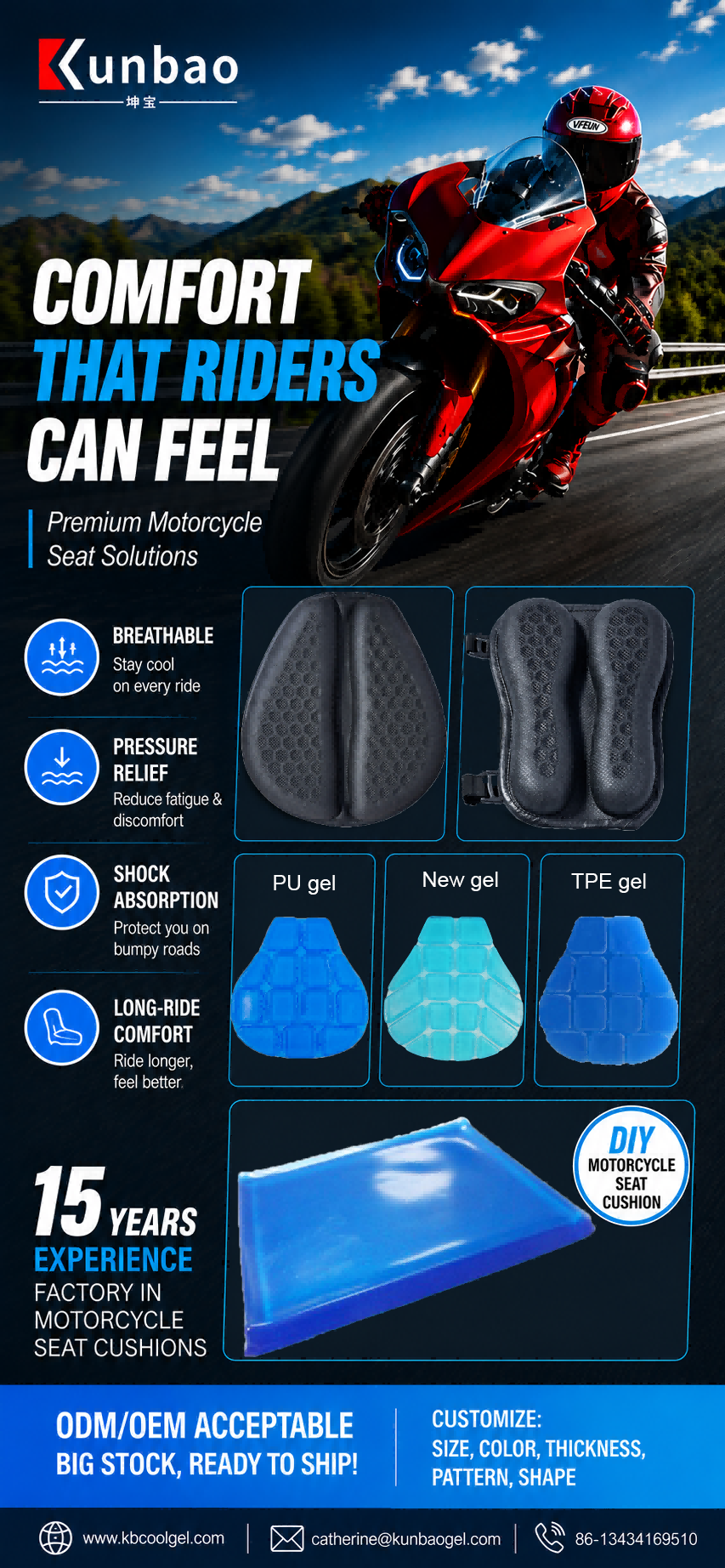
Most support systems fail quietly in the layers no one bothers to inspect. The foam used here is not a single slab; it has a slightly denser core and a softer perimeter, so it compresses under weight but keeps its boundaries intact. That shift in firmness is adjusted in tiny increments until pressure spreads evenly instead of collecting under one point.
The stitching does far more than attach the cover. Tensioned rows of thread create controlled flex zones that help the foam recover its shape after each use, while deeper quilted channels stop the fill from creeping toward the edges. It is slow, unglamorous work, but it is the reason the support still feels predictable after months of daily wear.
Built Around Your Riding Position, Not a Showroom Average
Most bikes are assembled around a hypothetical rider—a set of averages pulled from a sizing chart. That approach works if you happen to sit exactly like the chart predicts, but most of us don’t. This setup starts from the other direction: your actual hip angle, shoulder reach, knee tracking, and how much weight you naturally carry through your hands and sit bones. Every stack height, stem length, and saddle offset is then adjusted until the cockpit feels neutral rather than forced.
When the contact points match your position, the small compensations disappear. Your elbows stop locking, your lower back unwinds, and your breathing opens up because your ribcage isn’t folded over a bar that’s too low or too far away. The bike starts to feel less like a piece of equipment and more like an extension of how you already move. That changes how you read the trail or road—you’re not constantly shifting to get comfortable, so your attention stays on the line ahead.
That’s the real divide between a showroom fit and a riding-position fit. One is designed to fit the widest possible bell curve; the other is built around the way your body actually settles into a ride. You notice it most at the end of a long day, when a generic setup would have you stretching your neck and shaking out your wrists. Here, the fatigue stays physical, not positional—and that’s a distinction you can feel in the first hour.
Vibration Control That Starts Under the Upholstery
Vibration Control That Starts Under the UpholsteryMaterials That Handle Sweat, Rain, and Sun Without Fading
Sweat and rain are basically moisture with extra chemistry, and both can be rough on fabric. Salt, oils, and body acids sit on the surface and slowly break down weaker dyes. Solution-dyed acrylic and polyester take a different route by locking the pigment into the fiber before it is spun, so the color runs through the entire thread instead of clinging to the outside where perspiration and downpours can scrub it away.
Sun damage works more quietly but causes just as much fading. Outdoor-grade olefin and acrylic are built with UV stabilizers that absorb or deflect that harsh light instead of letting it chew through the color molecules. Because the protection is part of the material rather than a surface coating, it does not peel, crack, or wash off after a few humid afternoons or sudden storms.
For anything that faces sweat, rain, and sun in equal measure, solution-dyed acrylic, PVC-coated polyester, and marine-grade olefin are worth choosing. They dry fast, resist body oils and mildew, and hold their tone through long summers on patios, boats, or gym bags. The best results come from materials that treat fading as a structural problem, not a cosmetic one.
A Low-Profile Look That Doesn't Sacrifice Cushioning
The silhouette sits close to the ground, keeping the profile sleek enough to pair with tapered pants or shorts without adding bulk. Hidden inside that slim frame is a foam layer tuned to absorb impact where the foot lands heaviest, so the ride stays soft during long walks or all-day standing.
Instead of relying on a thick midsole that announces itself visually, the cushioning works through density and shape. A slightly rounded heel eases transitions while the forefoot keeps just enough flex to feel natural, letting you move without that overly plush or unstable sensation.
The result is a shoe that reads as understated from the outside but doesn't leave your feet feeling the pavement. It's built for people who want the easy look of a minimalist design without paying for it by the end of the day.
FAQ
Instead of forcing your body to adapt to a generic shape, the foam is sculpted around your pressure points and weight distribution. That means less numbness, fewer mid-ride squirms, and you arrive without feeling like you have been sitting on a park bench.
Absolutely. You can mix gel inserts with memory foam or choose a firmer edge for cornering support while keeping the center softer. It is about matching the build to your typical miles, posture, and even climate.
Many riders pick breathable covers or water-resistant stitching for exactly that reason. A well-chosen cover lets air move instead of trapping heat, and sealed seams keep morning dew or light rain from soaking into the foam.
Usually you can keep the original seat pan and have the foam and cover reshaped around it. That preserves the factory fit under the bike while changing everything your body actually touches.
Not necessarily. Too much soft foam can let you sink and restrict circulation. A better approach is layered density: a supportive base with a slightly forgiving top layer, so the seat holds you without bottoming out on long hauls.
The rear section can be widened or contoured to give a passenger more stable support, and you can add a subtle backrest slope that reduces the feeling of sliding backward under acceleration.
Most riders feel the change within the first hour. Instead of constant pressure in one spot, the load is spread more evenly, so you are not already shifting around before the first fuel stop.
Yes. You can choose stitch patterns, cover textures, and colors that match the factory lines or give it a more tailored look, so the seat does not shout aftermarket while still doing the work.
Conclusion
By the time the odometer rolls past eighty miles, most stock seats have already made their point through a dull ache that starts in your tailbone and works its way up. Custom motorcycle seat cushions attack that problem before it begins. The difference isn't just extra padding; it's a deliberate layering of foam densities and stitch placement that spreads pressure across your sit bones instead of letting it pool in one spot. Rather than building for a showroom average, these seats are shaped around how you actually ride — forward-leaning, upright, or somewhere in between — so your hips stay settled without constant shifting. That kind of fit means the seat supports your riding posture instead of quietly fighting it mile after mile.
Beneath the upholstery, vibration damping does more than soften engine buzz; it keeps small, high-frequency fatigue from creeping into your lower back and legs. The materials are chosen to take real weather, so sweat, rain, and direct sun don't turn the surface slick or bake the color out of it after one season. Even with that protection, the profile stays low enough to look clean on the bike, avoiding the overstuffed appearance that makes many comfort seats feel like an afterthought. The result is a cushion that disappears beneath you — not in the sense of going flat, but in the way first-class comfort lets you forget the seat entirely and just ride.
Contact Us
Contact Person: Catherine Peng
Email: [email protected]
Tel/WhatsApp: +86-13434169510
Website: https://www.kbcoolgel.com/