

Direct Expansion Air Handling Unit Company Guide to Efficient Cooling Solutions
2026-10-20
Direct expansion air handling units rarely get the attention they deserve—until a space can't hold temperature or energy bills spike. But efficiency isn't about buying the biggest unit; it's about matching cooling demand with smart design. This guide walks through what actually matters in DX AHU selection, from coil performance to part-load behavior, and shows why operators looking for reliable, efficient cooling keep turning to shairko.
Why direct expansion cooling suits buildings with tight rooftop space
When rooftop real estate is at a premium, every square foot counts. Direct expansion cooling sidesteps the bulky chillers and cooling towers that traditional chilled-water systems demand. Instead, the refrigerant loops directly between the outdoor condensing unit and indoor air handlers, leaving far more usable space on the roof for other equipment or even tenant amenities.
This compact footprint isn't just about saving room; it also simplifies structural requirements. Because DX systems are lighter and more modular, they often eliminate the need for costly roof reinforcement. Building owners can install multiple smaller condensers exactly where they fit, rather than wrestling a single massive piece of machinery into a tight layout.
Moreover, the absence of water piping across the roof reduces leak risks and maintenance corridors. In dense urban settings where roof access is already constrained, direct expansion offers a practical, low-profile solution that keeps mechanical systems out of the way without sacrificing performance.
Key components that determine a DX air handler's cooling output
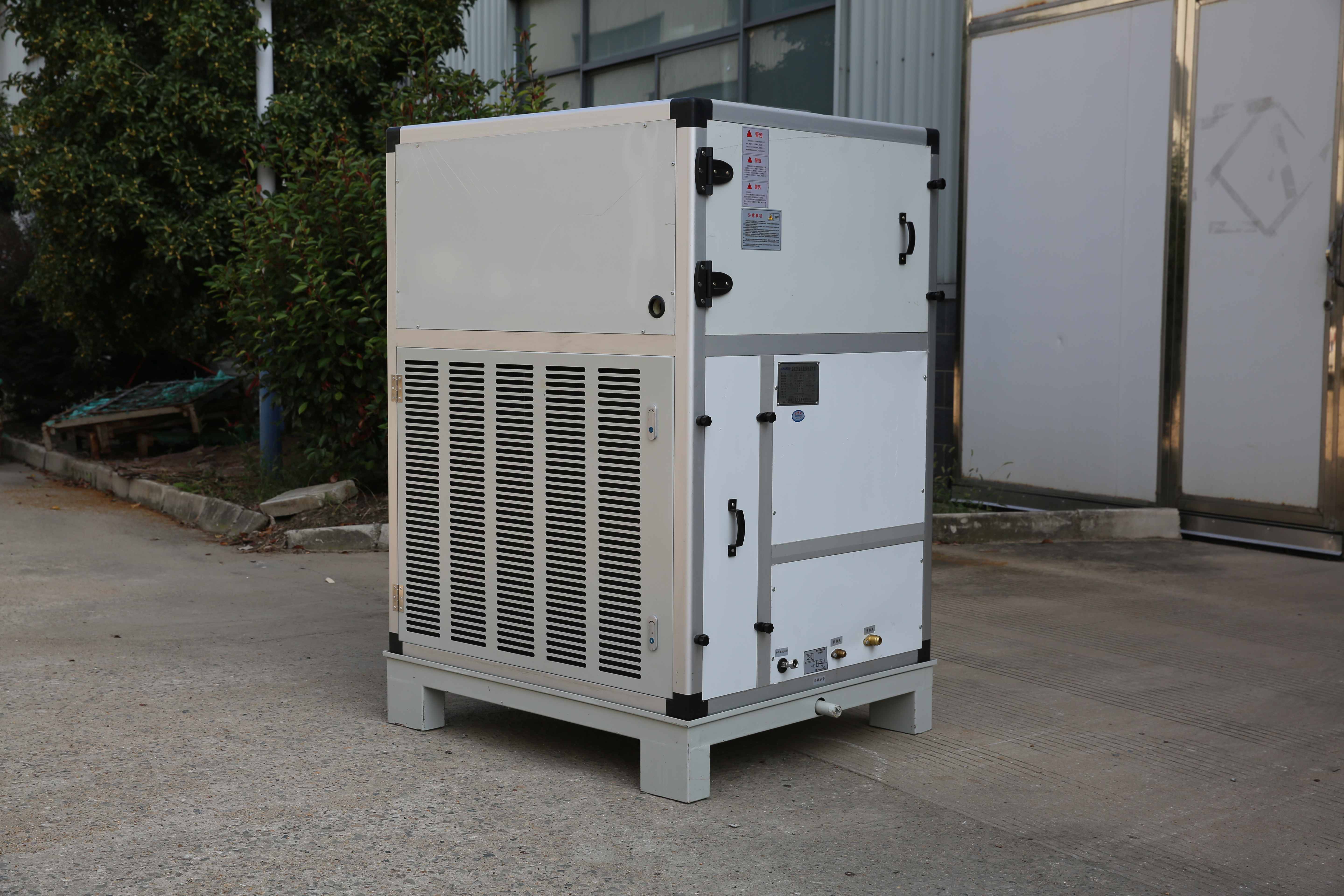
The cooling output of a direct expansion (DX) air handler hinges on several interacting parts, but none more so than the compressor and the evaporator coil. The compressor's displacement and operating efficiency set the upper limit for refrigerant flow, which directly translates to how much heat the system can move. A scroll or rotary compressor with a variable-speed drive can modulate output to match partial loads, whereas a fixed-speed unit simply cycles on and off. Meanwhile, the evaporator coil's surface area, fin density, and row depth dictate how effectively that refrigerant flow absorbs heat from the air stream. An undersized coil will starve the compressor of proper superheat, leading to reduced capacity and potential liquid slugging, while an oversized coil can cause refrigerant to flood back without sufficient evaporation.
Beyond the compressor and coil, the expansion device plays a critical yet often overlooked role. A thermostatic expansion valve (TXV) or electronic expansion valve (EEV) regulates refrigerant flow into the evaporator based on suction superheat, keeping the coil fully wetted without overfeeding. If the valve is misadjusted or hunting, the evaporator's effective heat transfer area shrinks, dropping sensible and latent capacity. The condenser side also matters—airflow across the condenser coil and ambient temperature determine the head pressure and subcooling, which in turn affect the mass flow of refrigerant available to the evaporator. A dirty condenser or low condenser airflow pushes pressures up, reduces compressor efficiency, and can trip high-pressure safeties long before the evaporator reaches its rated output.
Finally, the blower assembly and refrigerant charge cannot be separated from the cooling equation. The supply fan must deliver the correct air volume across the evaporator; too little airflow lowers suction pressure and risks coil freezing, while too much airflow raises the leaving air temperature and reduces latent capacity. Refrigerant charge is equally non-negotiable—an overcharged system backs liquid into the condenser and elevates head pressure, whereas an undercharged system starves the evaporator, lowering suction pressure and superheat. Proper commissioning with a target subcooling and superheat range ensures the compressor, coils, expansion device, and blower work together at the manufacturer's rated performance point, delivering the expected cooling output under design conditions.
Sizing DX units to match part-load conditions without waste
Most direct expansion systems are selected at peak load, then forced to cycle or throttle through most of their operating hours. A unit that short-cycles at 30% of rated capacity wastes energy through frequent compressor starts, poor latent removal, and unstable discharge air temperatures. The fix starts with demand profiling: logging sensible and latent loads across a typical week reveals the real operating envelope, not just the design-day spike. From there, compressors can be staged, variable speed drives applied, or multiple smaller circuits used so that the system modulates down to the part-load point where it actually lives.
Part-load efficiency on DX equipment is not a single number on a spec sheet. It emerges from how evaporator coil surface area, compressor unloading strategy, and airflow control interact. A unit with a single large scroll compressor matched to a tiny coil might show good full-load EER, but at 40% load it struggles with coil frosting, refrigerant migration, and oil return problems. By contrast, a tandem or triple compressor arrangement with independent circuits allows each circuit to operate near its sweet spot longer, cutting waste without adding controls complexity. The key is matching the unit’s modulation steps to the building’s actual load profile, not just the peak.
Oversizing DX equipment is often treated as a safety factor, but in practice it becomes a permanent operating penalty. A 20% oversize on a rooftop unit can increase annual energy use by 10–15% simply because the compressor cycles on and off more often and runs fewer hours at steady state. Instead of adding a size buffer, designers can specify units with digital scroll compressors, hot gas bypass only as a last resort, or multiple independent refrigerant circuits that allow capacity steps of 25%, 50%, 75%, and 100%. This way, at any given hour the active capacity sits close to the load, and waste from short-cycling or excessive humidity swings is avoided without brute-force oversizing.
Operational adjustments that keep DX efficiency high in humid climates
Maintaining direct expansion (DX) system efficiency in humid climates requires shifting focus from temperature alone to managing latent load. Raising the evaporator coil temperature slightly above the dew point reduces moisture removal per unit of cooling, which might seem counterproductive, but it actually improves the sensible heat ratio and prevents the compressor from working harder to condense excessive water vapor. This adjustment keeps the coil drier and lowers the risk of frost or mold buildup, allowing the system to deliver more useful cooling without wasting energy on unnecessary dehumidification.
Regular maintenance becomes even more critical when humidity is high. Dirty filters and coils restrict airflow, forcing the DX unit to run longer and pull more moisture from the air, which drives up energy use. Cleaning or replacing filters monthly, checking drain pans for algae or sludge, and verifying that condensate lines slope properly all prevent water accumulation that can corrode components or breed bacteria. Installing variable-speed compressors and fans also helps: they can ramp down during mild, muggy periods to remove humidity gradually rather than cycling on and off at full blast.
A more nuanced approach involves decoupling temperature and humidity control at the operational level. Instead of setting a fixed thermostat and hoping the DX unit handles both, use a dew point sensor to trigger cooling only when moisture levels exceed a set threshold. For spaces that need precise humidity control, a small reheat coil downstream of the evaporator can warm the air back to a comfortable temperature after deep dehumidification, avoiding the common cycle of overcooling followed by wasteful reheating. These adjustments keep the DX system running near its peak efficiency even when outdoor humidity soars.
Maintenance checks that catch DX refrigerant issues early
Instead of waiting for frozen coils or a dead compressor, techs can catch trouble early by checking subcooling and superheat together. These two numbers don’t lie—when both drift outside the manufacturer’s range, it usually means the charge is off or the metering device is struggling. A quick check with a digital manifold beats guessing.
Another early warning sits right at the sight glass, but only on systems that still have one. Bubbles that don’t clear after the unit stabilizes point to low refrigerant or a restricted filter-drier. Combine that with a ten-minute temperature split across the evaporator and you’ll know if the coil is starving before frost shows up.
Leak detection has moved beyond soap bubbles. An electronic sniffer or ultrasonic tool can catch pinhole leaks at flare fittings and Schrader cores while the system is still holding pressure. Tracking compressor current draw alongside these checks also reveals when a low charge is forcing the compressor to work harder than it should.
Comparing direct expansion and chilled water for mid-sized facilities
For mid-sized facilities—think branch offices, smaller schools, or light manufacturing plants—cooling loads tend to sit in an awkward middle ground. Direct expansion (DX) units look attractive because they ship as packaged or split systems with lower upfront cost and simpler piping. But once a building spreads across multiple zones or needs simultaneous heating and cooling, a DX approach often forces you to install many independent circuits, which can drive up maintenance points and reduce part-load efficiency. A chilled water plant, by contrast, centralizes refrigeration and lets a handful of chillers serve dozens of air handlers. That centralization usually pays off when floor area, occupancy schedules, or internal gains vary from zone to zone.
Energy performance over a typical cooling season also separates these two options. DX systems, especially those with fixed-speed compressors, tend to cycle frequently at partial load—common in spring and fall—which wastes energy and swings humidity. Chilled water systems can modulate capacity more smoothly, and they open the door to water-side economizers, variable primary flow, or even thermal storage if the facility has a demand-charge problem. On the maintenance side, DX refrigerant leaks are harder to pinpoint and repairs often require certified technicians on every unit. A chiller plant concentrates the refrigerant circuits in one mechanical room, which can simplify leak checks and oil management, though it adds pumps, water treatment, and tower maintenance to the workload.
Space and lifecycle flexibility matter for mid-sized buildings that expect growth or tenant changes. DX equipment generally spreads across rooftops, mechanical closets, or outdoor pads, which can conflict with architectural goals or limit future roof access. Chilled water needs a dedicated plant room and larger pipes, but once the piping network exists, adding or relocating air handlers becomes much less disruptive. For a mid-sized facility with a 10- to 20-year horizon, the higher first cost of chilled water may be justified if the building is likely to be renovated or expanded; for a simpler, single-tenant box with moderate cooling density, DX remains a perfectly rational choice.
FAQ
They combine the air handling and refrigerant coil into one system, which simplifies installation and gives facilities tighter control over supply air temperature without relying on chilled water infrastructure.
The guide walks through coil sizing, compressor staging, airflow ranges, and control sequences so managers can match equipment to actual load profiles instead of buying oversized units.
Spaces with fluctuating occupancy, limited mechanical room space, or no central chilled water plant benefit the most because DX AHUs can respond quickly and operate independently.
Check the coil face velocity, refrigerant circuiting, compressor turn-down capability, and supply air reset options to avoid issues like coil frosting or short cycling.
It provides practical adjustments such as fan speed tuning, coil cleaning schedules, refrigerant charge verification, and control loop recalibration that reduce energy waste without major retrofits.
Staging or variable capacity allows the unit to match cooling output to real-time demand, which prevents frequent on-off cycles and keeps humidity levels more stable.
It includes a concise preventive maintenance roadmap covering filter changes, coil inspection, drain pan hygiene, belt tension, and refrigerant leak checks to extend equipment life.
Instead of listing specs in isolation, the guide connects each design choice to actual operating costs, airflow behavior, and long-term serviceability, which helps buyers avoid common oversizing mistakes.
Conclusion
Direct expansion air handling units make a lot of sense for buildings with limited rooftop space, largely because they skip the separate chiller plant and the bulky piping that goes with it. The guide digs into the parts that actually set cooling output—compressor capacity, evaporator coil surface, and airflow across the coil—and stresses that matching these components matters more than a nominal tonnage label. A recurring theme is part-load sizing: oversizing leads to short cycling, weak moisture removal, and wasted energy, so the recommended method relies on real load profiles instead of adding arbitrary safety margins.
For humid climates, the operational advice centers on keeping latent capacity up without spiking power draw. That might mean staging compressors, trimming airflow across the coil, or using reheat only when genuinely needed. Maintenance gets framed as an early detection routine—checking superheat, subcooling, filter-drier pressure drop, and signs of oil residue can reveal refrigerant leaks or non-condensables long before they tank performance. In the comparison for mid-sized facilities, direct expansion tends to win on first cost, footprint, and part-load efficiency when capital and mechanical space are tight, while chilled water still has the edge for larger plants staffed with full-time operators.
Contact Us
Contact Person: Crystal
Email: [email protected]
Tel/WhatsApp: 8613524235353
Website: https://www.airkohvac.com