

Ductile Iron Casting Original Manufacturer for High-Performance Industrial Parts
2026-09-20
For maintenance teams and engineers, a ductile iron part is only as reliable as the foundry that poured it. Zhaoyuqi isn't a reseller or a trading company—it's an original manufacturer dedicated to high-performance industrial castings, from heavy-duty housings to wear-resistant impellers. Every batch starts with carefully controlled melt chemistry and ends with rigorous inspection, so the parts that reach your floor behave the same at cycle 10,000 as they did at cycle one. In this article, we'll explore the real-world advantages of OEM ductile iron casting and show how Zhaoyuqi's process eliminates the weak links that often hide in cheaper supply chains.
Why Ductile Iron Outperforms Grey Iron in High-Load Gear Housings
Grey iron has long been a default choice for gear housings, but high-load applications expose its limitations quickly. The graphite flakes in grey iron act as internal stress risers, which can initiate cracks under cyclic loading or sudden torque spikes. Ductile iron, with its spheroidal graphite nodules, disrupts this failure path. The rounded inclusions distribute stress more evenly, allowing the material to tolerate higher tensile loads before yielding. This difference becomes critical in gear housings where misalignment, vibration, or overload conditions push the material beyond its static rating.
Beyond strength, ductile iron offers a practical advantage in fatigue resistance. Gear housings experience repeated loading and unloading as teeth mesh and shafts deflect. Grey iron's flake structure promotes crack propagation along graphite boundaries, shortening service life under pulsating stress. Ductile iron's nodular microstructure impedes crack growth by forcing the crack front to navigate around spheroids, effectively increasing the number of cycles to failure. Field data from heavy machinery transmissions show ductile iron housings lasting two to three times longer than grey iron equivalents under identical torque profiles.
Another overlooked factor is machinability after casting. While grey iron machines with a familiar crumbly chip, ductile iron's tougher matrix requires different cutting parameters, but it eliminates the risk of graphite-induced edge chipping at seal grooves or bearing bores. In high-load housings, where precision fits are non-negotiable, this translates to fewer scrapped parts and more consistent assembly tolerances. The switch to ductile iron is not merely a material upgrade; it changes how designers approach safety factors and maintenance intervals.
The Hidden Cost of Casting Porosity in Hydraulic Manifolds
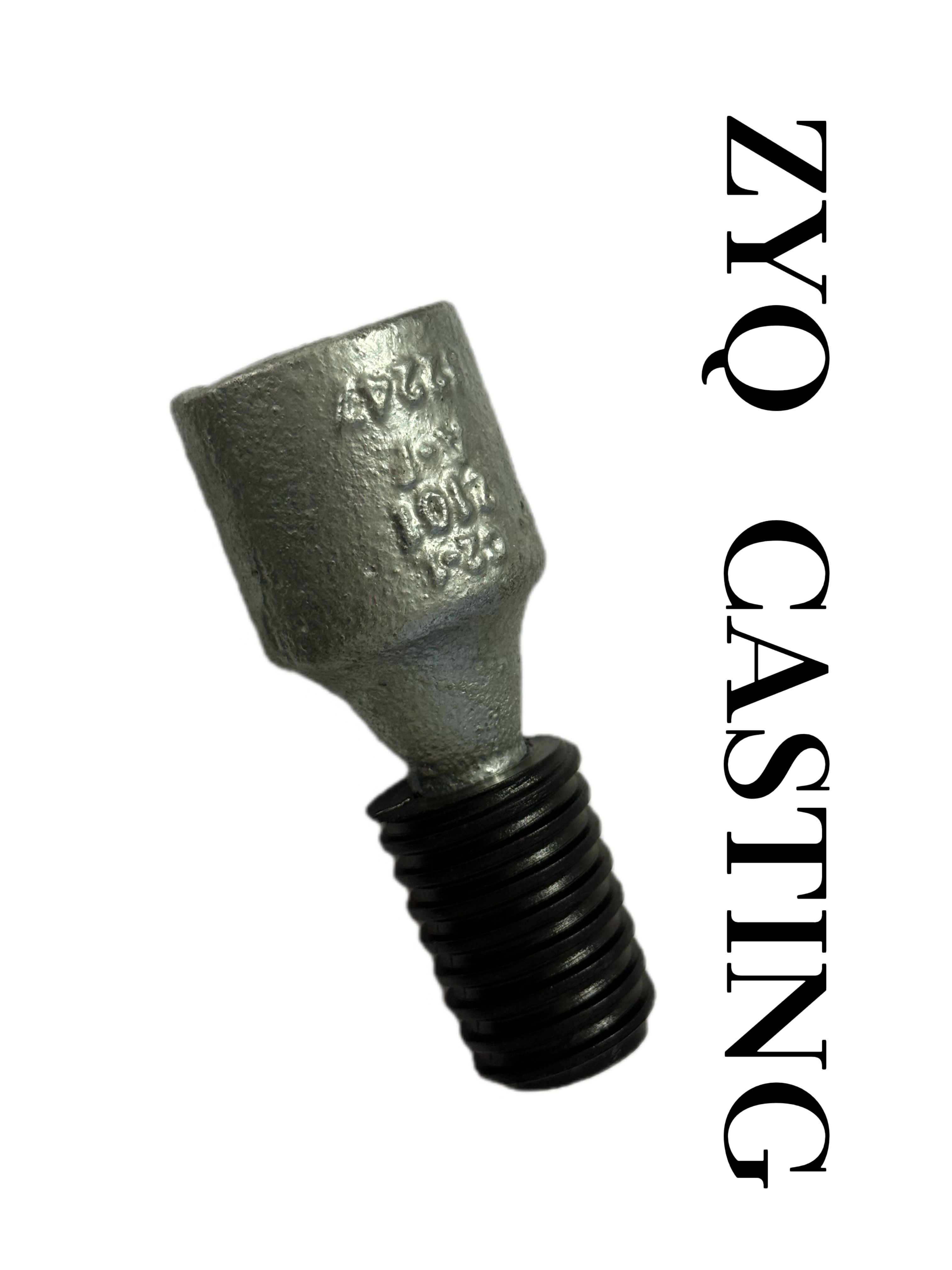
Porosity in cast hydraulic manifolds rarely announces itself. It hides in the walls of internal passages, waiting for pressure cycles to turn micro-voids into leak paths. When a manifold weeps fluid or loses pilot pressure, the diagnosis often points to seals or fittings first. The real culprit—a cluster of gas pockets formed during solidification—can go unnoticed for months, bleeding efficiency from the system while maintenance teams chase ghosts.
The financial drain is rarely a single dramatic failure. Instead, it shows up as slightly higher energy consumption from a pump compensating for internal leakage, or as premature wear on downstream components forced to operate at reduced pressure. Downtime for unscheduled manifold replacement, coupled with labor for troubleshooting and system flushing, quietly erodes margins. In mobile machinery, a porous manifold can strand equipment in the field, turning a component that costs a few hundred dollars into a logistical and reputational liability.
Addressing porosity upstream changes the economics. Switching to forgings or machined-from-bar stock eliminates the casting process where most voids originate, though it raises raw material cost. A more nuanced approach involves working with foundries on gating design and vacuum assistance, paired with non-destructive testing like CT scanning on critical batches. The upfront investment pales next to the long-term cost of chasing intermittent faults, replacing failed manifolds under warranty, and explaining to customers why a supposedly robust hydraulic system underperforms.
From CAD File to First Casting: What Actually Happens in the Foundry
The journey from a CAD file to the first metal casting involves far more than simply pressing “print.” Once the design lands in the foundry, the first step is usually a thorough review for castability. Engineers look at wall thickness, draft angles, and potential shrinkage zones, because what works in a digital model can behave very differently when poured as molten metal. This back-and-forth between the design team and the foundry often reveals small tweaks — a slight radius here, a rib there — that prevent costly defects later.
After the design is locked, patternmaking begins. Traditional wooden or urethane patterns are still common for low volumes, while higher runs may use metal tooling. Alongside the pattern, the foundry plans the gating and risering system: channels that guide the metal in and reservoirs that feed the casting as it cools and shrinks. For many parts, a simulation is run first to predict flow and solidification, allowing the foundry to shift gates or add chills before cutting any tooling.
Only then does the actual molding and pouring happen. Sand molds are rammed around the pattern, cores are set for internal cavities, and metal is melted to a precise chemistry and temperature. The first casting is rarely perfect — it’s a learning piece. Foundry technicians will section it, measure critical dimensions, and check for porosity. Adjustments may follow: a slight change in pouring temperature, a revised riser, or a new vent location. The goal of that first casting isn’t just a part; it’s a proven recipe that can be repeated reliably on the production floor.
How We Control Wall Thickness to ±0.5 mm Without Extra Machining
Getting wall thickness to hold within half a millimeter without a secondary operation comes down to front-loading the variables. We pull shrink data from each resin lot, then adjust the core pin geometry and cooling circuit layout in the mold design stage. That way the nominal wall is already biased to land where we want after the part cools, rather than chasing it later.
During sampling, we map thickness across the cavity with ultrasonic gauges and feed those readings back into the injection profile. By tweaking pack pressure, hold time, and gate freeze-off, we push excess material toward thin zones or pull it back from thick ones. The mold steel never gets touched; the process does the compensating.
For high-aspect-ratio or multi-cavity tools we use sequential valve gating and differential cooling temperatures to keep flow fronts balanced. Once the process is locked, we monitor cavity pressure curves on every shot. A drift of a few bar triggers an alert before the wall drifts out of tolerance, so corrections happen at the press, not on a mill.
Ductile Iron Myths That Lead to Over-Engineered Industrial Parts
Many design teams still treat ductile iron as if it were gray iron, assuming the material needs extra wall thickness to handle stress. That assumption often leads to parts that are heavier and more expensive than necessary. Ductile iron's nodular graphite structure gives it tensile and yield strengths closer to steel, which means standard engineering calculations can be applied without arbitrarily inflating safety factors.
Another common myth is that ductile iron parts are inherently full of internal defects, so designers add mass to compensate. Modern foundry controls, like inoculation and thermal analysis, produce consistent microstructures with predictable mechanical properties. Over-engineering based on outdated defect rates simply wastes material and increases machining time.
The real issue is that many engineers rely on decades-old data or rules of thumb that were meant for gray iron or low-quality castings. When you use current material specifications and realistic loading conditions, ductile iron often allows thinner sections and simpler geometries without sacrificing reliability. The result is a part that performs as required while costing less to produce.
A Field Failure That Changed How We Pour High-Pressure Valve Bodies
The call came on a Tuesday morning: a valve body rated for 6,000 psi had split along the flange during a routine hydrotest at a gas processing plant. The casting had passed every inspection we had at the time—visual, dye penetrant, even radiography on critical sections. But none of that caught the real problem. It wasn't a material defect; it was how we filled the mold.
After cutting the failed body into sections, the pattern was unmistakable. Shrinkage porosity had formed in the thick neck, right where the valve stem housing meets the body. Our old pouring system used a top gating setup that seemed efficient but let the molten metal cool unevenly. The last metal to enter the cavity was the hottest, and it ended up trapped in the heaviest section with no feed path. The result was micro-voids that grew into a crack under pressure, months after the part was installed.
We redesigned the rigging before the next pour. Instead of one top gate, we moved to a bottom-fill system with a ceramic foam filter and a feeder positioned directly over the thick neck. The pour rate dropped, but the solidification front now moved from thin sections toward the feeder, not away from it. The first batch after the change went through a full teardown—sectioning, micrographs, pressure cycling. No porosity, no cracks. That field failure cost us one customer's trust, but it taught us that high-pressure valve bodies don't forgive shortcuts in metal feeding.
FAQ
Ductile iron offers far higher tensile strength and impact resistance because its graphite forms as nodules rather than flakes. This gives it a degree of ductility that gray iron simply cannot match, so parts are less likely to crack under shock loads or cyclic stress.
Yes. We regularly cast complex shapes with cores, thin wall sections, and near-net profiles. Our foundry works from customer drawings or 3D models, and we adjust gating and risering to hold dimensional accuracy within the tolerances you specify.
The parts end up in hydraulic systems, agricultural machinery, construction equipment, gearboxes, pump housings, and railway components. Anywhere that combines high load, vibration, and long service life, ductile iron tends to be a strong candidate.
We melt in electric induction furnaces and use spectrometer checks before every pour. After casting, tensile bars from the same heat are tested for yield strength, elongation, and hardness. This gives a traceable record for each batch.
Beyond fettling and shot blasting, we can machine as-cast parts to final dimensions, apply anti-corrosion coatings, or arrange heat treatment such as normalizing or annealing. You can receive parts ready for assembly.
Yes. We can produce single prototypes using 3D printed patterns or soft tooling, then move to automated molding lines for runs of thousands per month. The transition is straightforward because we keep the same metallurgical controls in place.
Our quality system is aligned with major international standards for automotive and industrial supply chains. We can supply material certificates, dimensional inspection reports, and PPAP documentation when the project requires it.
Conclusion
As an original manufacturer focused on ductile iron castings for high-performance industrial parts, we have learned that material choice and process control determine whether a component survives its first year in service. Ductile iron consistently outperforms grey iron in high-load gear housings because its nodular graphite structure resists crack propagation under cyclic stress, while grey iron's flake graphite acts as a stress riser. The hidden penalty of casting porosity in hydraulic manifolds is often found only after machining—scrapped parts, delayed assemblies, and field leaks that erode trust. Our foundry's route from CAD file to first casting is not a black box; every gate, riser, and chill is placed after solidification simulation, not guesswork.
Controlling wall thickness to ±0.5 mm without extra machining comes from rigid pattern-making, monitored mold hardness, and controlled pouring temperature—not from overbuilding stock. Too many buyers still hold ductile iron myths, such as assuming higher elongation always requires more nickel or that thicker sections automatically guarantee strength. Those myths lead to over-engineered parts, higher costs, and longer lead times. One field failure in a high-pressure valve body changed how we pour: we now use bottom-gated filling, ceramic foam filters, and stricter inoculation timing to prevent oxide films and micro-shrinkage. For OEMs that need reliable castings under pressure, the difference is not in the brochure—it is in the gating system, the melt chemistry, and the discipline to reject a borderline heat.
Contact Us
Contact Person: Nico Yin
Email: [email protected]
Tel/WhatsApp: 8618561567088
Website: https://www.ductileironparts.com/