

Executive Office Chair Company Reveals the Top Features to Look for in a Boardroom Chair
2026-10-21
When it comes to boardroom seating, most decision-makers still rank leather and looks over long-term comfort. But the team at OFCJNS, a leading executive office chair company, says that misconception is costing companies more than just back pain. In a recent breakdown of their flagship boardroom collection, they revealed the often-overlooked details that separate a genuinely supportive chair from a conference-table placeholder. From hidden lumbar mechanisms to the way armrests influence negotiation posture, the findings challenge conventional wisdom. Here are the top features to look for before your next boardroom upgrade.
The Caster Test That Reveals Chair Quality in Seconds
A chair can look great in photos, but the moment you roll it across a hard floor, the truth comes out. The caster test takes about five seconds: stand behind the chair, give it a gentle push, and watch how the wheels behave. If it glides straight without wobble, hum, or hesitation, the base and casters are working as a unit. If it veers left, rattles, or makes a plasticky scrape, that chair will annoy you daily.
Press your thumbnail into one of the wheels. A quality chair uses soft polyurethane casters that yield slightly and spring back, leaving no permanent mark. They roll quietly on tile, wood, and low-pile carpet, and they don't scratch the floor. Cheap chairs use hard nylon or polypropylene wheels that feel slick and brittle; under weight they pick up every bit of grit and turn every movement into a grinding soundtrack.
The logic is simple: casters are not a place where good manufacturers save money. If the wheels are solid, the chair almost always has a reinforced base, proper tolerances, and a cylinder that won't sag after three months. If the casters feel like afterthoughts, the rest of the chair follows the same pattern. Run the test once, and you'll never buy a bad chair again.
Why Armrest Height Matters More Than Lumbar Support in a Boardroom
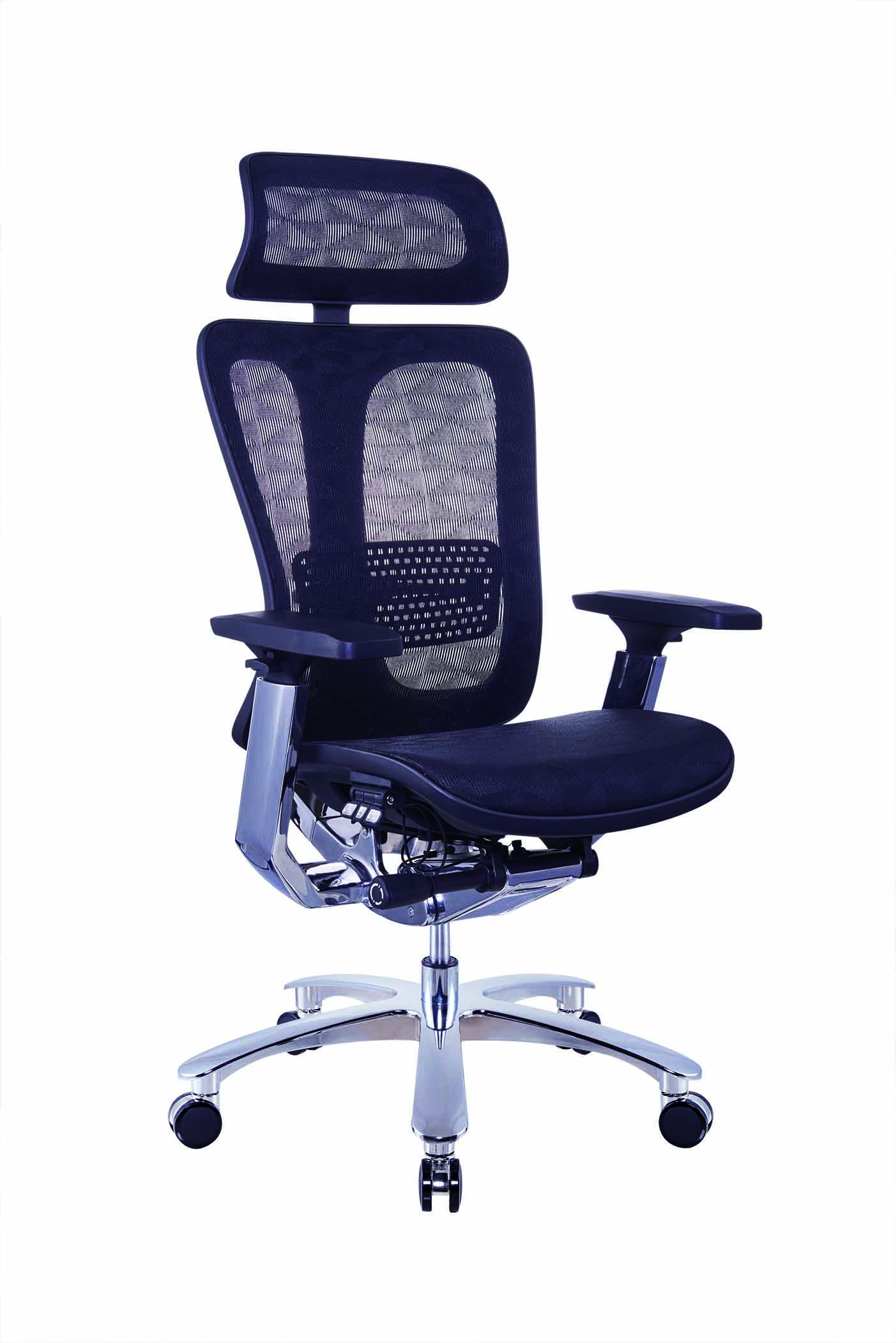
In a boardroom, your command of the table starts with where your elbows land. Armrest height dictates whether your forearms rest naturally on the surface or hover awkwardly above it. Set too low, and you end up leaning into the table just to keep your hands visible, which reads as anxiety rather than authority. Set too high, and your shoulders bunch up, making every gesture look constrained. Lumbar support never enters this equation because it only operates when you lean back—something you rarely do while making a point.
There's also the practical side of reaching for papers, a laptop, or a clicker. When armrests are at the right height, your hands stay in the same plane as the table, so small movements feel effortless and controlled. When they're off, you waste attention on readjusting your posture instead of tracking the room. Over a long negotiation, that constant micro-correction drains more energy than a stiff lower back ever will. You can shift in your seat to ease lumbar tension, but you can't escape a bad armrest height without changing how you sit—and that changes how you're perceived.
The Leather Grade Most Executives Misread—Until It Peels
Most executives assume a smooth, uniform surface means top-tier leather. They run a hand over the chair in the showroom, hear the word "genuine," and sign the purchase order. Months later, the surface starts lifting at the seams. That is the moment the misread becomes visible.
The grade in question is bonded leather. It carries a convincing topcoat of polyurethane, often embossed with a grain pattern that photographs well and feels slick in a boardroom. But beneath that thin layer is a composite of shredded leather scraps and adhesive. With daily use, heat and friction break the bond, and the surface peels away in flakes rather than wearing like full-grain or top-grain leather.
Executives who have been through this once start reading labels differently. They look for the word "top-grain" or "full-grain" and ask about the hide's origin. The lesson is not that genuine leather is fake—it is that the term "genuine leather" is a grade, not a guarantee. The real tell is how the material ages. If it peels instead of developing a patina, the grade was misread from the start.
A Recline Tension Setting That Keeps You Alert (Not Just Comfortable)
Most chairs treat recline tension as a simple comfort dial—loosen it to rock back, tighten it to sit rigid. But this one is tuned differently. The resistance doesn't just hold your weight; it subtly engages your core and keeps your spine from collapsing into a lazy slump. You can lean back without drifting off, because the chair pushes back just enough to keep your eyes level with the screen and your mind in the room.
Think about the difference between lounging on a sofa and sitting in the driver's seat of a car. One invites you to check out; the other keeps you present without strain. That's the feeling here. The recline mechanism is calibrated so that even in a tilted position, your hips stay open and your shoulders don't round forward. You get the relief of changing posture without losing the thread of what you're doing.
It's a small detail that changes how long you can work. Instead of fighting the chair or melting into it, you find a middle zone where movement is easy but alertness doesn't fade. The tension isn't about locking you in place—it's about giving you just enough structure to stay sharp while your body relaxes.
The Seat Depth Number That Prevents Numb Legs After Hour Two
Most numbness issues after hour two aren't about cushion firmness but about a single overlooked measurement: the distance between the back of your knee and the front edge of the seat pan. When that gap disappears, the edge presses into the soft tissue behind your thigh, restricting blood flow and pinching nerves. A good starting point is roughly two to three finger widths, or about an inch and a half to two inches of clearance, but the number that matters is the one you can measure while sitting with your hips fully back.
To find your own seat depth number, sit with your lower back touching the backrest and your feet flat on the floor. Slide your fingers between the front edge of the chair and the back of your knee. If you can't fit at least two fingers without squeezing, the seat is too deep. If there's enough room for an entire fist, it's too shallow and your thighs are doing extra work to keep you stable. Many chairs let you slide the seat pan forward or back; on fixed chairs, a slim wedge cushion behind your lower back can effectively shorten the depth without changing the chair itself.
The two-hour mark is a useful stress test because that's when postural muscles start to fatigue and subtle pressure becomes obvious pain or tingling. If your legs only go numb after you've been sitting for a while, you're probably very close to the right depth but still need to shift the seat pan a half inch or so. The goal isn't a universal number printed on a spec sheet. It's a personal clearance that lets you sit for long stretches without constantly thinking about your legs.
How Chair Weight Reveals the Truth About Build Materials
Pick up a chair and the first thing your body registers is weight. That sensation is more than just a number on a shipping label—it hints at what the frame is really made of. A solid oak chair will sit noticeably heavier in your hands than a lookalike built from particleboard with a wood veneer, because the density of the materials differs by a wide margin.
But weight isn't a shortcut to quality. Some budget chairs hide reinforced steel plates or thick MDF blocks inside hollow plastic shells just to feel more substantial. On the other end, a well-engineered aluminum chair can be light yet far stronger than a cast-iron style copy that weighs twice as much. The real signal comes from where the mass is concentrated: solid wood and thick-gauge steel tend to carry weight evenly through the seat, back, and legs, while filler weights often sit dead in the base.
Tap a chair and then lift it. A dull, solid thud paired with a balanced heft usually points to dense hardwood or heavy-gauge metal. A hollow, plasticky ring that still feels oddly heavy might mean you're holding a shell with concealed weights. Once you start connecting weight to sound and texture, material shortcuts become harder to hide.
FAQ
Adjustable lumbar depth and seat angle matter more than plush cushioning. You need the chair to follow the curve of your spine without forcing one posture, and a seat edge that doesn't press into the back of your thighs.
Check the base and mechanism before the upholstery. A heavy-duty aluminum base and a smooth, quiet tilt mechanism usually indicate a chair built for years of daily use. Loose plastic covers or squeaky tension knobs are red flags.
Boardroom chairs are designed for shorter but high-stakes sessions, so they lean more on upright posture and refined looks. Regular task chairs often favor all-day adjustability with a more casual silhouette.
Not necessarily. Leather looks sharp and wipes clean easily, but it can get hot during long meetings. A high-grade fabric or ventilated faux leather can feel better if your boardroom tends to run warm.
Armrests should be low enough to slide under the table but padded enough to support your forearms when you lean back. Fixed armrests are fine if the table height is consistent; adjustable ones add flexibility for different body types.
Yes, if it has a synchro-tilt mechanism that lets you recline slightly while keeping your feet on the floor. A chair that locks you bolt upright will tire your back faster than one that moves with you.
Aim for a seat height that lets your feet rest flat and your knees bend at about 90 degrees. Depth should leave two to four fingers of space between the seat edge and the back of your knees to avoid pressure points.
More important than most people think. A wider base and a weight rating above 300 pounds reduce the risk of tipping and make the chair feel stable when you lean to one side. Check the spec sheet instead of guessing.
Conclusion
Shopping for a boardroom chair means wading through a sea of marketing claims, but the real tells are far more physical. A quick caster test—rolling the chair across the room and then spinning each wheel by hand—reveals whether the base will glide or grind after months of use. Armrest height, often overlooked, matters more than lumbar support in a room where people lean forward to talk: if the arms can't adjust to desk height, shoulders hunch and debate turns into discomfort. Leather grade is another silent giveaway; many executives mistake corrected grain for full grain, only to watch the surface peel within a year. Top-grain or aniline hides, while pricier, hold their texture under daily pressure.
Recline tension isn't just about leaning back—it's about staying sharp. A chair that locks you into one angle or fights your movements forces micro-adjustments that drain energy over a three-hour meeting. The right tension lets you rock slightly without losing eye contact or posture. Seat depth is equally critical: if the front edge presses against the back of your knees, numbness sets in by hour two. Look for a depth that lets you sit fully back with two to three fingers of space behind the knee. Finally, chair weight exposes build quality. A boardroom chair that feels suspiciously light is often hiding hollow plastic where there should be steel or dense hardwood. Lift it, tip it, listen for creaks—materials don't lie.
Contact Us
Contact Person: Diff Wang
Email: [email protected]
Tel/WhatsApp: +8613650281199
Website: https://www.ofcmeshchair.com/