

How 4G Core Network Companies Are Powering the Future of Mobile Connectivity
2026-05-29
As mobile networks evolve toward 5G-Advanced and beyond, the 4G core remains a critical anchor for global connectivity. At the heart of this evolution, IPLOOK has been quietly redefining what a core network can do—enabling operators to stretch their investments, bridge legacy and cloud-native architectures, and deliver seamless user experiences. Here's how innovative 4G core solutions are shaping the next chapter of mobile communication.
The Quiet Evolution Behind Every Mobile Connection
You barely notice it anymore. Your phone signals, data flows, and calls connect without a second thought. But behind that instant link lies a cascade of quiet advancements—signal processing refinements, smarter handoffs between towers, and power-saving protocols that stretch battery life. None of it screams for attention, yet every piece has been obsessively reworked in the background for years.
What’s fascinating is how this evolution sidesteps flashy headlines. Antenna designs shrink while managing more bands; interference cancellation becomes so good you forget it exists. Even the tactile feedback of a crystal-clear voice call is actually a symphony of noise suppression and adaptive bitrate tweaks, all happening in real time. It’s a silent march of engineering—persistent, unglamorous, and absolutely essential.
The result feels like magic only because the complexity is hidden. From densely packed urban cells to rural macros, the network listens and adjusts without a flicker. These under-the-hood refinements don’t make keynote speeches, but they’re the reason you can roam almost anywhere and still assume connectivity is a given. That assumption is perhaps the greatest compliment to the relentless, invisible work being done.
Why 4G Core Infrastructure Still Matters in a 5G World
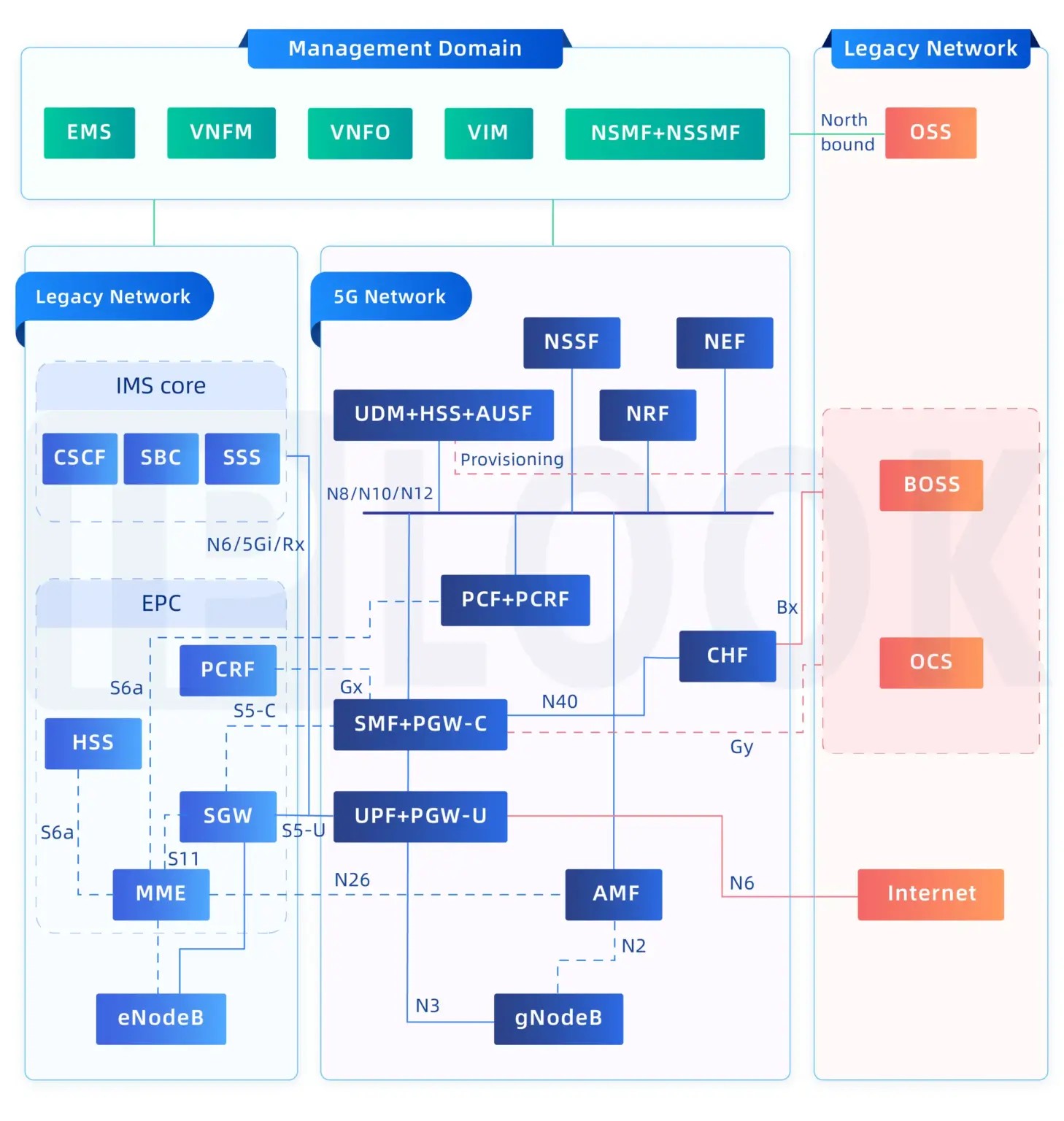
Despite the rapid rollout of 5G networks, the 4G core—specifically the Evolved Packet Core (EPC)—remains a critical backbone for global connectivity. Many operators have adopted non-standalone 5G architectures, which rely entirely on existing 4G infrastructure for control functions, authentication, and seamless mobility. This means that even when a device shows a 5G icon, it often depends on the 4G core to establish and manage sessions. Without a robust and well-maintained EPC, operators cannot guarantee the fallback coverage and reliability that subscribers expect, especially in regions where 5G coverage is still spotty or limited to dense urban areas.
Beyond acting as a lifeline for early 5G rollouts, 4G core infrastructure continues to serve a vast number of IoT and M2M deployments that simply do not require 5G’s high throughput or low latency. Millions of sensors, trackers, and industrial modules operate on LTE-M or NB-IoT, and these technologies are deeply intertwined with the 4G core. Ripping out or neglecting this infrastructure would disrupt essential services like smart metering, fleet management, and agricultural monitoring. The longevity of these use cases ensures that the 4G core will remain not just relevant but essential for years to come, long after 5G becomes commonplace in smartphones.
Operators also face the practical challenge of amortizing heavy investments made in 4G equipment. Building a nationwide 5G standalone core is capital-intensive and time-consuming, while the existing 4G network continues to generate steady revenue from voice, data, and enterprise services. Rather than viewing it as a sunset technology, forward-looking providers are using virtualization and software upgrades to modernize their EPCs, making them more agile and interoperable with emerging 5G functions. In this hybrid landscape, the 4G core isn’t a relic—it’s the stable foundation that makes the transition to 5G possible without jeopardizing profitability or user experience.
How Network Providers Are Rethinking Data Delivery
For years, the playbook was simple: push more data through fatter pipes. But as real-time applications multiply and user expectations harden, providers are shifting from brute-force capacity upgrades to intelligent traffic orchestration. Edge computing nodes are springing up in unexpected places—think cell towers retrofitted with processing power—so that latency-sensitive tasks like multiplayer gaming or augmented reality overlays happen closer to the user, not in some distant hyperscale data center. It’s less about speed for speed’s sake and more about carving out customized pathways that match the personality of the data itself.
Another quiet revolution is the move toward dynamic service chains. Instead of treating all packets equally, carriers now can spin up virtualized network functions on the fly—firewall here, transcoder there—stitched together for a specific app session, then torn down. This fluidity lets them sell “burstable” slices of the network to content distributors during a live event, or guarantee a clean, low-jitter lane for a surgeon’s remote console. It’s a departure from one-size-fits-all delivery, and early adopters are already reporting fewer midnight pager alerts.
Unseen Forces Driving Tomorrow’s Mobile Landscape
The mobile world rarely shifts because of a single breakthrough that makes headlines. Instead, it’s the quiet, almost invisible forces—shifts in how chips handle ambient data, new battery chemistries that don’t make it into spec sheets, and the way antennas learn to cooperate in crowded airspace—that are reshaping what our devices will do next. These underlying currents aren’t about faster downloads or shinier screens; they’re about making the phone feel like a natural extension of your surroundings, anticipating context rather than just responding to commands.
Consider the dance between edge computing and on-device intelligence. It’s not a battle between cloud and local processing, but a seamless negotiation where tasks are sliced and routed in microseconds based on latency, power draw, and even thermal conditions. The real magic happens when your phone offloads a slice of an AI inference to a nearby access point, then pulls it back when you step into a basement—all without a stutter. This unseen orchestration is what will make future apps feel intuitive, almost telepathic, while keeping your data from ever leaving a trusted circle of devices.
And then there’s the ghost in the machine: the evolution of spectrum management. We’re moving past the static licensing of frequencies toward dynamic spectrum sharing that lets mobile signals breathe in real time, adapting to interference and demand like a living ecosystem. Combined with advances in ambient backscatter communication—where devices talk by reflecting existing radio waves—the mobile landscape of tomorrow won’t just be about connecting people; it will be an invisible mesh where everything from street sensors to wearable patches finds a voice, without adding to the noise.
The Core Network’s Role in Smarter Connectivity
As digital demands intensify, the core network has moved from being a simple routing hub to an intelligent orchestrator of connectivity. It now actively shapes how data moves, prioritizing mission-critical traffic while maintaining seamless handovers between different access technologies. Without this silent coordination, the always-responsive digital experiences we take for granted would quickly unravel into lag and disarray.
Much more than a back-end utility, the modern core network applies context-aware logic that adapts in real time. It determines which data streams need minimal latency, which can be paused during congestion, and even how devices should authenticate without cumbersome re-checks. This on-the-fly decision-making enables everything from autonomous vehicle communications to immersive augmented reality, all sharing the same underlying infrastructure without stepping on each other's toes.
Looking ahead, the core's role will further evolve into an anticipatory brain for connectivity. It will learn traffic patterns, predict resource surges before they happen, and autonomously reconfigure network slices to maintain quality. In a world of billions of interconnected things, the difference between a functional network and a truly effortless one lies in how intelligently the core can perceive, decide, and act.
Building Bridges Between Legacy Systems and Next-Gen Demands
When the tried-and-true mainframe that’s been running inventory for two decades needs to feed real-time data into a sleek mobile app, engineering teams don’t have the luxury of starting over. The art lies in creating thin abstraction layers that wrap older service interfaces in lightweight APIs, allowing the core logic to remain untouched while stretching its reach toward modern consumers. It’s less about replacing the foundation and more about teaching an old workhorse new tricks—adding event-driven hooks and gradual schema translations that keep both sides talking.
Surprisingly often, the friction isn’t in the technology but in the mental models. Developers who cut their teeth on cloud-native microservices might see monolithic COBOL routines as immutable block boxes, while veterans steeped in on-prem reliability can view containerized deployments as reckless toys. Building a bridge here means carving out shared ownership: embedding a Rust or Go “sidecar” process next to the legacy stack so that younger engineers feel hands-on comfort, and older systems gain incremental observability. The bridge becomes a living, maintained buffer rather than a one-off connector script that rots in six months.
Practical patterns emerge when you stop treating legacy as a liability and start seeing it as a hardened persistence layer with strange but proven business rules. Wrapping a decades-old stored procedure inside a GraphQL resolver, for instance, lets mobile clients query exactly what they need without forcing a rewrite of the procedure itself. The trick is to enforce strict contracts—snapshot testing the outputs, versioning the new API, and logging every translation—so that when next-gen demands inevitably evolve again, the bridge can be adapted without touching either endpoint directly.
FAQ
These companies are the backbone of modern mobile networks, ensuring that data travels reliably between devices and the internet. Even as 5G rolls out, 4G core infrastructure remains critical for widespread coverage and supporting billions of IoT devices that don't need ultra-high speeds.
5G networks often rely on the 4G core for initial access and fallback connectivity. Many devices and services still use 4G, and the core network's proven reliability makes it a key part of seamless transitions between network generations.
They continuously upgrade their platforms to handle virtualized functions and edge computing, which paves the way for new applications like autonomous vehicles and smart cities without losing the stability of existing networks.
When you stream a video or use navigation apps, the 4G core manages the data flow, prioritizing traffic to prevent buffering and drops. It's the unsung hero that keeps your connection smooth even in crowded areas.
They must scale capacity while maintaining low latency and high security. Integrating cloud-native architectures into legacy systems is complex, but it's essential for handling tomorrow's data explosion.
Industries like logistics and agriculture use 4G-connected sensors for real-time tracking and automation. The core network ensures reliable communication across vast areas where 5G coverage is still thin.
They will focus on network slicing and AI-driven optimization, making 4G more efficient while coexisting with 5G. Their role is shifting from pure connectivity to enabling intelligent, programmable networks.
Conclusion
The steady hum of the 4G core has become so embedded in daily life that its evolution often passes unnoticed. Yet behind every app notification, video call, or cloud sync lies a sophisticated infrastructure quietly adapting to rising demands. Far from being a fading technology, the 4G core remains the backbone of global connectivity—even as 5G steals the spotlight. It handles the vast majority of today's mobile traffic, and its architectural principles are being refined to support hybrid networks where 4G and 5G coexist. Network providers aren't simply maintaining this older framework; they're rethinking how data flows through it, introducing virtualization and edge computing to push intelligence closer to users. This quiet transformation is turning the 4G core into a flexible, future-ready platform that underpins the seamless experiences people expect.
This hidden engine is also bridging two worlds: legacy systems that still serve billions and the ambitious promises of next-generation demands. Rather than a forklift upgrade, the industry is weaving 4G and 5G together into a single, smarter fabric. Core network companies are embedding advanced policy controls, network slicing concepts, and AI-driven optimizations directly into the evolved packet core, allowing operators to tailor connectivity for diverse applications—from massive IoT to ultra-reliable industrial links. It’s a delicate dance of evolution, ensuring that yesterday’s investments don’t become roadblocks but rather stepping stones. By infusing the 4G core with cloud-native agility, these companies are laying the unseen groundwork for tomorrow’s mobile landscape, where connectivity is intelligent, adaptive, and virtually invisible—delivering on the promise of a world where everything from autonomous systems to simple voice calls coexists without friction.
Contact Us
Contact Person: Shimmy
Email: [email protected]
Tel/WhatsApp: 85253392231
Website: https://www.iplook.com