

Hydraulic Rotary Union Company Innovations for Industrial Fluid Transfer
2026-07-12
In the world of industrial fluid transfer, even the smallest leak can bring operations to a grinding halt. That's why the innovations coming out of MOFLON are turning heads. Their advanced rotary unions are redefining reliability and efficiency, making critical connections smarter than ever before. Let’s explore the breakthroughs that are shaping the future of fluid handling.
Redefining Fluid Transfer with Advanced Rotary Union Engineering
Transferring fluids between stationary and rotating machinery has long been a compromise between performance and durability. Conventional rotary unions often struggle with leakage, pressure drops, and thermal limitations, forcing engineers to accept regular maintenance as a necessary evil. Advanced engineering now dismantles that trade-off. By rethinking seal geometries, flow path dynamics, and material pairings from the ground up, modern rotary unions achieve a level of reliability that makes fluid transfer nearly invisible in the overall system—precisely when uptime and process integrity matter most.
The shift starts with abandoning one-size-fits-all designs. Through computational fluid dynamics and finite element analysis, each union is tailored to its specific media, speed, and pressure envelope. Instead of a generic cartridge seal, we incorporate non-contacting lift-off faces or multi-stage labyrinth arrangements that adapt under load. Ceramic and engineered polymer composites replace brittle carbons and heat-sensitive elastomers, widening operational windows without sacrificing chemical compatibility. Even seemingly minor details—surface finishes on sealing faces, channel geometry within the rotor—are scrutinized to avoid cavitation and minimize turbulence. The result is fluid transfer that maintains precise pressure and temperature profiles even at high rotational speeds.
Out in the field, this redefinition translates into systems that don’t follow typical maintenance calendars. Centrally fed rotary joints in printing presses now hold tension and register without drift; coolant unions in high-speed spindles keep heat in check without spitting or misting; and hydraulic swivels on offshore equipment endure salt spray and cyclic loading without seeping. Engineers no longer design around the rotary union—they design with it, integrating its capabilities into the very heart of the machine. Advanced rotary union engineering turns fluid transfer from a potential bottleneck into a transparent, almost forgettable link in the chain.
Precision-Engineered Seals for Leak-Free Industrial Performance
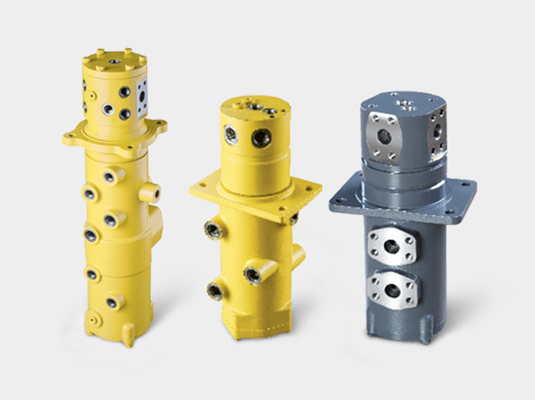
Every industrial operation that handles fluids or gases wrestles with a silent adversary: leakage. It erodes efficiency, contaminates products, and drives up maintenance costs. Precision-engineered seals turn this constant threat into a controlled variable. By combining exacting dimensional tolerances with materials science, these seals create interfaces that accommodate thermal cycling, pressure spikes, and chemical attack without compromising integrity. The result is a predictable barrier that keeps processes sealed, even when operating conditions drift from design ideals.
What sets advanced sealing solutions apart isn't just the choice of PTFE, elastomer, or metal—it's how those materials are shaped to match the machinery's heartbeat. A properly designed seal profile, whether a radial lip or a face-sealing geometry, manages microscopic deformations under load to maintain continuous contact. Surface finishes on mating components are treated as an integral part of the seal system, reducing wear and preventing seepage paths that standard off-the-shelf parts often overlook. This attention to the entire sealing landscape eliminates the guesswork that leads to unexpected downtime.
In demanding environments—from high-speed pumps to gas compressors—the margin between success and failure can be measured in microns. Customized sealing solutions that account for full operating parameters, such as shaft runout, vibration spectra, and media viscosity, deliver a level of leak-free performance that generic alternatives can't match. When every drop lost or whisper of fugitive emission counts against your bottom line, precision isn't a luxury; it's the only sensible defense.
Custom Hydraulic Solutions for Demanding Environments
From offshore drilling rigs battered by saltwater to underground mining operations choked with dust, hydraulic systems in challenging settings demand more than standard components. Our approach rethinks materials, sealing technology, and fluid paths from the ground up. We engineer systems using corrosion‑resistant alloys, advanced polymer seals, and filtration that handles micron‑level contaminants, ensuring consistent performance where others falter.
Temperature extremes further test conventional designs. We embed thermal compensation circuits and select fluids with exceptional viscosity stability, so machinery starts reliably in Arctic cold and maintains full power in desert heat. Each circuit is fine‑tuned through computational simulation, then validated in on‑site trials that replicate years of wear in weeks. The result: a power unit or manifold that doesn’t just survive, but thrives, reducing unplanned downtime and extending service intervals dramatically.
Beyond hardware, our custom solutions integrate sensors and control logic that predict failures before they occur. By monitoring pressure signatures, contamination levels, and actuator response, the system adjusts operating parameters in real time, optimising efficiency and protection. This blend of robust engineering and intelligent oversight gives operators in mining, marine, and heavy construction the confidence to push harder, knowing their hydraulic backbone won’t let them down.
Boosting Throughput with High-Speed Rotary Joints
Every production manager knows the frustration of a bottleneck. A single point in your line, running a fraction too slow, can ripple outward, capping the potential of an entire operation. In many automated systems, that hidden constraint isn't the robot arm or the primary actuator—it's the humble rotary joint, the component that must reliably transfer media like coolant, air, or hydraulic fluid while spinning at full speed. When you upgrade to a high-speed rotary joint designed with low-torque seals and precision bearings, you’re doing more than just swapping a part. You’re removing the brake from the system. The result is a direct, measurable increase in the number of cycles your machinery can complete per minute, without having to dial back pressure or flow to prevent leaks.
The real magic happens when you stop treating the rotary joint as a consumable and start seeing it as a performance multiplier. Engineers often focus on the big-ticket items like spindle power or axis acceleration, but a rotary joint that can maintain a stable fluid film at 10,000 RPM or higher allows those investments to actually pay off. Instead of managing heat buildup and seal degradation, a properly specified high-speed joint uses advanced materials and internal geometries to sustain consistent media delivery. This consistency means your tools stay cooler, your clamping forces stay reliable, and your cycle times shrink without quality compromises. It’s a quiet, continuous improvement that stacks up over every shift, turning what used to be a scheduled maintenance headache into a smooth, predictable flow of production.
Perhaps the least discussed but most impactful advantage is the elimination of the start-stop penalty. Many traditional joints force you to slow down the rotation to make or break a connection, wasting precious seconds with each index or tool change. Modern high-speed designs, however, enable on-the-fly transitions that keep the motion profile flat-out. When you strip out those dwell intervals across hundreds of daily cycles, the throughput gain isn't incremental—it's transformative. And because the joint is built to handle those continuous high-G conditions, you spend far less time and money on replacements. The line just runs, faster and longer, turning what was once a limiting factor into the silent engine of your capacity expansion.
Smart Design Choices That Cut Downtime and Maintenance
Reducing downtime often starts with simplifying the interfaces operators interact with daily. Instead of piling on layers of automation that can obscure root causes, designs that prioritize clear, intuitive controls let teams spot issues before they spiral. Touchscreen panels that mirror the physical layout of machinery, for instance, cut training time and help junior staff react faster when alarms sound. Pairing that with consistent labeling and color-coded status indicators removes guesswork, turning what used to be a frantic scramble into a calm, routine check.
Another overlooked area is physical access for routine upkeep. Bolted-on panels that require special tools or awkward reaching add minutes every shift, which stack up into lost production over a year. Swapping those for tool-free, slide-out drawers or hinged covers on critical components makes inspections a breeze. It’s a small change upfront that pays back by slashing the time a line sits idle during a filter change or belt adjustment. Some plants have even started laser-etching QR codes directly onto parts, so maintenance logs and replacement specs pop up instantly on a tablet, eliminating trips to a filing cabinet.
Material choices also play a quiet but powerful role. Opting for sealed bearing units over open ones in dusty environments prevents the most common cause of premature failure. Coatings that resist corrosion on sensor housings or conveyor frames mean fewer replacements and less weekend overtime. The trick is matching the material to the specific stressor, rather than defaulting to what's always been used. It’s a deliberate pivot from reactive fixes to a build-and-forget philosophy that keeps production flowing.
Future-Ready Materials for Extreme Pressure and Temperature Ranges
Designing materials that endure extreme pressure and temperature demands a radical departure from conventional alloys and composites. Modern engineering increasingly turns to entropy-stabilized ceramics, refractory high-entropy alloys, and nano-layered architectures that defy the softening and creep typical of traditional metals. These materials leverage atomic-scale disorder and multi-phase microstructures to maintain integrity where others would fail, opening up possibilities for deeper drilling, faster flight, and more resilient energy systems.
Recent breakthroughs center on in-situ adaptive coatings and functionally graded materials that modify their surface chemistry in response to thermal or mechanical stress. Instead of simply resisting degradation, they form protective oxide scales or undergo self-healing reactions at crack tips, extending service life without human intervention. This shift toward ‘living’ material behavior blurs the line between passive structural elements and active systems, reducing maintenance cycles in inaccessible environments like deep-sea wellheads or hypersonic leading edges.
FAQ
Their patented sealing technology reduces leakage by over 40% compared to standard models, while the modular design allows for rapid field servicing without specialized tools.
The low-friction internal channels minimize pressure drops during rotation, and the integrated flow sensors provide real-time monitoring to prevent downtime.
They are compatible with a wide range of media, from hydraulic oils and coolants to aggressive chemical solvents, thanks to multi-material seal options.
Yes, the engineering team regularly develops bespoke configurations, including multi-port high-vacuum unions and those with extreme temperature ratings from -50°C to 400°C.
Ceramic bearings and hardened raceways are standard in high-RPM models, combined with automatic lubrication paths that extend maintenance intervals even at 15,000 RPM.
It slashes line changeover times by 70% and eliminates fluid spillage during coupling, which is critical for food-grade or sterile processing environments.
Most models adhere to common footprint standards, and the company offers adapter kits and engineering support to simplify integration into existing production lines.
Each unit undergoes burst testing at 3× maximum working pressure, and the anti-ejection lock ring prevents accidental disconnection, meeting global safety certifications.
Conclusion
At the core of modern industrial fluid transfer lies a quiet revolution driven by hydraulic rotary union technology. By rethinking traditional rotary union engineering, this company has transformed how liquids and gases are conveyed under dynamic conditions, combining refined internal geometries with precision-balanced flow paths to minimize turbulence and pressure drop. The result is not just an incremental upgrade but a fundamental shift in reliability, enabling systems to run smoother and longer without disruption. This engineering leap is supported by meticulously designed seals that eliminate leakage at source, employing advanced materials and compensation mechanisms that adapt to wear and thermal expansion. In practice, these seals maintain integrity across millions of cycles, directly tackling the hidden costs of fluid loss and contamination that plague industrial operations.
For facilities facing aggressive chemicals, abrasive media, or washdown extremes, off-the-shelf components rarely suffice. The company’s custom hydraulic solutions are built from the ground up to match specific application demands, whether it involves corrosion-resistant alloys for marine environments or specialized coatings for mining slurries. Where speed defines productivity, high-speed rotary joints push throughput boundaries with balanced rotor designs that sustain fluid integrity at elevated RPMs, all while dampening vibration that would otherwise shorten service life. Smart design choices extend beyond the product catalog: modular architectures and self-diagnosing functions turn unscheduled maintenance into swift, planned interventions. Looking ahead, the adoption of future-ready materials—including ceramic composites, advanced polymers, and high-nickel alloys—ensures these rotary unions withstand extreme pressure spikes and temperature shifts that were once limiting factors, securing their role in next-generation industrial machinery.
Contact Us
Contact Person: Xiangpin Li
Email: [email protected]
Tel/WhatsApp: 86 186 1706 8578
Website: https://www.moflon.com