

Laminated Tube Factory Innovations: Crafting Premium Packaging Solutions
2026-07-24
In an era where packaging defines brand identity, the laminated tube industry is undergoing a quiet revolution. At the heart of this transformation is Sanrong Packaging, redefining what it means to craft premium packaging solutions. From eco-friendly materials to precision engineering, discover how cutting-edge factory innovations are shaping the future of product presentation—and why your brand can't afford to be left behind.
Rethinking Material Blends for Unmatched Barrier Performance
For decades, barrier materials have followed familiar paths—aluminum foil, EVOH, PVDC coatings—each with their own compromises between performance, cost, and processing ease. But as supply chains demand longer shelf lives and thinner profiles, those classic approaches reveal their ceilings. The real breakthroughs don’t come from pushing a single polymer to its limits; they come from rethinking how we blend dissimilar materials at the molecular level, creating interfaces that actively obstruct gas and moisture migration in ways that homogeneous layers cannot.
Modern blending techniques have moved far beyond simple melt mixing. By designing compatibilized domains on the nano- or micro-scale, we can create tortuous pathways that trap permeants without sacrificing clarity or mechanical integrity. Innovations like in-situ polymerization, layered clay dispersions, and hybrid organic-inorganic networks allow us to tune barrier properties against specific challenges—oxygen ingress, CO₂ retention, aroma preservation—all within a single, recyclable structure. The art lies in managing phase morphology so that each component reinforces the other, rather than simply trading off one weakness for another.
The push for mono-material packaging and circular end-of-life scenarios only intensifies the need for smarter blending. By engineering blends that match the performance of legacy multi-layer laminates with just two or three carefully chosen polymers, we sidestep recycling hurdles while retaining the shelf-life advantages brands rely on. It’s a shift in mindset: stop layering barriers and start architecting them within the material matrix itself. The result is a new class of packaging where performance isn’t added—it’s built in.
Precision Engineering Behind Seamless Tube Structures
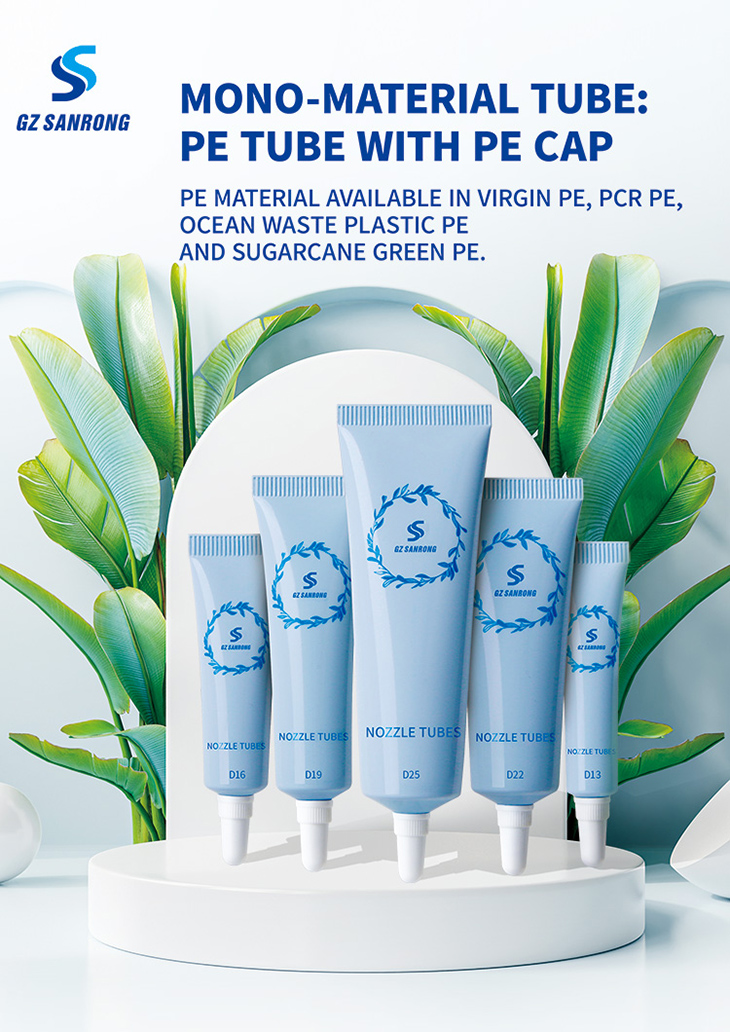
Creating seamless tube structures demands an obsessive level of control over every variable in the manufacturing process. It starts with metallurgy—selecting the right alloy and then precisely managing its temperature through the piercing and elongation stages. Even a minor deviation in heat can alter the grain structure, leading to microscopic weaknesses that compromise integrity under pressure. Modern mills employ closed-loop feedback systems that adjust roller positions and mandrel speeds in real time, ensuring dimensional consistency down to the micron level. This isn't just automated machinery following a recipe; it's a dynamic dialogue between material behavior and machine response, honed through decades of process refinement.
Beyond the rolling and drawing, the true artistry emerges in the tension between ductility and strength. Achieving a hollow profile without seams means the steel must flow like a viscous fluid without ever tearing. Engineers choreograph a sequence of cold-working passes that carefully elongate the grain, each step increasing hardness while preserving enough malleability for the next stage. The real secret often lies in the intermediate annealings—those precise heat soaks that reset the crystal lattice just enough to prevent brittleness. It's a delicate balance that separates a tube that merely meets spec from one that performs flawlessly in a deep-sea valve or an aircraft hydraulic system.
Inspection routines for these products are equally demanding, because the absence of a weld doesn't automatically guarantee perfection. Ultrasonic phased-array probes spiral around the tube, hunting for inclusions or laminations that are buried fractions of a millimeter deep. Eddy current sensors map surface continuity, while laser micrometers track wall thickness variation with sub-percent accuracy. What sets elite manufacturers apart is how they feed this torrent of data back into the process, using it to predict tool wear or subtly adjust piercing angles before a drift in quality ever occurs. That feedback loop—turning real-time measurements into immediate process corrections—is the quiet heartbeat of precision tube making, and it's largely invisible to anyone who only looks at the final product.
Sustainable Coatings That Preserve Product Integrity
Protective coatings have long been essential in shielding everything from industrial equipment to consumer goods, yet their environmental footprint often goes overlooked. A shift toward sustainable options doesn’t just reduce harm—it actively contributes to product longevity. By forming barriers against moisture, corrosion, and abrasion, these coatings maintain the original strength, appearance, and functionality of materials, cutting down on waste and the need for frequent replacements. What makes them truly effective is their ability to perform under stress without relying on toxic solvents or heavy metals, proving that durability and eco-consciousness can go hand in hand.
Recent breakthroughs in green chemistry have unlocked formulations that rival—and sometimes outperform—conventional counterparts. Plant-based resins, waterborne polymers, and bio-derived additives are now crafted to bond tightly with substrates, offering toughness that doesn’t degrade prematurely. Unlike older coatings that might crack or peel, these next-gen solutions flex with temperature changes and resist UV damage, keeping the protected item intact far longer. The secret lies in molecular engineering: adjusting crosslink density and incorporating nano-scale reinforcements that enhance barrier properties without compromising the material’s recyclability at end of life.
Real-world applications are proving the concept at scale. In food packaging, thin, edible coatings extend shelf life while preventing spoilage, all without leaving behind synthetic residues. On construction sites, low-VOC sealants guard steel beams against rust for decades, even in harsh coastal climates. These aren’t niche experiments—they’re practical tools that manufacturers are adopting to meet both regulatory demands and consumer expectations. The result is a quiet revolution where the products we rely on stay stronger, safer, and more sustainable from the inside out.
Automated Quality Control with Zero-Defect Ambitions
The shift toward automated quality control isn't just about cutting inspection time—it's quietly reshaping how production lines think about perfection. Instead of relying on spot checks and statistical sampling, manufacturers are embedding real-time vision systems that examine every single unit as if it were the only one. These tools look past surface flaws to catch subtle deviations in texture, alignment, or color that would slip past even the most attentive human eye.
What makes the zero-defect mindset genuinely interesting is how it flips the traditional cost-of-quality equation. Old models accepted a certain failure rate and budgeted for rework or returns. Now, factories are training algorithms on historical defect data so that the line can self-correct before a bad batch ever leaves the station. It's less about inspection gates and more about building a feedback loop where the process learns to avoid mistakes entirely.
There's a cultural ripple, too. When operators see that the system catches even their own unconscious slip-ups with zero blame, a different kind of vigilance takes hold. They start feeding insights back into the machines—suggesting new defect categories or tweaking sensitivity thresholds—turning quality from a checkpoint into a shared mission. The ambition isn't just zero defects; it's making quality so innate that the word 'defect' starts to feel obsolete.
Customizable Decor Techniques That Elevate Shelf Appeal
Shelf styling often falls flat when every piece looks straight out of a catalog. The real charm comes from weaving in personal touches—think a small ceramic dish you painted yourself or a vintage book with a cover that matches your room’s palette. These aren’t just objects; they’re conversation starters that make the display uniquely yours.
Texture plays an unsung role in making shelves feel curated rather than cluttered. Try layering a soft woven basket behind a sleek metal frame, or leaning a rough-hewn wooden cutting board against the back of the shelf. The contrast stops the eye just long enough to appreciate each item, and you can easily swap things out when your mood shifts.
Don’t shy away from adjusting the backdrop itself. Removable wallpaper, a strip of washi tape along the shelf edge, or even a simple coat of paint inside a bookcase can transform the entire feel without a permanent commitment. It’s a low-risk way to test bold colors or patterns, ensuring your shelves never feel boring or predictable.
Streamlined Production Lines for Rapid Concept-to-Market
Bringing a new product from sketch to shelf used to feel like fighting through sludge. Now, with production lines engineered as agile ecosystems rather than rigid chains, we collapse the gap between imagination and launch. Automated workstations swap tooling in minutes, material flows reroute on demand, and quality checks run inline—no more batching and waiting. It’s manufacturing that moves at the pace of creativity, not the calendar.
The real unlock? Prototyping doesn’t happen in a silo; it happens on the very same line that will ramp to full production. Engineers, operators, and designers sit shoulder-to-shoulder, tweaking specs while the first units roll off. This living line learns from each iteration, embedding real-time feedback into toolpaths and assembly sequences. By the time a design is locked, the line has already mastered it—slashing months off traditional transfer-to-factory delays.
Speed without chaos requires a different kind of orchestration. Digital twins run ahead of physical changeovers, simulating hundreds of what-if scenarios before a single part is touched. When a new variant is greenlit, the line reconfigures with minimal human intervention, guided by a thread of data that connects customer insights directly to actuators. The result isn’t just faster time-to-market; it’s a production system that stays perpetually ready for the next big idea, turning volatile demand into a competitive rhythm instead of a panic trigger.
FAQ
A laminated tube is crafted by fusing multiple layers of specialized materials like aluminum and plastic. This structure creates a strong barrier against light, air, and moisture, which keeps products fresher for longer. Brands are increasingly drawn to it because it balances durability with a premium look and feel, all while being lightweight and cost-effective to ship.
Factories are moving beyond standard extrusion methods. Many now integrate real-time digital monitoring to adjust layer thickness with precision, use energy-efficient curing techniques, and employ robotic systems for quality checks. These steps minimize waste and allow for rapid changeovers between designs, which fosters both speed and customizability.
The premium feel comes from the tube's surface versatility. It can be finished with soft-touch coatings, metallic foils, or glossy varnishes that catch the eye on a shelf. The seamless construction and precise printing also convey a sense of craftsmanship, elevating the perceived value of products like luxury creams or specialty oral care items.
Absolutely. Innovations now include tubes with higher percentages of post-consumer recycled content and the development of mono-material laminates that are easier to recycle. Some factories offer thinner laminate structures without compromising protection, reducing plastic use. These approaches help brands meet environmental goals without sacrificing performance.
Beyond the obvious cosmetics and toothpaste sectors, laminated tubes are becoming vital in pharmaceutical creams, industrial adhesives, and even gourmet food pastes. Their ability to dispense precise amounts and protect sensitive formulas makes them a versatile pick for any market requiring controlled, contaminant-free access to viscous products.
The process starts with selecting the right barrier layers and tube diameter. Then, designers can specify everything from the shoulder shape and cap style to the decorative printing technique—be it offset, flexographic, or digital. Advanced factories often collaborate on a series of prototypes, letting brands test ergonomics and visual impact before final production.
From raw material inspection to the finished product, rigorous testing is key. This includes checking seal integrity through burst and vacuum tests, verifying print registration under high-magnification cameras, and performing stability trials with actual product fills. Continuous data logging during manufacturing helps trace any inconsistencies, ensuring every tube meets strict performance standards.
Conclusion
At the heart of modern laminated tube manufacturing lies a complete rethinking of material science. By blending advanced polymers, aluminum barriers, and specialty resins, factories now achieve barrier performance that rivals glass—yet with the squeezability and lightness consumers demand. This isn't simply layering; it's an engineered synergy where each micron serves a purpose: blocking oxygen, locking in flavors, or resisting aggressive chemicals. The result is packaging that keeps pharmaceuticals potent, cosmetics fresh, and food safe for longer, all while slimming down the overall material footprint.
Behind the seamless exterior of a premium tube is a world of precision engineering. From the initial extrusion to the final shoulder-sealing, production lines operate with micrometric accuracy, ensuring consistent wall thickness and flawless orifice geometry. Automated vision systems inspect every single tube at full production speed, flagging the faintest scratch or pinhole—achieving what many call a zero-defect ambition. Meanwhile, the shift to water-based and mono-material coatings has removed volatile solvents without sacrificing gloss or product protection. These sustainable coatings maintain the integrity of sensitive formulations while keeping the tube fully recyclable. To top it off, digital and hybrid decorating techniques now deliver photo-realistic graphics, tactile varnishes, and metallic cold foils that make products leap off shelves. Combined with streamlined workflows that cut concept-to-market lead times by weeks, today's laminated tube factories are not just packaging suppliers—they are strategic partners in brand storytelling, delivering solutions that protect, preserve, and persuade in equal measure.
Contact Us
Contact Person: Alex Wu
Email: [email protected]
Tel/WhatsApp: 86-20-37965868
Website: https://www.gzsanrong.com/en.html