

Leading Tissue Converting Line Exporters for Global Paper Mills
2026-10-13
Every tissue converting line ships with a promise: higher output, tighter tolerances, fewer breakdowns. Yet most paper mills learn the hard way that not all exporters keep that promise. The real leaders don't just sell machines—they engineer around your mill's specific bottlenecks. DAXIN has spent years turning that principle into a global footprint, with converting lines running in mills across Europe, Southeast Asia, and Latin America. In this post, we strip away the spec-sheet noise and show what actually separates top-tier tissue converting line exporters from the crowd—and where DAXIN fits into that picture.
Why the Best Tissue Converting Line Exporters Prioritize Mill-Specific Design
Every tissue mill operates under its own set of constraints—furnish type, machine width, drying capacity, and even humid tropical air versus dry continental conditions. A converting line that hums along in one plant can become a bottleneck in another if it was merely copied from a generic template. Top-tier exporters understand this and begin each project by mapping the actual mill data: creping blade angles, sheet moisture profiles at the reel, and downstream packaging speeds. Only then do they adjust roll hardness, embossing depth, and log saw indexing to match the parent roll characteristics. It is this first-principles approach that separates a vendor who sells machinery from a partner who designs around the mill’s daily reality.
Generic lines force the mill to adapt, often through trial and error, wasted parent rolls, and higher broke return. Mill-specific design flips that burden back onto the supplier. The exporter’s engineers spend days on the converting floor, watching how operators handle reel splices, how dust behaves near the unwinds, and where web breaks tend to start. They then tailor the unwind stand tension control, the embosser gap profile, and even the control panel layout to fit the crew’s habits. One mill may need rapid width changeovers because it runs short private-label orders; another may need to minimize core glue contamination for food-contact grades. By addressing these nuances before delivery, the line starts up faster and reaches nameplate speed within weeks instead of months.
Prioritizing mill-specific design also pays off years later when the mill introduces a new grade or shifts from virgin to recycled fiber. A converting line that was originally tuned only for soft, bulky tissue will struggle with shorter fibers and higher fines without retrofits. Exporters who emphasized mill-specific flexibility from the start—modular embossing rolls, adjustable perforation blades, and open automation interfaces—allow the plant to adapt without calling back the vendor for every change. In the end, the true cost of a converting line is not its invoice price but how many good rolls it produces per shift across the mill’s entire product mix. That is why the best exporters treat every mill as its own engineering challenge, not as another entry on a sales list.
How Regional Supply Chains Shape Converting Equipment Delivery
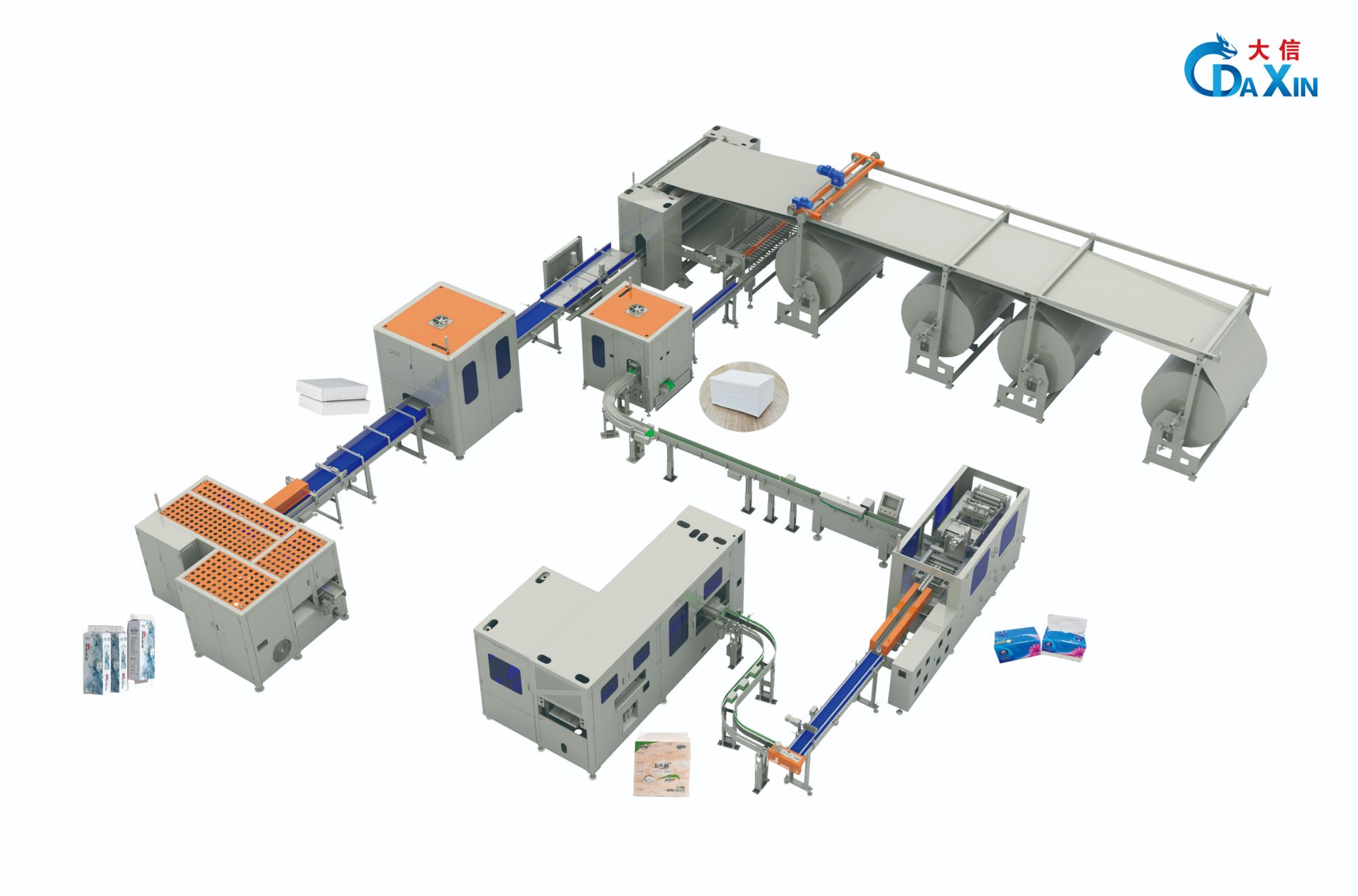
Regional supply chains directly influence the lead times and customization options for converting equipment. Manufacturers relying on locally sourced components can often respond faster to design changes and offer more flexible configurations, whereas global sourcing may introduce longer shipping windows and higher coordination costs. This regional advantage becomes especially critical when paper, film, or foil converters need rapid replacements or upgrades to keep lines running.
Beyond logistics, regional supply chains also shape the technical support and service ecosystem around converting equipment. Local parts availability reduces downtime, while proximity to engineering teams enables quicker on-site troubleshooting and preventive maintenance. Converters in well-developed industrial clusters benefit from shared expertise and faster iteration cycles, which can lead to more efficient equipment layouts and tighter integration with downstream packaging processes.
Finally, regional supply chain structures affect cost structures and risk profiles. Tariffs, trade agreements, and local labor markets all contribute to the total cost of ownership for converting machinery. A regionalized supply chain may increase initial purchase price but lower long-term operational risks, while a globalized one might offer lower upfront costs but expose converters to currency fluctuations and supply disruptions. Understanding these trade-offs helps businesses select equipment strategies that align with their production goals and geographic footprint.
The Real Cost of Skipping Factory Acceptance Tests
Skipping a factory acceptance test can feel like a shortcut that trims the schedule, but the actual price usually lands much later. A control panel or skid that leaves the vendor's floor without a proper checkout often carries wiring mistakes, incorrect setpoints, or missing interlocks. Those small oversights become expensive shutdowns once the equipment is installed at your site, where troubleshooting is slower and every hour of downtime cuts into production.
There is also a contractual side that rarely gets discussed until problems surface. Without the documented proof that the system met its performance criteria before shipment, responsibility for failures becomes blurry. The vendor may argue the damage happened during transit or installation, while your team absorbs the cost of emergency service calls, replacement parts, and extended commissioning. That can quietly erase any initial savings from bypassing the test.
Beyond the immediate repair bills, repeated startup failures can strain relationships between engineering, operations, and suppliers. A reputation for unreliable deliveries tends to follow both the buyer and the vendor, affecting future project bids and insurance premiums. In that sense, the real cost is not just the skipped test itself but the pattern of firefighting it creates across every project that comes after.
What Paper Mills Look for in a Converting Line Partner
Paper mills rarely spell it out in a request for quote, but what they actually want from a converting line partner is someone who understands the entire downstream process, not just the machine specs. A partner who asks about basis weight variation, caliper profiles, and roll density before quoting is far more valuable than one who jumps straight to line speed and web width. Mills need suppliers who can spot potential bottlenecks—like slitter dust buildup or tension control at splices—before they become daily headaches on the floor.
Beyond the initial sale, mills look for a partner whose service team reacts as if the mill's downtime is their own. That means having local technical support, a realistic spare parts inventory, and people who can troubleshoot over the phone without reading from a script. The best converting line partners also bring operator training that goes beyond button-pushing, covering the "why" behind settings so crews can make smart adjustments when grades change. It's this combination of process insight and responsive support that separates a one-time vendor from a long-term partner.
Where Automation Is Changing Tissue Converting Workflows
Automation has quietly moved from the edges of tissue converting into the heart of everyday operations. In the past, automatic reel splicing and basic roll tracking were considered advanced, but now the real shifts happen in areas like parent roll handling, core loading, and tail sealing. These steps used to rely on a worker’s feel and timing; today, sensors and servo-driven mechanisms make them repeatable at line speeds that were unthinkable a decade ago. Operators still oversee the process, but their role has shifted from manual adjustment to monitoring exceptions and fine-tuning parameters on the fly.
One area where the change is most visible is in log sawing and accumulation. Older lines needed constant manual intervention to clear jams or align logs before wrapping. Modern systems use vision-guided robotics and buffering conveyors that adapt to slight variations in log diameter or length without stopping the line. This doesn’t just reduce downtime—it changes how plants schedule production. Short runs and frequent changeovers, which used to be avoided due to setup complexity, are now manageable because the automated equipment resets itself in seconds rather than minutes.
Another less obvious but equally important shift is happening in quality control. Instead of relying on periodic manual checks, automated inspection stations now measure ply bonding, perforation strength, and roll firmness continuously. The data feeds back into the converting process in real time, adjusting winding tension or embossing pressure without human input. This has led to a new kind of operator: someone who interprets trends and predicts issues rather than reacting to them. The result is higher yield, fewer rejected rolls, and a workflow where automation doesn’t replace people—it changes what they need to know and how they spend their shift.
After the Sale: The Support That Keeps Converting Lines Running
A converter line never really stops being a series of moving parts, and once it is commissioned, the real test starts. The support behind it matters as much as the original build. Our service engineers routinely take late-night calls from plants where a tension control issue or a worn nip roller is about to cause a shift change headache. Instead of walking a customer through a manual, they pull the same machine drawings and sensor data the original build team used, which often cuts troubleshooting time to a single shift.
Spare parts are another place where after-sale support quietly keeps output on track. Rather than waiting for a part number to fail, we track wear patterns across similar lines and flag components like slitter blades, bearings, and drive belts before they take a machine down. That turns a reactive teardown into a planned lunch-hour swap, and it keeps material moving instead of stacking up at the unwind stand.
The most useful support usually shows up without being called. Remote diagnostics let us watch a line's torque curves and temperature drift during normal runs, so a slight misalignment or a heating motor gets attention before it becomes a weekend outage. That kind of continuity, from the people who installed the line to the ones who answer on a Tuesday night, is often why a converter keeps hitting its throughput targets long after the warranty folder is closed.
FAQ
Look beyond brochures—ask for reference mills running similar grades, check the supplier's local service network, and request a detailed energy consumption report per ton of finished product. A reliable exporter should also offer a phased installation plan instead of a single drop-off.
European suppliers often emphasize precision engineering and modular upgrades, while Asian exporters tend to offer more aggressive pricing with faster delivery cycles. The trade-off usually shows up in customization depth and long-term wear-part availability, so mills should map their own maintenance capabilities first.
Automation now goes far beyond speed—integrated vision systems catch splices and sheet defects in real time, while auto-adjusting embossing pressure reduces waste during grade changes. This matters most for mills producing private-label products with frequent changeovers.
Direct drives on embossing and log saw units cut belt and gear maintenance significantly. Quick-change anilox rolls and servo-controlled unwind stands minimize downtime between parent reel swaps. Many mills overlook these and pay more later in labor and spare parts.
Request a time-stamped video of a comparable line running your target basis weight and sheet count for at least four hours, not just a short demo. Also ask for the OEE data from one or two reference customers over a six-month period, not just startup numbers.
Beyond freight and duties, mills often forget foundation reinforcement, electrical harmonization, and the cost of keeping a supplier's technician on site during fine-tuning. Some exporters quote a low base price but charge heavily for training, software licenses, and emergency support.
A single-source line simplifies startup and service accountability, but mixing best-in-class modules—like a high-speed wrapper from one maker and a specialty embosser from another—can yield better product differentiation. The deciding factor is whether your engineering team can handle multi-vendor integration and spare parts logistics.
Conclusion
Tissue mills worldwide rarely succeed with off-the-shelf converting equipment. The strongest exporters start by studying each mill's layout, parent roll sizes, and finished product mix before proposing any line configuration. This mill-specific design work prevents costly retrofits later, especially when regional supply chains create long lead times for replacement parts or specialized rollers. Smart buyers also insist on a full factory acceptance test before shipment—skipping that step might save a few weeks, but the real cost shows up as misaligned embossing units or drive tuning issues discovered only after installation. Mills that avoid this trap tend to partner with exporters who treat the acceptance test as a joint problem-solving session rather than a formality.
What separates a dependable converting line partner from a one-time seller is rarely the machine spec sheet. Mills look for engineering teams that understand how automation changes workflow—splice detection, vision-based defect rejection, and automatic roll handling now determine daily output far more than maximum line speed. After the sale, the real differentiator is support: remote diagnostics that catch bearing wear early, spare parts stocked in the mill's region, and technicians who know the local power and humidity conditions. Exporters who combine that after-sales depth with a design built around the mill's actual operating habits become the ones global paper producers call back for the next expansion.
Contact Us
Contact Person: Sam Xie
Email: [email protected]
Tel/WhatsApp: 86-18938538530
Website: https://www.daxin321.com/