

LED Signal Light Bulb Supplier Selection Criteria You Need to Know
2026-11-01
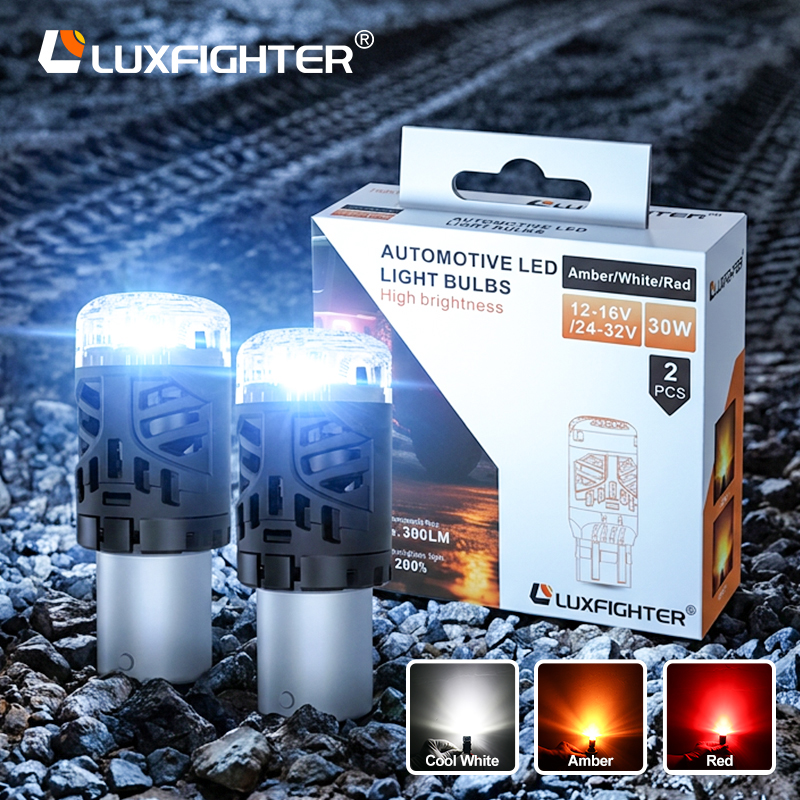
Signal light bulbs look simple—until field failures start stacking up. If you’re sourcing LED signal light bulbs, the real test isn’t the datasheet; it’s how the supplier handles thermal management, binning, and consistency across every batch. Here’s what to look for before you sign, and why LUXFIGHTER often ends up on the shortlist.
Certifications Are Just the Entry Fee
A framed certificate on the wall might open a few doors, but it won't keep them open. The credential proves you can pass a test or complete a course—it doesn't prove you can handle a difficult client, adapt when a project goes sideways, or earn trust in a room full of skeptics. Treat the certification as what it really is: a ticket to the conversation, not a guarantee of respect.
Too many professionals treat credentials as the finish line. They study, pass, and then wait for opportunity to arrive. But the market doesn't reward paper—it rewards the person who can translate that knowledge into results. A license or designation matters only if it's paired with judgment, communication, and the willingness to do the unglamorous work. Otherwise, it's just an expensive way to decorate your office.
Ask to See the Thermal Shock Test Logs
When you are comparing products that will face rapid temperature swings, asking to see the thermal shock test logs is one of the smartest moves you can make. These logs go far beyond a simple pass or fail stamp, showing exactly how many cycles were run, what temperature extremes were used, and how long the parts were held at each extreme before the next shock. Without this level of detail, you are left guessing whether the testing actually mirrors the conditions your product will encounter in the field.
Raw test logs also tend to expose things that polished summaries leave out. You might spot notes about a cracked housing on cycle forty-two, a temporary pause while a fixture was adjusted, or a batch that needed to be retested after an equipment calibration issue. Those details are not signs of failure—they are evidence of honest, thorough evaluation. A supplier willing to hand over the full record is usually one that has nothing to hide.
Finally, comparing logs from different manufacturers gives you a practical basis for decision-making. One may claim thousands of cycles but ran them with a long recovery time between shocks, while another ran fewer cycles under far harsher timing. The logs let you weigh real-world stress instead of marketing language, so you can choose a product that will actually survive the temperature swings it will meet in service.
Check How They Handle Low-Voltage Spikes
Low-voltage spikes often come from inductive loads switching off, loose neutral connections, or neighboring equipment sharing the same circuit. You want to see whether the device clamps those transients quickly or lets them ride through to sensitive downstream components. A good test is to introduce a narrow 50–100 µs spike near the lower operating threshold and watch the output with an oscilloscope. If the response overshoots or rings for more than a couple cycles, that is a red flag.
Beyond the waveform, pay attention to how the unit behaves after the spike clears. Some designs recover cleanly with no latch-up or reset, while others hiccup, brown out, or require a manual power cycle. Repeated spikes at irregular intervals can expose weak feedback loops that pass a single-event test but fail in the field. Ask for captured scope shots from the manufacturer, not just a pass/fail note. The shape and duration of the recovery tell you more than a datasheet bullet.
Also worth asking is how the protection behaves under load. A no-load bench test can hide marginal clamping because the transient energy has nowhere to go except into the protection network. Load the output to at least 50–70% of rated current, then repeat the spike. If the output droops or the unit enters a protection mode that is not specified in the manual, that is an integration risk you would rather find now.
Compare Lumen Maintenance at 6,000 Hours
When evaluating LED lighting options, lumen maintenance at the 6,000-hour mark tells you a lot about long-term performance. Many bulbs on the market hold up well in the first few thousand hours, but the ones worth keeping tend to show a gentler decline as they approach this midpoint. Rather than focusing on peak brightness alone, look at how steadily the light output holds. A bulb that dips below 90% of its initial lumens by 6,000 hours might still work fine in a closet, but it's probably not the best choice for a kitchen or workspace where consistent illumination matters.
Different product lines behave quite differently once they reach this threshold. Some cheaper models start out impressively bright, yet their lumen curve drops more sharply between 3,000 and 6,000 hours. Higher-quality options often level off around 95% or better, even under daily use. The gap becomes obvious when you compare bulbs side by side in the same fixture. What felt like a bright upgrade at installation can turn into a noticeably dimmer room just a few months later, especially in areas where lights stay on for eight or more hours a day.
Paying attention to 6,000-hour lumen maintenance can also reveal how a bulb handles heat and driver stress. A well-designed fixture disperses heat effectively, which helps preserve the phosphor coating and keeps output stable. If two bulbs have similar initial ratings but one shows a 3% drop and the other a 12% drop by this point, the difference isn't just about the LED chip—it's about the whole thermal design. That's why real-world testing at 6,000 hours often separates durable, everyday performers from ones that fade faster than their spec sheets suggest.
Custom Housing Samples Should Take Days, Not Months
When a client asks for a custom housing sample, they usually need it yesterday. Yet the industry norm still lags at six to eight weeks for a single prototype. That timeline made sense when every enclosure started from a blank sheet and a stack of raw aluminum sheets. It doesn't hold up when modular tooling, pre-qualified extrusions, and in-house finishing lines can cut the cycle down to a matter of days.
Speed doesn't have to mean sloppy corners or mismatched seams. A well-organized shop can pull a custom housing from approved CAD to a finished, powder-coated sample in three to five business days by leaning on parametric design libraries and keeping standard hardware on the shelf. The trick is front-loading the engineering decisions: lock the mounting points, connector cutouts, and thermal slots before the first bend, then let the shop floor run without waiting on drawings to be redlined.
For engineers juggling tight launch windows, a three-day sample isn't a luxury; it's the difference between testing a real part and guessing from a render. When the supplier can iterate twice in a single week, the entire development conversation changes. You stop debating whether the enclosure will fit and start asking what else can be improved before the pilot run.
A Real Supplier Will Discuss Their Worst Batch
When you ask about our worst batch, we don't dodge. It was the 2019 harvest in Yunnan—about 600 kilos of black tea that came out with a flat, almost metallic finish. The leaves looked fine on the surface, but the fermentation had stalled overnight because the overnight temperature dropped harder than our weather log predicted. We caught it at cupping, not at packing, and that's the only reason it didn't ship under our name.
What we did next is what separates a real operation from a trading shell. We pulled the entire lot, paid the farmer anyway, and spent three weeks blending small test batches with an older, more oxidized leaf to see if the defect could be masked. It couldn't—not without wrecking the character we'd promised. So we sold the entire batch at a loss to a local producer who wanted it for a smoked tea experiment. The lesson: track overnight humidity shifts before you trust a forecast.
Ask any supplier who insists they've never had a bad batch, and you're talking to a liar or someone who never cups their own inventory. Bad batches happen to everyone who actually makes things. The difference is whether they'll tell you before you find out from a customer.
FAQ
Start with certifications and test reports like UL, ECE, or RoHS, and check if the supplier is willing to send samples for independent testing. Pay attention to whether certificates are still valid and match the exact model you're buying, not just the supplier's name.
Ask for integrating sphere test data and, ideally, third-party lab reports. Check the color coordinate spread within a single batch, especially for amber and red, because traffic signal applications have very tight color tolerances.
Signal bulbs often run outdoors around the clock, and poor heat dissipation leads to lumen depreciation and early failures. Look for aluminum substrates, proper thermal interface material, and a housing design that actually moves heat away from the LED junction instead of just quoting a long theoretical lifespan.
Find out if they perform 100% burn-in testing and how long it lasts, plus whether they use automated optical inspection. Ask them to walk you through how they handle defective batches. That reveals more than a simple yes or no about having a QC department.
It's critical because signal light standards, base types, and voltage requirements vary widely by country. A capable supplier should be able to adjust the base, brightness levels, and driver design based on your drawings or samples, rather than only offering off-the-shelf products.
For larger orders, an on-site visit is worth it. Focus on the soldering and SMT lines, the aging room, and how materials are stored. Video audits work for initial screening, but being there can expose subtle issues like inconsistent operator practices or unmarked components.
Watch out for quotes far below the market average, unwillingness to share a detailed BOM, vague answers about certifications, abnormally short lead times, or frequent changes in your main contact. A small trial order is a good way to test batch-to-batch consistency before committing.
Lock down the brands and substitution rules for key components like LED chips and driver ICs in the contract. Also ask about their raw material inventory strategy and whether they have multiple approved sources for critical parts to avoid a single point of failure.
Conclusion
Certifications are just the entry fee, not the finish line. You should ask to see thermal shock test logs that cover rapid transitions between extreme cold and heat, because signal bulbs on vehicles or industrial equipment rarely enjoy stable temperatures. Equally important is how a supplier handles low-voltage spikes. A good design will show clamping circuits or transient suppression, and the supplier will be able to explain the test bench setup. If they can't walk you through these details, their quality claims don't mean much. Compare lumen maintenance at 6,000 hours, not just initial brightness. The depreciation curve after thousands of hours tells you whether you're buying a bulb that fades early or one that holds its output for the long haul.
Custom housing samples should take days, not months. When a supplier takes weeks just to send a modified shell, it usually signals inefficiency or overloaded lines, and that will affect your production schedule later. Push for a firm sample timeline and watch how they respond. Finally, a real supplier will discuss their worst batch without being cornered. They can tell you what failed, why it got past inspection, and what they changed afterward. That kind of honesty about past defects is far more useful than a spotless quality scorecard. It shows they understand failure modes and are willing to fix them, which matters more than any certificate on the wall.
Contact Us
Contact Person: Gavin Chen
Email: [email protected]
Tel/WhatsApp: (+86)756-6831079
Website: https://www.luxfighter.com/