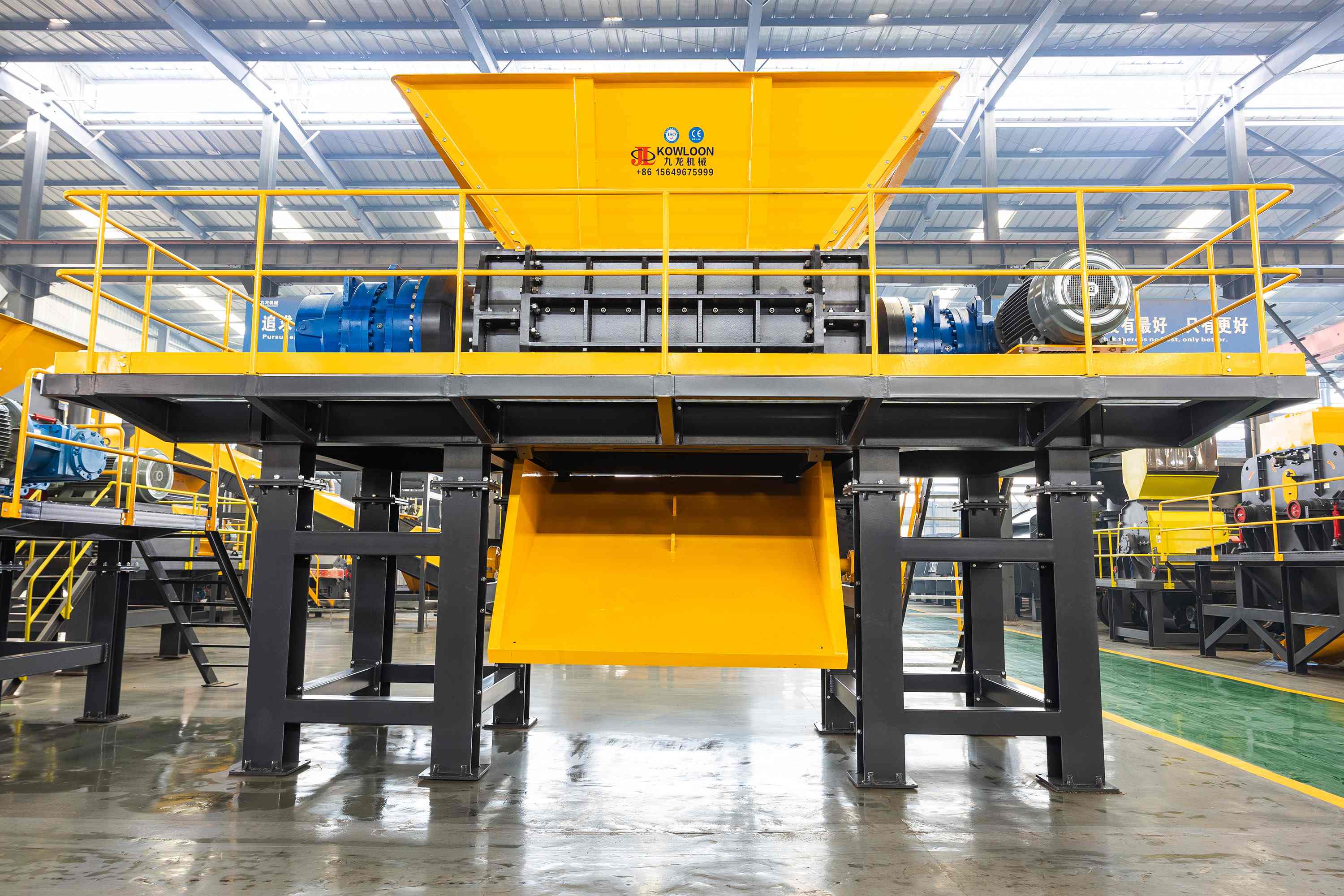

New Type Double Shaft Shredder: Boosting Efficiency in Heavy-Duty Recycling
2026-10-27
Watch any recycling line long enough and you'll spot the same bottleneck: a shredder that stalls when the feed turns heavy. The new double shaft shredder from Kowloon Machinery is built to break that pattern, pairing twin-shaft torque with a rugged design that keeps throughput high on the toughest waste streams—without the constant maintenance calls.
Rethinking Shredder Geometry for Unforgiving Waste Streams
Most shredder rotors are still designed around clean, homogeneous scrap, but real waste streams rarely cooperate. Mixed construction debris arrives with rebar, concrete, and wrapped plastic film in the same load; municipal waste hides mattresses, carpet, and wet organics. A rotor geometry optimized for metal turnings will choke on a tangle of synthetic textiles because its hook angle and cutter spacing assume a material that fractures predictably. Rethinking geometry means treating the stream itself as the design constraint: deeper relief behind the cutting edge lets stubborn material slide past instead of wedging, and an open rotor profile prevents material from wrapping around the shaft before it ever reaches the anvil.
The smallest dimensional changes can shift behavior dramatically. A sharper tip radius pierces plastic film and rubber cleanly but dulls within hours against silica-laden debris; a blunter tip survives longer yet draws more power and produces dust. Stepped or scalloped cutter faces split the difference, keeping a narrow leading edge for penetration while moving wear-prone surfaces out of the cutting zone. Asymmetric disc spacing on dual-shaft shredders also helps—uneven gaps break up long, fibrous items that would otherwise wind tightly around a uniform rotor and force repeated reversals.
The real metric is uptime, not peak torque. Machines with variable helix angles and alternating hook patterns chew through mixed loads without the constant jamming and manual clearing that plague conventional designs. When geometry is rethought around the worst material in the stream rather than the average, the result is less strain on drives, fewer interrupted shifts, and a rotor that finally treats unforgiving waste as a normal operating condition.
How Twin Shafts Break Through Materials That Stall Single-Shaft Units
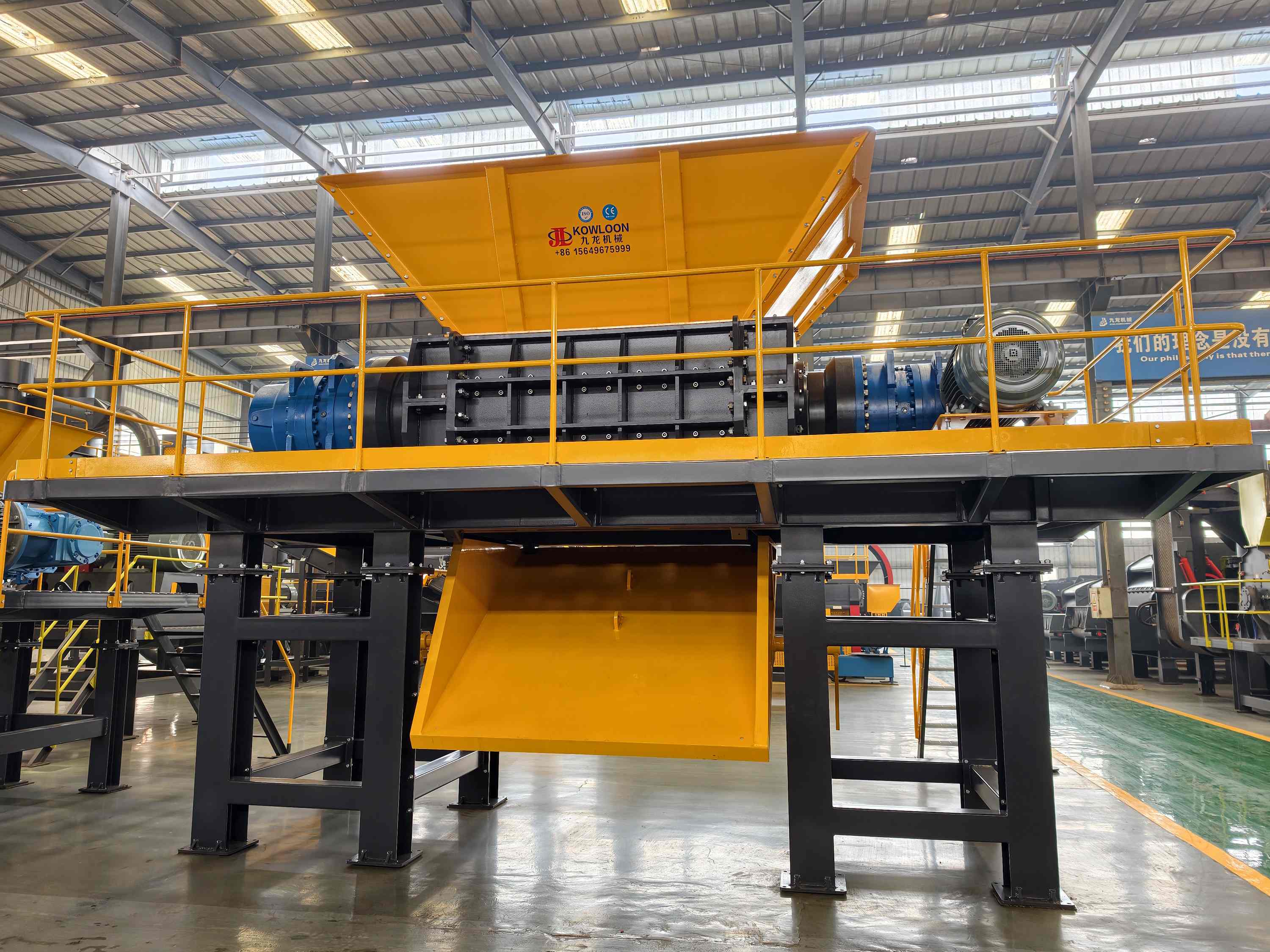
Single-shaft shredders rely on a rotor forcing material against a stationary screen or comb, which works fine until the feed stock is fibrous, elastic, or unevenly shaped. Those materials tend to wrap around the rotor, bunch up at the cutting edge, or simply flex instead of fracturing, and the result is a stalled shaft or a blocked screen. Twin-shaft designs change that dynamic by using two counter-rotating shafts with interleaved cutters. Each chunk gets pulled into the nip point between the shafts and sheared from both sides at once, so there's no single blade waiting for a clean bite.
The overlap between the two cutter stacks also creates a self-clearing zone. As one shaft reverses slightly or shifts speed relative to the other, any material that would normally bind a single rotor is torn apart or pushed through the gap. Low-speed, high-torque output keeps the cutters from grabbing too aggressively, which is often what stalls single-shaft units on rubber, carpet, or tangled wire. Because the force is divided across dozens of cutting edges simultaneously, the motor doesn't have to overcome a single large resistance spike.
Materials that stall single-shaft machines usually share one trait: they store energy and spring back rather than splitting. Twin shafts handle this by maintaining constant pressure at the bite point, while the interleaved hook profiles break the material in tension instead of relying solely on compression. That shift in failure mode is what lets a twin-shaft unit chew through baled film, tires, or scrap metal that would otherwise stop a single-shaft rotor cold.
Torque Distribution: The Overlooked Factor in Heavy-Duty Uptime
Fleet managers spend countless hours tracking engine hours, fluid samples, and tire wear, yet torque distribution rarely makes the checklist. When power flows unevenly through a tandem axle or split driveline, the result isn't always immediate failure. Instead, bearings scrub, splines fret, and gear faces polish into uneven patterns that quietly shorten component life. This hidden imbalance turns routine maintenance into reactive repairs, especially on routes with frequent grade changes or tight turns where wheel speed differences are constant.
On paper, an open differential splits torque equally, but real-world loads rarely conform to that assumption. A slight mismatch in tire circumference, pressure, or even corner weight can force one side to work harder while the other coasts. Over time, that extra energy becomes heat and wear concentrated in the differential side gears and axle shafts. For vocational trucks running mixers, dumps, or logging rigs, the problem compounds because traction demands swing wildly during a single shift.
Improving uptime doesn't always require expensive upgrades. Checking tire pressures weekly, matching tire brands and tread depths across an axle, and calibrating torque-sensing systems after tire changes can restore balance. When rebuilds happen, replacing bearings and seals as a matched set rather than piecemeal keeps the intended preload and distribution intact. Paying attention to this overlooked variable often prevents the kind of unscheduled downtime that can't be fixed with a quick part swap.
Feed Dynamics That Keep the Cutting Chamber Working—Not Waiting
The cutting chamber only earns its keep when material arrives at the right pace. Too fast, and you jam the rotor, stall the knives, or force regrind through a gap that was never sized for that volume. Too slow, and you waste horsepower, cycle time, and operator attention on a machine that's basically idling with extra steps. The real trick is tuning the feed so the chamber always has just enough material to chew without ever getting backed up. That means watching how the infeed conveyor, metering rolls, or gravity chute interact with the cutter's natural rhythm—because a granulator that waits for material isn't a bottleneck, it's a missed opportunity.
One overlooked detail is the pulse of the feed itself. Many operators treat the infeed as a steady stream, but real scrap comes in surges: a dense sprue, a wispy film edge, a lump of purging that hits the hopper all at once. If the feed system can't absorb those pulses, the cutting chamber sees alternating starve and flood cycles. You'll hear the motor load swing, see the screen temperature creep, and eventually find fines mixed with half-cut chunks. A better setup uses a slight buffer zone—a small surge hopper or a variable-speed feed screw—so the chamber sees a more uniform diet without constant babysitting.
Feed dynamics also include what happens after the cut. If the screen allows particles to leave too quickly, the chamber can underfill and lose that grinding action that actually does the work. If the screen clogs, backpressure sends material up into the feed throat, and now the inbound stream has nowhere to go. Matching screen open area, rotor speed, and feed rate isn't a one-time setting; it's an ongoing conversation between what's coming in, what's being cut, and what's getting out. When those three stay in sync, the cutting chamber never waits for work—and never chokes on it either.
Wear Protection That Extends Blade Life Beyond Industry Norms
Most cutting tools lose their edge long before the carbide actually fails. The difference comes down to how the surface resists abrasion at a microscopic level. Our blades are treated with a layered coating that distributes friction more evenly, so the edge doesn't chip away in the usual pattern. The result is a tool that keeps its geometry through jobs that would normally force a replacement.
In field tests, operators have reported runtimes that stretch well past what datasheets predict. Rather than swapping blades mid-project, they're finishing entire runs on a single edge. That kind of consistency doesn't come from marketing claims—it comes from coating chemistry and a sharper initial grind that reduces the strain on every pass.
The practical payoff is straightforward: fewer interruptions, less wasted material, and a blade that refuses to dull on schedule. It's not about making a blade that lasts forever. It's about making one that outlasts the expectations you've accepted for years.
Turning Bulky Scrap into Uniform Output Without Extra Passes
Most size-reduction setups treat bulky scrap as a two-step problem: first break it down, then run it through again to even out the pieces. That second pass eats time, energy, and floor space. The better route is to design the cutting chamber so every rotation does real sizing work, not just tearing. Offset rotor discs paired with stationary anvils create a scissor-like shear that pulls material through once and leaves a narrow particle band behind.
The trick is keeping the feed steady without forcing it. Instead of relying on gravity alone, a slight downward angle on the infeed guides long or tangled scrap into the bite zone at a consistent rate. Once the material clears the cutters, a curved discharge grate holds anything oversized just long enough to be re-cut by the next blade pass—so it exits uniform without ever leaving the machine for a second trip.
FAQ
It combines a redesigned hook-style cutter profile with independently driven shafts, so it can grip and tear through bulky scrap that would stall conventional machines.
The counter-rotating shafts pull material downward from both sides at once, preventing bridging and allowing a steady feed of mixed waste without operator intervention.
Yes, those are well within its capability. The hardened steel blades and high-torque drive let it chew through thick rubber, cast aluminum, and even light steel sections without slowing down.
Each shaft can be slid out from the side of the chamber for blade inspection or replacement, so maintenance crews don't have to lift the entire rotor assembly out with a crane.
It's built with oversized bearings, a splash-lubricated gearbox, and automatic load sensing that momentarily reverses the shafts if an unshreddable object enters, which protects the drivetrain during continuous operation.
With the standard screen basket installed, output typically lands between 25 and 80 millimeters, but swapping in a different screen can shift that range up or down depending on downstream processing needs.
In practice, the extra shaft usually lowers cost per ton because it reduces pre-cutting labor and avoids frequent stall-clearing downtime, even though peak power draw is slightly higher.
Conclusion
The new double shaft shredder rethinks cutting chamber geometry from the ground up to handle unforgiving waste streams that would choke conventional equipment. Instead of relying on a single rotor, twin counter-rotating shafts bite into bulky, tangled, or elastic materials, pulling them through where single-shaft units stall and push back. Torque is distributed across both shafts in a controlled pattern, preventing stress spikes that silently erode gearboxes and bearings—a detail often overlooked until downtime hits. Feed dynamics are tuned so the cutting chamber stays continuously loaded, not waiting for the next batch, which keeps throughput high even with inconsistent input sizes.
Wear protection goes beyond hard-facing: replaceable wear liners, segmented blade tips, and strategic material choices stretch blade life well past industry norms, reducing the need for frequent blade changes. The result is that bulky scrap—whether industrial waste, tires, or mixed construction debris—is converted into uniform output in a single pass, eliminating extra screening or re-shredding steps. By integrating these advances, the new double shaft shredder delivers the kind of heavy-duty reliability and efficiency that recycling operations need when margins are tight and material streams are anything but predictable.
Contact Us
Contact Person: Ray
Email: [email protected]
Tel/WhatsApp: +86 13733817580
Website: https://www.zzkowloon.com/