

Non-Oriented Electrical Steel: Essential Insights for Distributors and Industry Professionals
2026-01-29
In today's rapidly evolving industrial landscape, one material stands out for its pivotal role in powering modern infrastructure and green technologies: non-oriented electrical steel. As distributors and industry professionals navigate the complexities of this essential component, understanding its nuances becomes more critical than ever. Jiangsu Baowu New Materials, a leader in advanced materials, is at the forefront of innovation in this field, offering cutting-edge solutions that drive efficiency and sustainability across global applications. In this blog, we'll uncover key insights into non-oriented electrical steel, explore its transformative impact on industries, and highlight how its unique properties are reshaping the future of energy and manufacturing. Whether you're sourcing materials or optimizing operations, this guide will provide the knowledge to stay ahead in an increasingly competitive market. Dive in to discover why this steel is indispensable and how it can elevate your projects to new heights.
Key Market Trends Driving Demand for Non-Oriented Electrical Steel
As global energy efficiency standards tighten and industries push for greener operations, non-oriented electrical steel is seeing a sharp rise in demand. This material, crucial for electric motors, transformers, and generators, benefits from trends like the rapid electrification of vehicles and expanding renewable energy infrastructure. Manufacturers are turning to these steels for their balanced magnetic properties, which enhance performance while cutting energy losses in applications from household appliances to industrial machinery.
Another key driver is the ongoing innovation in manufacturing technologies that allow for thinner, more efficient steel grades tailored to specific applications. With industries like automotive and aerospace seeking lightweight yet durable components, non-oriented electrical steel offers solutions that meet both technical and environmental goals. This shift is supported by investments in smart grid technologies and the Internet of Things (IoT), where reliable electrical materials are essential for next-generation devices.
Market analysts note that regions like Asia-Pacific and Europe are leading in adoption, driven by policies promoting energy conservation and carbon reduction. As companies aim to reduce operational costs and comply with regulations, the versatility of non-oriented electrical steel—balancing cost with performance—makes it a preferred choice. This trend isn't just cyclical; it reflects a deeper movement toward sustainability, positioning this steel as a cornerstone in the transition to a more energy-efficient economy.
Technical Properties and Performance Metrics Every Distributor Should Know
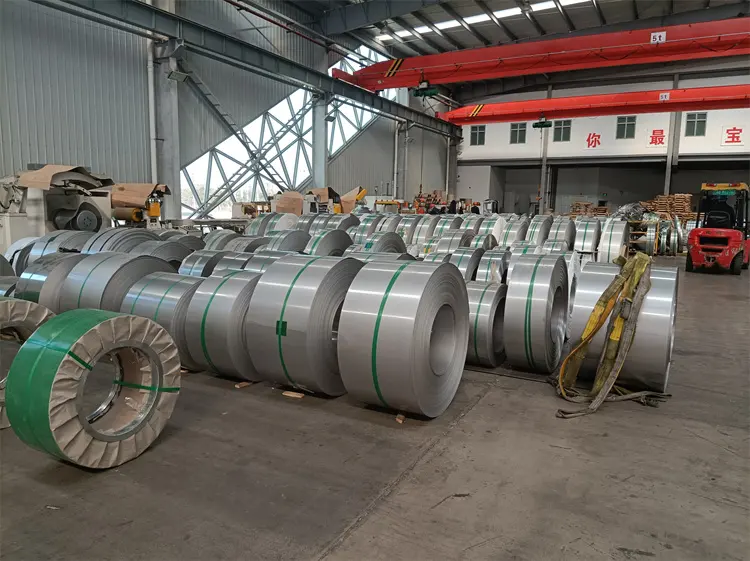
For distributors navigating the intricacies of modern supply chains, grasping key technical properties isn't just beneficial—it's essential. These include attributes like tensile strength to gauge how a product handles stress, thermal resistance for items in varied climates, and material compatibility to prevent chemical degradation during storage or transport. By familiarizing yourself with these specs, you can better predict product performance across different conditions, helping you stock or recommend items with confidence based on their build and design. This knowledge often translates to fewer returns and happier customers, as you're not just guessing what will hold up but relying on concrete data to back your decisions.
Performance metrics, on the other hand, dive into real-world outcomes that directly impact your operations and client satisfaction. Think metrics such as lead time for measuring delivery efficiency, order accuracy rates to track fulfillment reliability, and inventory turnover to optimize stock levels and minimize dead stock. By monitoring these figures, distributors can pinpoint bottlenecks in their processes, adapt to market demands more swiftly, and build stronger partnerships with suppliers by holding them accountable to agreed-upon standards. It's about moving beyond vague promises to quantifiable results that drive growth and set you apart from competitors who overlook these details.
Ultimately, blending technical properties with performance metrics creates a powerful toolkit for any distributor. For instance, knowing a product's moisture resistance (a technical feature) combined with its shelf-life performance in humid climates (a metric) allows for smarter inventory placement and reduced spoilage. This holistic approach not only enhances operational efficiency but also fosters trust, as clients see you as a partner who truly understands the products and their journey from warehouse to end-user. Staying informed on these elements can make all the difference in today's fast-paced market, offering a clear edge in reliability and service quality.
Supply Chain Dynamics and Sourcing Strategies for Industry Professionals
Navigating the complexities of modern supply chains demands a keen understanding of dynamics like global trade fluctuations, technological integrations, and sustainability pressures. For industry professionals, it's not just about moving goods efficiently; it's about anticipating disruptions, building resilient networks, and leveraging real-time data to stay ahead. This involves analyzing geopolitical shifts, adapting to consumer demands for faster deliveries, and mitigating risks through diversified logistics. By mastering these dynamics, professionals can transform supply chains from cost centers into competitive advantages, fostering innovation and growth in a rapidly evolving market landscape.
Effective sourcing strategies are crucial for optimizing supply chain performance, requiring professionals to balance cost, quality, and reliability. This goes beyond traditional supplier selection to include ethical sourcing, digital platforms for procurement, and collaborative partnerships. For instance, adopting a multi-sourcing approach can reduce dependency on single providers, while integrating AI-driven analytics helps identify hidden opportunities and inefficiencies. By focusing on strategic supplier relationships and agile procurement practices, professionals can secure vital resources, enhance product quality, and drive long-term value, ensuring their organizations remain adaptable and responsive to changing industry conditions.
To excel in this field, professionals must blend traditional expertise with innovative tools, fostering a culture of continuous improvement. Key actions include conducting regular supply chain audits, investing in supply chain visibility software, and engaging in cross-functional teamwork to align sourcing with overall business goals. By proactively addressing challenges like supply shortages or environmental regulations, they can craft sourcing strategies that not only meet current needs but also future-proof operations. Ultimately, a well-orchestrated approach to supply chain dynamics and sourcing empowers professionals to lead with confidence, delivering tangible results in an interconnected, competitive world.
Applications in Motors and Transformers: A Practical Overview
In the realm of electrical engineering, motors and transformers serve as fundamental components that drive countless industrial and consumer applications. Motors convert electrical energy into mechanical motion, powering everything from household appliances to heavy machinery in factories, while transformers are essential for efficiently distributing electricity across power grids by stepping voltage up or down. These devices are critical in enabling modern infrastructure, from electric vehicles to renewable energy systems, and their practical implementation often involves careful design to balance performance, efficiency, and cost. Over the years, advancements in materials and control systems have expanded their use cases, making them more reliable and adaptable to diverse environments.
A key aspect of their application lies in the need for energy efficiency and sustainability. For instance, in industrial settings, high-efficiency motors can significantly reduce energy consumption and operational costs, while smart transformers with monitoring capabilities help prevent outages and optimize grid performance. In practice, selecting the right type of motor—such as induction, synchronous, or DC—depends on factors like load requirements and control precision, whereas transformer choices often hinge on factors like voltage levels and thermal management. This practical overview highlights how real-world scenarios, such as integrating variable frequency drives or ensuring compatibility with renewable sources, shape the deployment of these technologies, underscoring their role in meeting evolving energy demands.
Beyond traditional uses, emerging trends are pushing the boundaries of motor and transformer applications. Innovations like lightweight materials and digital twins are enabling more compact and intelligent designs, while the rise of electric mobility is driving demand for high-power motors and fast-charging transformers. In practical terms, these developments require engineers to consider not just technical specifications but also factors like maintenance accessibility and environmental impact, ensuring that solutions are both effective and future-proof. By examining case studies from various sectors, it becomes clear that a hands-on approach to understanding these devices' capabilities can lead to more resilient and innovative systems, ultimately enhancing their utility in a rapidly changing technological landscape.
Cost Factors and Pricing Considerations in the Electrical Steel Market
In the electrical steel market, several key cost factors directly impact pricing, making it a dynamic and often volatile sector. One of the primary drivers is the cost of raw materials, such as iron ore, silicon, and other alloys, whose prices can fluctuate significantly based on global commodity markets, mining disruptions, and geopolitical tensions. For instance, when silicon prices surge due to supply chain bottlenecks, manufacturers face higher production expenses, which are often passed on to consumers in the form of increased prices for electrical steel sheets or coils. Additionally, energy costs, particularly electricity for industrial processes like rolling and annealing, play a crucial role, as these processes are energy-intensive, leading to higher operational expenses in regions with expensive power.
Beyond raw materials, manufacturing and processing costs shape the market's pricing landscape. Advanced technologies and stringent quality standards, such as grain-oriented (GO) and non-oriented (GO) steel production, require sophisticated equipment and skilled labor, adding to overhead. For example, producing grain-oriented electrical steel involves complex heat treatments and precise rolling techniques to enhance magnetic properties, which can elevate costs compared to simpler grades. Environmental regulations and sustainability initiatives also contribute, as companies invest in eco-friendly practices, like reducing carbon emissions or recycling scrap, which may increase short-term expenses but align with long-term market trends, influencing pricing strategies to balance competitiveness with compliance.
Market demand and supply dynamics further influence pricing considerations, with factors like industry growth in renewable energy and electric vehicles driving up consumption. As demand rises for electrical steel in applications such as transformers, motors, and generators, suppliers may adjust prices to capitalize on scarcity or to invest in capacity expansion. Competition among manufacturers also plays a role, with companies in regions like China or Europe leveraging economies of scale or innovative technologies to offer competitive rates, while trade policies and tariffs can introduce additional costs, affecting cross-border pricing and availability. Ultimately, navigating these interconnected factors requires a nuanced approach, blending cost efficiency with strategic insights to stay responsive to market shifts and customer needs.
Future Outlook and Innovations Shaping the Non-Oriented Steel Sector
The non-oriented steel sector is poised for significant transformation as global demand for energy-efficient solutions intensifies, driven by the rapid expansion of electric vehicles and renewable energy infrastructure. Key innovations in material science, such as the development of high-silicon grades and advanced processing techniques, are enhancing magnetic properties and reducing core losses, making these steels more competitive in high-performance applications. Companies are increasingly investing in digitalization and smart manufacturing processes to optimize production efficiency and supply chain resilience, aligning with broader industrial sustainability goals.
Emerging trends include the integration of artificial intelligence and machine learning to predict material behavior and customize alloy compositions for specific end-uses like electric motors and transformers. Focus is shifting towards circular economy models, with efforts to improve recyclability and reduce carbon footprints through innovative recycling technologies and cleaner energy sources in production. As regulations tighten and consumer preferences evolve, stakeholders are exploring novel applications in areas like power electronics and advanced robotics, fostering a more agile and responsive market landscape.
Collaborative partnerships between manufacturers, research institutions, and governments are accelerating R&D, leading to breakthroughs in cost-effective nano-coatings and hybrid materials that extend product lifespans. The outlook remains optimistic, with projected growth in emerging markets and continuous improvements in energy savings positioning non-oriented steels as a critical enabler for a greener, more technologically advanced future. This dynamic evolution underscores the sector's adaptability and potential for long-term value creation amidst shifting global priorities.
FAQ
Non-oriented electrical steel is extensively used in appliances like refrigerators and washing machines, as well as in power generators, transformers for renewable energy systems, and even in electric vehicle drivetrains and charging infrastructure.
Silicon content, typically ranging from 0.5% to 3.5%, reduces electrical resistivity and hysteresis losses, enhancing magnetic permeability and core efficiency; higher silicon grades are preferred for high-frequency applications.
Distributors should evaluate factors such as consistent thickness tolerance, surface coating quality (e.g., insulation types), adherence to international standards like ASTM A677, and the manufacturer's supply chain reliability for timely deliveries.
Annealing relieves internal stresses from cold rolling, improving magnetic softness and reducing core loss; controlled atmospheres during annealing prevent oxidation, ensuring optimal magnetic properties and durability.
Recent developments include thinner gauges (down to 0.35 mm) for reduced eddy current losses, advanced insulation coatings that enhance stacking factor, and alloys with reduced core loss for high-efficiency motors in compliance with global energy regulations.
Professionals should conduct checks for dimensional accuracy using calipers, perform Epstein frame tests for core loss and permeability, inspect for surface defects like scratches, and verify coating adhesion through bend tests to ensure material integrity.
Conclusion
Non-oriented electrical steel, a critical material for modern electrical equipment, is experiencing rising demand driven by global electrification and the push for energy efficiency. Distributors and industry professionals should recognize key trends such as the growth in electric vehicles and renewable energy systems, which are increasing applications in motors and transformers. Understanding technical properties like core loss and permeability is essential for selecting the right grades, as these metrics directly impact performance. Additionally, supply chain dynamics, including sourcing from reliable manufacturers and navigating logistical challenges, play a vital role in ensuring steady availability amidst fluctuating market conditions.
Professionals must also consider cost factors, where material composition and production processes influence pricing, requiring a balance between quality and affordability. Looking ahead, innovations in steel formulations and manufacturing techniques promise to enhance efficiency and reduce environmental impact, shaping the future of the non-oriented steel sector. By integrating these insights into their strategies, distributors can better serve industries reliant on this versatile material, from automotive to power generation, ensuring competitiveness in a rapidly evolving market.
Contact Us
Contact Person: Zoe Liang
Email: [email protected]
Tel/WhatsApp: 86 189 2128 6299
Website: https://www.baowuchina.com