

NPT Ball Valve Vendor Guide: Key Factors to Consider Before Buying
2026-11-16
Selecting an NPT ball valve vendor isn't just about thread size—it's about long-term sealing integrity, material compatibility, and delivery reliability. Too many buyers learn this the hard way after a leak or a failed audit. This guide walks you through the concrete factors that matter most before you commit. At UPTAI, we believe an informed buyer is the best partner. Let's get into it.
Thread Form Variations That Catch Buyers Off Guard
A fastener spec sheet might list M10 x 1.5 without anyone blinking, but swap that 1.5 pitch for a 1.25 fine thread and suddenly a production line grinds to a halt. Thread form variations like metric fine, UNF, or even left-hand threads rarely get the attention they deserve until a batch of bolts refuses to mate with existing tapped holes. Buyers who only check diameter and length often learn this the hard way—especially when sourcing replacement parts from a new supplier who assumes “standard” means something different.
Beyond pitch differences, less common profiles such as buttress, acme, or multi-start threads can scramble an order. A multi-start thread might look similar at a glance but advances two or three times faster per revolution, which changes clamping force and loosening behavior. Tapered pipe threads like BSPT versus NPT create their own trap: both seal by interference, yet their angles and thread counts don’t match. Without a clear callout, even experienced buyers end up with parts that feel snug but leak under pressure.
The quiet culprit is often a drawing note that says “match existing” without specifying the thread form. Suppliers then default to their domestic standard, and the discrepancy only appears during assembly. A quick way to avoid this is to include the exact thread designation—not just the diameter—on every purchase order, and to request a sample fitting before committing to a full production run.
Pressure De-rating at Temperature: The Overlooked Curve
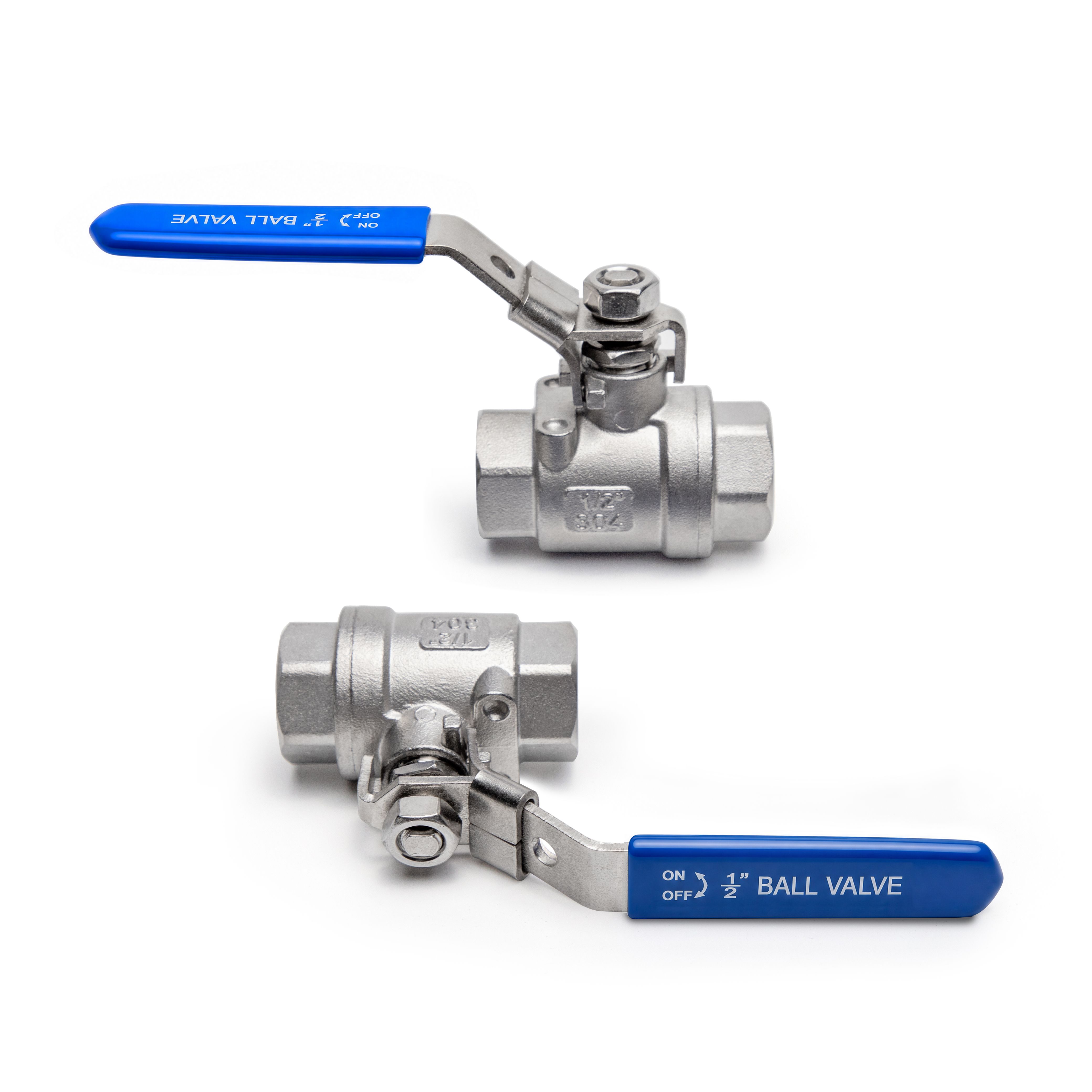
Most engineers memorize the pressure rating stamped on a valve body or flange and never revisit it until something leaks at 180°C. That single number, usually derived at ambient conditions, quietly loses validity as temperature climbs. The de-rating curve exists in every material standard—ASTM, EN, ISO—but sits in an appendix few people open during layout reviews. When a polypropylene fitting rated for 10 bar at 20°C is pushed to 60°C, it might only handle 4 bar; the curve isn't linear, and guessing it usually costs a shutdown.
The oversight isn't just about plastics. Ductile iron, carbon steel, and even stainless each have their own inflection points where creep or oxidation begins to dominate. A carbon steel flange pair might hold full rating to 200°C, then drop steeply by roughly 1.5% of its original rating per degree above a threshold nobody remembers. The curve is often hidden in a table with footnotes about material group, wall thickness, and corrosion allowance—details that get lost when a purchasing spec is copied from an old project. What surprises maintenance teams is that the failure rarely happens during normal operation; it shows up during a steam-out or thermal cleaning cycle, when the system hits a temperature the original designer assumed would never occur.
Treating the de-rating curve as a design input rather than an afterthought changes how you select components. It forces you to check the weakest item in the assembly: not just the pipe, but the gasket, the bolt material, the seal in a quarter-turn valve. One practical habit is to mark the maximum allowable pressure at the maximum expected temperature on the P&ID itself, so operators don't have to dig through a manufacturer PDF. Another is to ask suppliers for the actual curve, not just the room-temperature rating—because when a vendor hesitates to provide it, that's usually the component that should be derated first.
Material Certification: What the Paper Actually Confirms
A material certification often gets treated like a golden ticket, but its real job is far narrower than most people assume. The document typically confirms that a specific batch of raw material met a defined set of chemical, mechanical, or physical requirements at the time of testing. It does not guarantee how the material will behave after machining, welding, or long-term exposure to heat and corrosion — those outcomes depend on process control and design choices that no mill certificate can cover.
What the paper actually confirms is traceability: the heat number, the production date, the test results, and the signature of an authorized inspector. It links a physical coil or bar back to a furnace batch and a set of lab reports. In many industries, that link is the main value, because it lets engineers narrow down a failure investigation or satisfy an auditor without retesting every incoming shipment. The certificate is a receipt for the tests that were performed, nothing more and nothing less.
Reading one closely also reveals what is missing. Many certificates list only the tests requested by the purchaser at the time of order. If your application demands impact toughness at subzero temperatures, but the certificate only shows room-temperature tensile results, then the paper does not confirm fitness for that environment. Material certification confirms compliance with the agreed specification — not universal suitability for every downstream use.
Leak Testing: Batch Samples vs. Every Single Valve
Many manufacturers default to batch sampling because full testing feels slow and costly, but that convenience comes with blind spots. A random selection from a lot can catch systemic issues in materials or assembly, yet it misses the one valve with a hairline crack from a worn mold or a slightly misaligned seat. When that outlier reaches a fuel system or a medical gas line, the cost of failure dwarfs any savings from skipping the test. For high-risk applications, the decision often shifts from statistics to certainty.
Testing every single valve changes the production rhythm, but it also changes accountability. Automated dry-air or helium leak detectors can cycle quickly enough for most line speeds, and the data from each unit becomes a traceable record rather than a statistical inference. Batch sampling still has a place for low-pressure, non-critical uses where a leak means a minor nuisance, not a safety event. The real question is whether your tolerance for a missed defect can be expressed in parts per million or in human consequences.
End Connection Finishes That Prevent Galling and Seizing
Thread galling often strikes when two stainless steel surfaces rub together under high pressure, causing microscopic welding that can destroy the connection before it even reaches full torque. To stop this, savvy engineers turn to finishes like silver plating or molybdenum disulfide coatings, which act as a dry lubricant barrier between the mating threads. What makes a real difference is pairing a hard, smooth surface with a low-friction top layer—typically ceramic-based or PTFE-infused—so that the natural adhesion of stainless alloys never gets a chance to bite.
Not all anti-seize finishes are created equal, and picking the wrong one can be worse than none at all. For example, zinc-nickel electroplating works well for corrosion resistance but may still allow galling under repeated assembly cycles. A better route for demanding joints is a duplex treatment: first a thin electroless nickel base for hardness, then a baked-on fluoropolymer film that rides into the thread valleys without flaking. This keeps the coefficient of friction consistently low, even after dozens of make-and-break cycles, and eliminates the need for messy pastes that attract debris.
Field data from offshore and chemical processing plants shows that connections treated with proprietary anti-galling finishes can survive torque values 20–30% higher than bare stainless without seizure. The key is not just the material itself, but how the finish is applied—vacuum deposition or controlled spray methods ensure no thick edges at thread crests that could create hotspots. When you combine that with a slightly modified thread profile, the result is a connection that threads together smoothly by hand, yet locks securely under load, leaving galling and seizing as problems for the previous generation of fasteners.
Vendor Lead Time as a Clue to Their Real Capability
When a supplier quotes a lead time, most buyers treat it as a simple date on a calendar. But that number—whether it's ten days or ten weeks—is actually a compressed story about how the vendor runs its operation. A very short lead time might signal spare capacity and lean processes, or it might mean the supplier is desperate for orders and cutting corners on quality checks. A long lead time could indicate a backlog of work, but it could also reflect a well-planned schedule that accounts for raw material variability and realistic machine downtime. Instead of accepting the figure at face value, ask the vendor to walk you through the steps behind it. If they can't explain the breakdown quickly, that's a red flag.
Another way to use lead time as a capability signal is to watch how it changes under pressure. Ask what happens to the quoted lead time if you double the order quantity, or if you need a partial shipment early. A vendor with genuine operational strength will give you a modified plan with trade-offs—such as shifting other orders or running a weekend shift—and they'll tell you the cost. A weaker vendor will either promise the impossible without blinking or become vague and defensive. Over time, compare their promised lead times against actual delivery dates. The gap between those two numbers is one of the most honest indicators of real capability you'll ever get, because it can't be hidden by a glossy capabilities deck or a well-rehearsed sales pitch.
FAQ
Start by confirming the vendor's experience with threaded connections and their ability to supply valves that actually hold up under your working pressures. Ask for material test reports and real-world references rather than just a catalog.
Don't rely on the generic rating printed on the body. Request the pressure-temperature curve for the exact seat and seal materials you plan to use. Many valves are fine at room temperature but drop off quickly when things get hot.
Match the wetted parts to your media. Stainless steel covers a lot of ground, but if you're dealing with chlorides or aggressive chemicals, you may need to look at alloys or specific polymer seats. Brass is fine for many water and air lines, but not for everything.
Not exactly. NPT is a standard, but the quality of the threading and the tolerance control can vary. A loose or poorly cut thread will leak or gall, so ask for thread gauging and inspection records before you commit.
Look for pressure testing, seat leakage testing, and material traceability as a baseline. Depending on your industry, you might need certifications like API 607 for fire-safe design, or NSF/ANSI 61 for potable water. Don't settle for a vendor who says 'trust us' without documentation.
If you can tolerate some flow restriction and want to save money, a standard port may work. But for low-pressure-drop needs, slurries, or clean-in-place systems, a full port keeps the path clear and is easier to pig or clean.
Lead time consistency and packaging. A vendor might quote a great unit price but then deliver late or ship valves loosely in a box where threads get damaged. Ask how they protect threaded ends and whether they can hold a scheduled release.
Beyond the unit price, look at what's included: testing, documentation, coating or plating, and warranty support. A cheaper valve that fails early or requires rework will cost more in downtime than the savings.
Conclusion
Most procurement teams treat NPT ball valves as commodity items, but the differences between vendors show up in unexpected places. Thread form variations are a prime example: a valve may meet the nominal NPT size, yet the actual crest and root geometry can be too loose or too tight for reliable sealing, especially after a few installation cycles. Pressure de-rating at temperature is another trap - the 1,000 psi rating stamped on the body often applies only at ambient conditions, and at 300 degrees Fahrenheit the safe working pressure can drop by half or more. A vendor who cannot provide the de-rating curve immediately is not worth further consideration. Material certification seems straightforward, but the paper rarely confirms actual performance; it may simply trace a heat number to a mill test report for the raw bar stock, not the finished valve components. Ask whether the certificate covers the body, ball, stem, and seals, or just one casting.
Leak testing separates serious manufacturers from assemblers. Batch sampling - testing a few valves per lot - leaves you with the risk that your specific unit never saw pressure. Request vendors that pressure-test every single valve, both at the seat and the shell, and ask for the test procedure rather than a generic certificate. End connection finishes matter more than most engineers admit: rough machined threads gall and seize when stainless meets stainless, so look for vendors who control surface roughness or apply anti-seize coatings as standard. Lead time is not just a scheduling number; a vendor promising four-week delivery on a custom NPT valve is either holding finished inventory (good) or cutting corners (bad). Ask how they manage raw material and machining capacity. A truly capable supplier will walk you through their process without hesitation, from thread inspection to final test.
Contact Us
Contact Person: Adonis
Email: [email protected]
Tel/WhatsApp: 8615858822657
Website: https://www.uptaivalve.com