

OEM Foot Massager Sourcing Strategies for a Successful Product Launch
2026-11-16
Launching a foot massager isn’t just about finding a factory and placing an order—it’s about anticipating the sourcing pitfalls that quietly destroy margins and delay launches. From inconsistent motor output to vague compliance certificates, the wrong OEM partner can turn a promising product into a customer service nightmare. That’s why the most successful product launches treat sourcing as a strategic advantage, not a checkbox. In this guide, we’ll unpack the exact OEM foot massager sourcing strategies that separate profitable launches from costly missteps. You’ll see how to evaluate suppliers beyond the spec sheet, negotiate terms that protect your timeline, and avoid the hidden costs most brands only discover after it’s too late. And when you’re ready to move from theory to action, a proven partner like XINGBU can help you skip the guesswork and lock in the quality your customers expect—before your competitors do.
Factory Audits That Go Past the Polished Showroom
Most buyers only see what the factory wants them to see—fresh paint on the production line, a spotless floor, and a conference room stocked with fruit platters. A meaningful audit starts before you ever step through that entrance, by checking shipping manifests, staff rosters, and maintenance logs that don't get staged for visitors.
The real tells are often in the break room, the night shift, and the loading dock. Ask a line worker how many molds they run per hour, or watch how quickly a supervisor walks past an idle machine. Those details reveal whether the operation is genuinely stable or just rehearsed.
Dig into sub-tier suppliers, rejected lot counts, and the age of fire extinguishers. A facility that handles your order well on a Tuesday afternoon matters less than one that can keep doing it during peak season, power cuts, and staff turnover.
Motor Burn-In Tests: Catching the Cheap Wires Before Customers Do
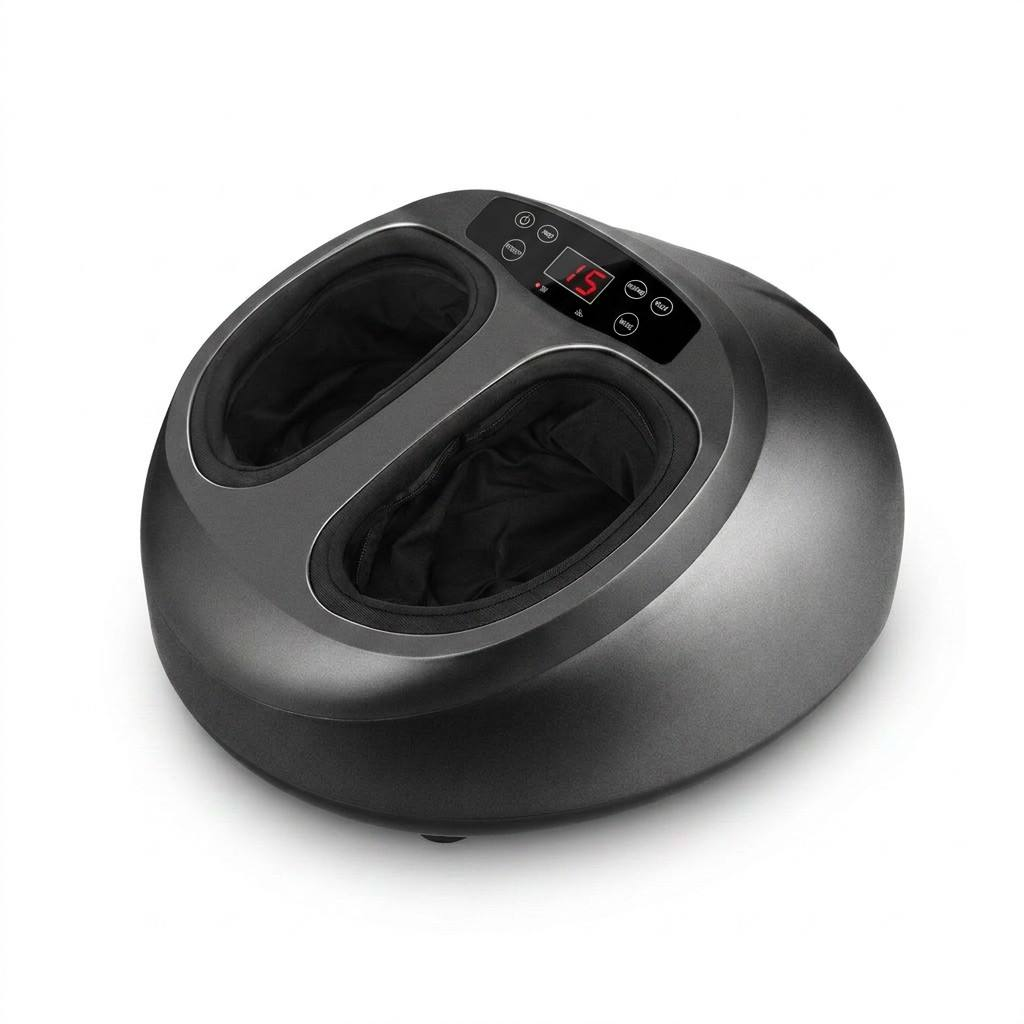
A burn-in test isn't just a formality. It's the moment a motor gets pushed past its comfort zone while still on the bench. Cheap wire shows itself quickly here—insulation softens, resistance climbs, and that faint smell of overheated varnish drifts through the test bay. When you run a batch at 130% rated load for six hours, the good windings stay stable. The questionable ones start to sweat at the terminations.
Most warranty returns trace back to one thing: a wire supplier who shaved pennies by thinning the copper or cheaping out on enamel. Burn-in catches that before the motor ever ships. You watch the thermal camera instead of trusting the datasheet. A hotspot near the slot liner tells you more than any certificate. Then you cut open a suspect unit, and the discolored varnish confirms it—that spool never should have made it past receiving.
Customers don't run motors gently. They overload, undervoltage, and ignore the duty cycle. Burn-in mimics that abuse in a controlled way, so the failures land on your floor, not theirs. The test may add hours to production, but it subtracts a lot more in field service calls and angry emails.
Designing Roller Nodes Your Competitors Can't Just Copy from a Catalog
Most catalog roller nodes are built around a generic envelope and a handful of off-the-shelf bearing sizes. If you start from that same constraint set, you end up with the same fatigue life, the same mounting headaches, and the same service intervals as everyone else. Breaking away means pulling the load path apart early: study how the roller actually sees side thrust, shock, and misalignment in your machine, then design the inner race, outer profile, and retention features around those measured loads instead of a standard cross-section.
Another lever that catalogs rarely give you is metallurgy paired with geometry. A slightly deeper case depth, a cleaner transition radius, or a non-standard crowning profile on the rolling elements can change where stress concentrates and how spalling initiates. We have also had success with selective surface treatments on the thrust faces and a custom cage pocket geometry that quiets the node under reversing loads. Those choices only come from watching failed nodes come back from the field and mapping each fracture back to a design decision.
Finally, make the assembly difficult to reverse-engineer by embedding the know-how in details that are not visible from a photograph. A proprietary preload sequence, a non-obvious bore taper, or a matched set of rollers sorted by actual diameter after grinding all create a performance envelope that copyists cannot match by measuring a sample. Document the reasons internally, keep the critical dimensions off the general arrangement drawing, and your roller node stops being a commodity.
Tooling Fees, MOQs, and the Fine Print That Eats Your Margins
Tooling fees look straightforward on a quote—one lump sum for the mold, die, or fixture. But in practice, that number rarely tells the whole story. Some suppliers amortize the tooling cost into the piece price after you hit a certain volume, then conveniently forget to credit you once you cross that threshold. Others charge a separate "design revision" fee every time you tweak a dimension, even when the change is minor. I've seen a $4,000 tooling line item balloon past $9,000 after three rounds of "necessary adjustments" that should have been caught in the initial DFM review.
MOQs are another silent margin killer. On paper, a 5,000-unit minimum feels manageable until you realize demand for your SKU is actually closer to 1,200 units per quarter. Now you're sitting on 3,800 units of inventory that ties up cash, eats warehouse space, and risks obsolescence. Worse, some suppliers will "waive" the MOQ but then hit you with a small-batch surcharge that's effectively the same cost. The real trick is asking what happens to the per-unit price at 50%, 75%, and 100% of the stated MOQ—the answer often reveals whether the minimum is a real production constraint or just a pricing lever.
Then there's the fine print: raw material surcharges tied to volatile commodity indexes, a 30-day payment term that quietly shifts to net-15 after your first late invoice, or a "re-quote at any time" clause buried on page three. Each one seems harmless until a copper spike adds 12% to your cost mid-contract. I've learned to scan for three things before signing: does the tooling ownership clause revert the mold to you after full payment, is the MOQ penalty capped at a fixed percentage, and does the price hold for at least 12 months without renegotiation. Miss those, and your "great deal" becomes a slow leak in your gross margin.
CE, FCC, and the Certification Maze That Can Delay Your Launch by Months
Getting a product through CE and FCC approval rarely follows the timeline on the project plan. CE marking can mean half a dozen EU directives depending on what the device does—RED for radio, EMC for emissions, LVD for safety, and RoHS for materials. Each one pulls in its own test standard, and if the product has a modular radio or a slightly unusual power supply, a lab might need weeks just to clarify which set of limits applies. Meanwhile, FCC testing splits between intentional and unintentional radiators, with different procedures for each, and a missed pre-scan can send the whole submission back to square one.
Delays usually come from the same handful of places: test labs booked out for a month or more, a harmonic that fails at the last minute, or paperwork that bounces between a notified body and a manufacturer because a schematic is missing a revision date. I've seen a single missing RF exposure calculation add six weeks to a schedule, not because the work is hard, but because nobody owned it until the certification body asked. Products with Bluetooth or Wi-Fi often get stuck on antenna gain tables or firmware lock codes that the lab needs to run the final tests.
The practical fix is to treat certification as a design input, not a launch gate. Pull the applicable standards early, run pre-compliance scans before the official test window, and keep technical documentation in one folder that can be shared the same day it's requested. If you're using a new radio module, confirm the modular grant covers your host device, and if you need a notified body for CE, start that conversation before the enclosure design is frozen. It won't make the maze disappear, but it keeps a two-week filing from becoming a two-month delay.
Shipping Foot Massagers Without Ending Up with Cracked Housings and Angry Reviews
The single biggest mistake sellers make is treating a foot massager like a generic boxed appliance. These units often have a rigid plastic shell that sits directly against the outer carton, so every drop or vibration transfers straight into the housing. Instead, isolate the device from the carton walls using foam blocks or molded pulp inserts that create at least a one-inch air gap on all six sides. That gap acts as a shock absorber, and without it, even a short drop onto concrete can spider-web the bottom casing.
Another overlooked factor is the internal massaging mechanism itself. Many foot massagers have heavy rollers or air pumps that are only secured by a few screws into the plastic base. During transit, those components can shift and act like a hammer from the inside, cracking the housing outward. A simple fix is to add a strip of high-density foam between any moving metal assembly and the surrounding shell, or to ship the unit with a reusable plastic brace that locks the roller carriage in place. This keeps the massager from destroying itself before the customer ever plugs it in.
Finally, think about the last mile. Courier hand-offs, porch drops, and even the customer’s initial unboxing all put stress on the corners and seams. Reinforce those weak points with edge protectors inside the carton, and choose a box with a double-wall corrugated rating of at least 200# test. A cheap single-wall carton will arrive crushed, and the customer will blame the product, not the carrier. A few dollars more in packaging materials is far cheaper than a return, a replacement shipment, and a one-star review that says the housing arrived cracked in three places.
FAQ
Look beyond price alone. Assess their track record with similar wellness devices, material certifications, and willingness to share detailed production timelines. A factory that asks questions about your target market and usage scenarios often delivers better customization than one that just accepts a spec sheet.
Request a documented quality control plan that includes inline inspections, function tests for heat and vibration nodes, and final random sampling. If possible, negotiate a third-party pre-shipment inspection clause so you are not relying solely on the factory's word.
Tooling modifications, packaging revisions, and compliance testing often appear later. Ask upfront whether the quoted unit price includes things like UL/CE certification support, custom logo molding, and export-grade packaging, otherwise your landed cost can climb quickly.
Existing designs reduce lead time and minimum order quantity, which works well for a first launch. Full customization makes sense if you have a unique selling point, such as a specific shiatsu node layout or app connectivity, but expect longer sampling cycles and higher upfront mold fees.
Lock in the exact BOM, including motor brand, power supply specs, and foam density. Add clauses for delivery penalties, intellectual property ownership of custom tooling, and a clear process for defect replacement. Avoid vague language like similar quality because that invites substitutions.
Start at least four to six months ahead. Sampling alone can take three to five weeks, followed by tooling adjustments, compliance documents, and sea freight. Build in buffer time for unexpected delays like component shortages or port congestion.
Ask for current certificates for the target market, such as FCC for the US or CE for Europe, and confirm whether the motor and heating elements have separate safety approvals. Also request a recent factory audit report covering labor practices and environmental handling.
Instead of pushing only on unit price, negotiate value-adds like free tooling amortization over a larger order, included packaging design, or faster lead times. Suppliers are often more flexible on these points than on a bare-bones price cut.
Conclusion
A polished showroom can hide a lot of sins, which is why a real factory audit means walking the production floor, not just flipping through a sample binder. Ask to see a live motor burn-in test running for at least four hours—cheap internal wiring tends to fail right around then, and that's the kind of defect your customers will find before you do. Once you've confirmed the build quality, shift to the roller nodes themselves. Off-the-shelf designs are fine for a generic product, but if you want any pricing power, you'll need a custom node shape or spacing pattern that can't be ordered from a competitor's catalog next month.
Tooling fees and MOQs are where margin quietly disappears, so push for a clear breakdown of what's amortized, what's refundable, and what happens if you reorder below the agreed volume. On the compliance side, CE and FCC testing can easily eat two or three months if the lab finds an issue with the power supply or motor emissions—build that buffer into your timeline instead of treating certification as a last-week checkbox. Finally, don't underestimate the packaging. A foot massager with a cracked housing from a single drop in transit will generate photos, one-star reviews, and return costs that erase whatever you saved on the unit price.
Contact Us
Contact Person: Hannah
Email: [email protected]
Tel/WhatsApp: +86 18266954198
Website: https://www.okmassager.com/