

OEM Pyrolysis Equipment: Unlocking Sustainable Waste-to-Energy Solutions
2026-07-18
What if your waste didn't just disappear—but powered a cleaner future? OEM pyrolysis equipment is making that possible, turning non-recyclable materials into energy and valuable byproducts. At the core of this shift is Tundrr, whose tailored solutions help businesses close the loop on waste while cutting costs. In this blog, we break down how Tundrr’s approach is unlocking sustainable waste-to-energy outcomes that go beyond standard incineration.
Precision Pyrolysis: How Custom Designs Boost Energy Recovery
Traditional pyrolysis systems often take a one-size-fits-all approach, but waste streams vary drastically in composition, moisture, and energy density. Custom-designed reactors address this by tailoring feed mechanisms, heating profiles, and residence times to match specific feedstocks. For instance, a facility processing high-moisture biomass might incorporate a pre-drying stage within the reactor design, using waste heat from the process itself. This not only improves thermal efficiency but also ensures consistent output quality, pushing energy recovery rates well beyond what generic systems can achieve.
The geometry of the reactor and the method of heat transfer play pivotal roles in maximizing energy output. Innovations like multi-stage screw conveyors or fluidized bed configurations allow for finer control over temperature gradients and reaction kinetics. A well-engineered design can minimize char formation that traps useful energy, while maximizing the production of combustible syngas and bio-oil. Some advanced units even integrate catalytic cracking directly into the pyrolysis zone to upgrade vapors on the fly, reducing the need for downstream processing and effectively capturing more energy from each ton of waste.
Beyond the reactor core, integrated energy recovery loops make custom designs exceptionally efficient. By channeling hot exhaust gases to power organic Rankine cycles or feed district heating networks, facilities can convert what was once waste heat into usable electricity or thermal energy. Tailored condensation trains also allow operators to harvest specific chemical fractions at optimal temperatures, preventing valuable energy carriers from being flared or lost. This holistic, customized integration turns a simple disposal method into a precision energy plant that adapts to both the waste challenge and the local energy demand landscape.
From Trash to Cash: The Financial Logic Behind Pyrolysis
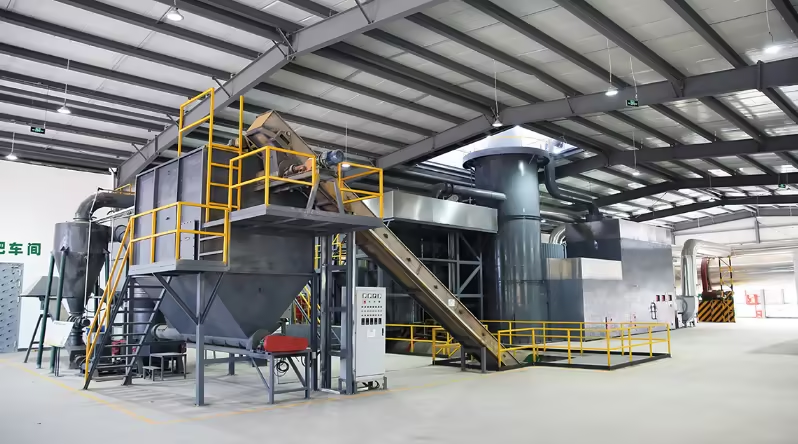
Turning garbage into gold might sound like alchemy, but modern pyrolysis plants are doing exactly that—and with surprisingly solid economics. The process essentially cooks waste materials like plastics or tires in an oxygen-free environment, breaking them down into saleable commodities: fuel oil, carbon black, and combustible gas. Instead of paying escalating landfill fees, operators get paid to take problematic waste streams, then sell the outputs to refineries, manufacturers, and energy users. The margin isn't just in the product sales; it's amplified by avoided disposal costs and, in many regions, government incentives that value waste diversion over incineration or burial.
What makes the numbers particularly compelling is the scalability and feedstock flexibility. A well-designed continuous pyrolysis unit can process upwards of 20 tons per day, yielding roughly 40–50% fuel oil that tracks closely with crude oil pricing, but typically at a discount to virgin fuels. The carbon black—often overlooked—commands respectable prices in rubber, pigment, and construction industries if quality is consistent. Meanwhile, the non-condensable gas gets cycled back to fuel the reactor, slashing external energy costs. When you factor in the relatively low-temperature, low-pressure operation (no exotic catalysts or extreme conditions), the capital payback periods often land in the 2–4 year range for projects sited near cheap, abundant feedstocks like tire piles or post-industrial plastic scrap.
Beyond the spreadsheet, there's a quieter financial logic: risk mitigation and site-level resilience. Traditional waste-to-energy incinerators draw constant regulatory scrutiny and public opposition; pyrolysis plants, especially modular containerized units, fly under the radar with minimal emissions and a smaller footprint. They can be co-located at landfills, recycling centers, or industrial parks, monetizing waste on the spot and sidestepping the volatile hauling and tipping fee rollercoaster. For investors weary of green-tech hype, the raw math of gate fees received plus commodity sales less operational overhead is refreshingly tangible—and quietly driving a surge of small-scale, profitable installations from Southeast Asia to rural America.
Cleaner Conversion: Meeting Stringent Emission Standards
Modern emission control technologies have redefined what's possible in reducing pollutants from industrial and automotive sources. By integrating advanced catalytic systems and real-time monitoring, facilities now achieve conversion efficiencies that once seemed out of reach. These solutions don't just cut down on nitrogen oxides and particulate matter—they fundamentally alter the chemistry of exhaust streams, turning harmful compounds into harmless ones before they ever leave the stack.
Meeting tougher regulations isn't simply about adding more hardware. It requires a precise dance between engine calibration, aftertreatment design, and fuel quality. Selective catalytic reduction, for instance, depends on a carefully metered injection of urea solution to neutralize NOx, while diesel particulate filters rely on regeneration cycles that balance backpressure and soot load. Getting this right means fewer unscheduled maintenance stops and a smaller environmental footprint, all while staying well within legal limits.
The push toward cleaner conversion has also accelerated material science breakthroughs. New catalyst coatings resist poisoning from sulfur and extend operational lifetimes, cutting replacement costs. Meanwhile, data-driven control algorithms adapt to varying loads and temperatures, ensuring peak performance across diverse conditions. It's a quiet revolution, but one that delivers measurable improvements in air quality—no hype required.
One System, Many Feeds: Handling Mixed Waste With Ease
Dealing with mixed waste streams used to mean juggling multiple machines, complex sorting lines, and a high chance of error. But when one unified system is designed to accept a wide variety of feeds—everything from municipal trash to industrial byproducts—simplicity takes over. Instead of separate pre-processing steps, the core technology adapts on the fly, recognizing material types and adjusting parameters without manual intervention. The result is a seamless intake that saves floor space and cuts down on the logistical headache of waste routing.
What really sets this approach apart is its internal sorting intelligence. Advanced sensors paired with mechanical separation work inside a single compact unit to pull out recyclables, organics, and residual fractions in one continuous motion. Air jets, magnetic arrays, and near-infrared cameras don't just identify; they instantly direct each fragment to the right output channel. The system learns as it runs, refining its decisions to boost purity rates even when the input mix changes unpredictably from hour to hour.
On the user side, operation couldn't be more straightforward. A basic touchscreen lets facility staff select the general type of incoming load, and the system takes care of the rest—monitoring throughput, adjusting torque and speed, and alerting only when the unexpected happens. Maintenance crews appreciate how quickly panels open for access, while managers track performance remotely without needing to parse complicated data. It all adds up to a waste handling experience that feels less like a chore and more like a quiet, reliable partner in the daily routine.
Start Small, Scale Fast: The Modular Pyrolysis Edge
Traditional pyrolysis plants often demand massive upfront capital and rigid footprints, locking operators into oversized capacity from day one. Modular systems flip this model by letting you commission a single compact unit that begins converting waste into valuable products fast. You validate process efficiency, build market relationships, and generate revenue while keeping capital risk low. Adding capacity becomes as straightforward as plugging in additional modules once project economics are proven, turning a linear scale-up into an agile growth curve.
The real edge lies in how this approach sidesteps the common pitfalls of centralized processing. Instead of shipping feedstock long distances to a mega-plant, modular units can be placed closer to waste sources, slashing logistics costs and carbon footprint. If market demand shifts, you can reallocate modules to new sites quickly. This plug-and-play philosophy means you are never trapped by a single facility’s constraints, and you can continually optimize your configuration as feedstocks and offtake agreements evolve.
Unlocking Hidden Value: Biochar, Syngas, and Beyond
In the world of biomass conversion, biochar and syngas are often overshadowed by flashier products like liquid biofuels. Yet these byproducts hold untapped potential that goes far beyond their conventional roles. Biochar, essentially a stable form of charcoal, can do more than just enrich soil—its porous structure makes it a champion at holding water and nutrients, but delve a little deeper and you’ll find it can also sequester carbon for centuries, pulling double duty as a climate solution. Meanwhile syngas, a mixture of hydrogen and carbon monoxide, is frequently burned for heat or power, losing the chance to become a building block for higher-value chemicals.
The real magic happens when we start thinking beyond the obvious. Biochar can be engineered into advanced construction materials, replacing sand in concrete or filtering contaminants from wastewater, turning a ‘waste’ into a resource that cleans and strengthens. Syngas, instead of going up in smoke, can be reformed into liquid fuels or polymerized into biodegradable plastics, closing loops that typically leak carbon and waste. This is where circular thinking breathes new life into old processes—not just extracting energy, but preserving and multiplying value in ways that conventional approaches miss.
FAQ
Pyrolysis equipment heats waste materials like plastics, tires, and biomass in an oxygen-starved environment, breaking them down into smaller hydrocarbons. Instead of burning them, it produces synthetic gas, liquid fuels, and a carbon-rich char. For waste management, this means diverting materials from landfills and turning them into usable energy sources, reducing both disposal problems and fossil fuel reliance.
Building pyrolysis technology from scratch requires deep expertise in thermal engineering, materials science, and emissions control. OEM providers offer pre-engineered, tested modules that can be dropped into existing operations, often with compliance guarantees and performance data. It’s less about the hardware itself and more about de-risking the project—you get a known quantity with ongoing support, saving years of trial and error.
That depends heavily on the design. Some units are optimized for homogeneous inputs like tire shreds or wood chips. Others include front-end sorting and shredding stages, handling commingled municipal waste. Feed flexibility is a selling point for many OEMs; they’ll often tailor the system to the specific waste profile of a region, but cleaner inputs always yield better consistency and less wear on the reactor.
Unlike incineration, pyrolysis avoids direct combustion, so it produces far fewer airborne toxins like dioxins, provided temperatures are controlled. The outputs can be refined into marketable products rather than ash. However, it’s not a free pass—the process requires energy to run, and managing the solid char responsibly is crucial. When done right, it’s a lower-emission pathway that recovers more value from the waste.
Routine attention centers on the reactor’s refractory lining, which can crack under thermal cycling, and the gas cleanup train, where tar buildup is common. Seals and conveyors in the feed system also need regular checks. Smart OEMs design for ease of access, but operators should expect to replace wear parts every couple of years and budget for periodic shutdowns to inspect corrosion, especially if processing halogenated plastics.
There’s a growing market for modular, containerized pyrolysis units that serve one hospital, farm, or remote community. These can process as little as a ton per day. Large centralized plants still dominate because they spread out capital costs, but the economics are shifting. The real constraint isn’t scale—it’s securing a steady waste supply and a buyer for the energy output, which local microgrids can sometimes address.
Typically, you get a pyrolysis oil (often called bio-oil or tire-derived oil), a combustible syngas, and a solid char. The oil can be upgraded to transportation fuels or used for heating; the gas can run generators on-site. Their cleanliness varies: syngas is relatively straightforward to scrub, while the oil may need further refining to remove oxygen and acids. Many OEMs include polishing steps, so the final products meet standard utility or fuel specifications.
Conclusion
OEM pyrolysis equipment is reshaping the waste-to-energy landscape by turning complex, mixed waste streams into reliable energy with remarkable efficiency. Rather than a one-size-fits-all approach, custom-designed reactors fine-tune temperature, residence time, and feedstock handling to maximize energy recovery—extracting every possible joule from materials that would otherwise end up in landfills. The process doesn't just burn waste; it thermally decomposes it in a controlled, oxygen-starved environment, producing cleaner syngas while easily meeting stringent emission standards. With advanced filtration and scrubbing systems integrated directly into the design, these units slash pollutants, making them a viable option even in regions with tight environmental regulations. The real technical leap lies in their adaptability: a single system can seamlessly switch between plastics, biomass, tires, or municipal solid waste, eliminating the need for multiple processing lines and reducing operational headaches.
Beyond the environmental wins, the financial case for OEM pyrolysis is compelling. Operators transform disposal costs into revenue streams by selling energy, biochar, and valuable by-products like syngas, which can power the very process or feed into local grids. The modular design further tilts the economics in favor of scalability—start with a compact unit that fits your current waste volumes and capital budget, then expand by adding modules as feedstock supply grows. This pay-as-you-grow model sidesteps the massive upfront investment that typically sinks large-scale waste-to-energy projects. Meanwhile, the biochar produced isn't just a soil amendment; it's a carbon-rich material that can sequester carbon for centuries, opening doors to carbon credit markets. OEM pyrolysis, in short, transforms a costly waste problem into a flexible, profitable, and genuinely sustainable solution.
Contact Us
Contact Person: Ellen Zhang
Email: [email protected]
Tel/WhatsApp: +86(21) 2287 6756
Website: https://www.tundrr.com/en/