

OEM Three Phase Vibration Motor Essentials for Reliable Industrial Performance
2026-11-16
When a three-phase vibration motor underperforms, the root cause is rarely the motor's design—it's the gap between OEM specifications and real-world operating conditions. This guide cuts through the noise, covering the essential factors that separate reliable industrial performance from costly downtime. Whether you're sourcing or maintaining these workhorses, understanding what to look for—and partnering with Guangling—can make all the difference.
Rotor Eccentricity Tuning for Predictable Force Delivery
Rotor eccentricity tuning begins with the deliberate offset between the rotor’s geometric axis and its center of mass. That offset, usually measured in tenths of a millimeter, generates a radial centrifugal force that scales with the square of rotational speed and linearly with the product of rotor mass and eccentric distance. By adjusting either the mass distribution or the mounting offset, designers can set the force amplitude at a given speed without changing motor torque or supply pressure. In systems where force must remain consistent across production batches, this mechanical adjustment often proves more repeatable than relying on closed-loop compensation.
A practical way to tune eccentricity is to use split rotor halves with an indexed coupling that allows relative rotation before locking. Rotating one half through a few degrees changes the combined center of mass while keeping total rotor inertia nearly constant. Another approach uses threaded radial inserts that can be moved outward in small increments. Because the force response follows a well-defined curve once eccentricity is set, the resulting delivery becomes predictable: the operator can record the eccentric offset and know that a given speed will produce the same output force within a narrow tolerance band. The trade-off is that higher eccentricity increases bearing side loads and vibration, so the tuning range is often limited by the bearing dynamic rating rather than the rotor itself.
In fluid handling and compact vibratory drives, this tuning method allows force delivery to be matched to a specific load or chamber geometry without changing motor windings or gear ratios. For example, a peristaltic pump with a slightly eccentric roller carrier can deliver a more uniform occlusion force across tubing variations by adjusting the carrier offset during assembly. Because the adjustment is mechanical and locally verifiable, it avoids the drift and calibration burden associated with sensor-based force control, while still providing enough flexibility to accommodate tolerance stack-ups. That makes rotor eccentricity tuning a low-cost, deterministic route to predictable force output in moderate-speed rotating systems.
Insulation Systems That Survive Voltage Spikes and Moisture
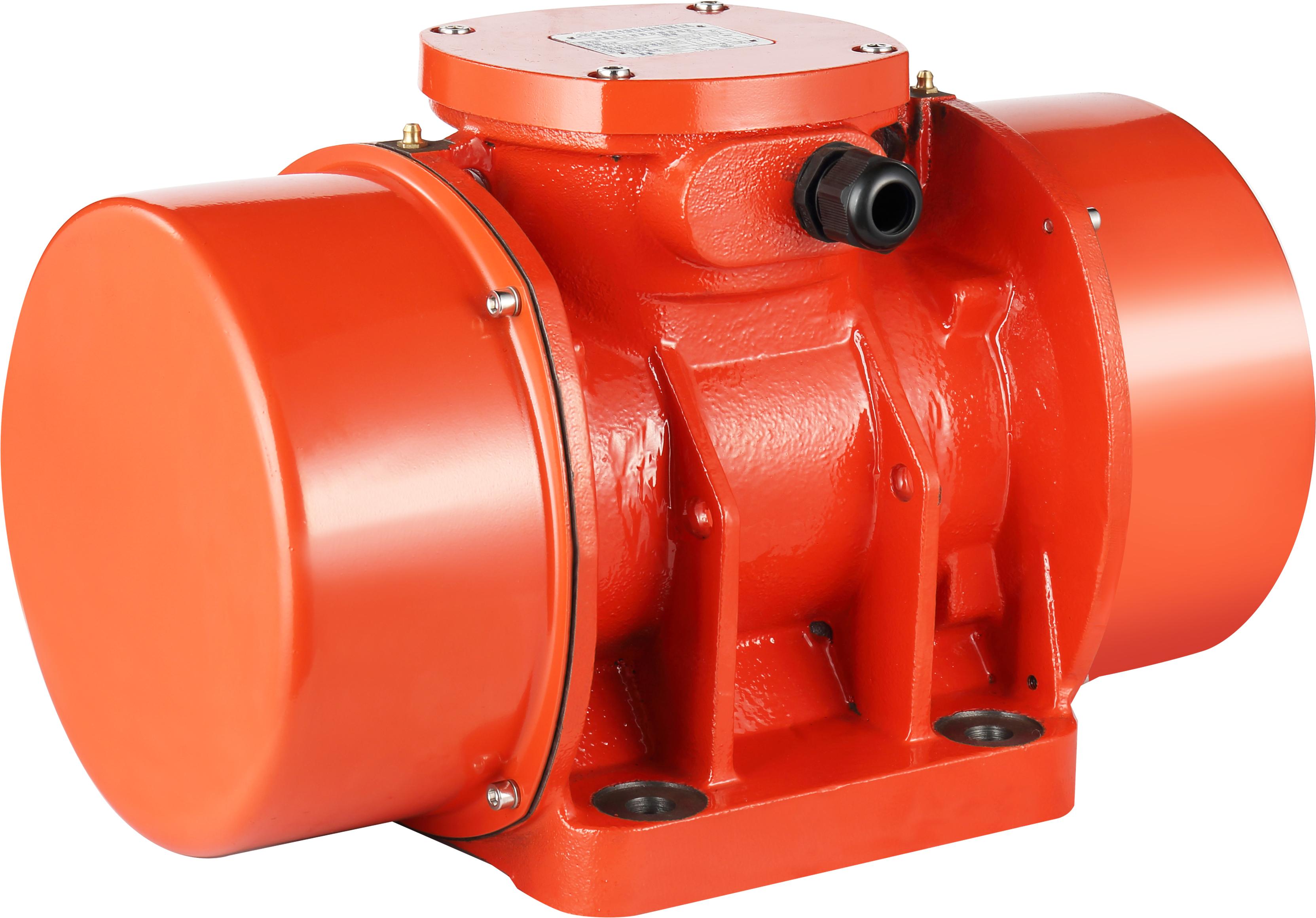
Voltage spikes from inverter drives or switching transients can punch through weak insulation in microseconds, leaving motors and transformers vulnerable to premature failure. The real challenge isn't just handling a single high-voltage event—it's surviving thousands of rapid pulses day after day without developing microscopic voids or partial discharge sites. Modern insulation systems address this by using mica-based tapes, corona-resistant enamels, and carefully controlled resin impregnation that fills every air gap. These materials work together to distribute electrical stress evenly, so a spike that would normally ionize trapped air simply dissipates as harmless heat.
Moisture is the silent killer that often gets overlooked until it's too late. A winding that tests perfectly dry can fail within hours once humidity creeps into cracks, hygroscopic binders, or poorly sealed lead exits. Effective insulation systems don't just repel surface water—they must resist absorption, condensation, and the slow capillary action that draws moisture along conductor strands. This means specifying low-water-absorption mica, hydrophobic varnishes, and void-free construction that denies water a place to pool. When combined with proper baking and vacuum pressure impregnation, the result is an insulation that maintains its dielectric strength even at 95% relative humidity.
Field experience shows that the most durable systems are designed with both threats in mind from the start, not as an afterthought. For example, wind turbine generators and mining conveyor motors see constant voltage reflections from long cable runs plus rain, salt spray, or condensation. Insulation that only solves one problem will eventually fail from the other. A robust approach uses corona-suppressing coatings on coil ends, slot liners with high thermal conductivity, and end-winding encapsulation that creates a seamless barrier. Testing such systems under combined stress—high-frequency pulses while exposed to moisture—reveals weaknesses that standard hipot or megger tests miss. Ultimately, the insulation that survives in the field is the one that treats voltage spikes and moisture as a single, inseparable challenge.
Bearing Preload Strategies to Cut Noise and Heat
Applying the right preload to a bearing can significantly reduce both audible noise and operating temperature. When a bearing runs with too little preload, the rolling elements may skid or bounce, generating vibration and excess heat. A controlled axial load keeps the balls or rollers in constant contact with the raceways, eliminating clearance-induced rattling and promoting smoother rotation.
Common preload methods include rigid positioning (using matched bearing pairs or spacers) and spring preload, each offering distinct benefits. Rigid preload provides high stiffness and is ideal for applications demanding precise rotational accuracy, while spring preload maintains a near-constant force despite thermal expansion. For temperature-sensitive designs, selecting a lower preload or using a spring system prevents excessive heat buildup without sacrificing noise control.
Field experience shows that matching preload to actual operating conditions—load direction, speed range, and housing material—is more effective than simply increasing preload. Over-preloading raises friction and accelerates wear, yet under-preloading can cause impact noise. Periodic monitoring of bearing temperature and vibration signatures helps fine-tune the preload strategy, achieving a balance where both noise and heat stay within acceptable limits.
Stator Slot Geometry Impacts on Starting Torque
The shape and depth of stator slots have a direct but often overlooked effect on the locked-rotor torque of an induction machine. Deeper slots raise the leakage inductance, which naturally limits the inrush current at start-up, but that same leakage also eats into the air-gap flux available for torque production. A shallower slot profile does the opposite, allowing a stiffer flux and higher starting torque, though it can push the starting current to levels that the supply or winding insulation may not tolerate for long.
Slot opening width changes the magnetic path in ways that show up clearly at standstill. A narrow opening smooths the flux distribution and reduces the effective air-gap, but it encourages local saturation near the slot tips, which can bend the torque-speed curve in the low-speed region. Wider openings relax this saturation and simplify coil insertion, yet they introduce more slot harmonics and can make the starting torque more sensitive to rotor position.
What matters in practice is not a single dimension but the combination of slot depth, lip geometry, and tooth width. A tapered slot with a modest opening can shift the saturation knee just enough to improve the starting torque per amp of inrush current, giving a better locked-rotor response without sacrificing full-load efficiency. This is why small changes to the stamping profile are often iterated in prototype testing rather than predicted from textbook formulas alone.
Enclosure Sealing Without Trapping Internal Heat
Sealing an enclosure against moisture, dust, and debris usually means tightening every seam until nothing gets through. But that same airtight barrier also locks in heat from internal components, pushing temperatures up and shortening device life. The real challenge isn't just keeping the outside out—it's letting the inside breathe without creating a leak path. Silicone gaskets and polyurethane foams can handle the mechanical seal, but they do nothing for thermal pressure. You need a design that treats heat as another form of pressure, not a separate problem.
One approach that works well is pairing a durable perimeter seal with a pressure-equalizing vent. The vent uses a microporous membrane that blocks liquid water and fine particles while allowing air and water vapor to pass. This keeps internal and external pressures balanced, so the sealing gasket isn't stressed by repeated heating and cooling cycles. At the same time, conductive paths or heat-dissipating surfaces can pull thermal energy toward the cooler outer shell, preventing hot spots near sensitive electronics.
In practice, the enclosure material matters as much as the sealing method. Aluminum or thermally conductive polymers can move heat away from sealed areas, while strategic ribbing increases surface area without opening the enclosure. For high-power devices, a small internal heat spreader or phase-change material can absorb transient spikes, giving the breathable vent time to equalize pressure. The goal is to keep the seal intact and the internal temperature within a safe range, even when ambient conditions shift quickly.
Shaft Material Choices That Resist Fatigue Cracking
Fatigue cracking in shafts almost always begins at a stress riser, so material selection works best when paired with thoughtful geometry. That said, alloys with high cleanliness and fine grain structure—like vacuum-degassed 4340 or 300M—tend to hold up better under repeated bending and torsional loads. Their deeper hardenability lets a shaft carry higher surface compressive stress without premature crack initiation, especially after induction hardening or nitriding.
For applications where weight matters or loads swing sharply, maraging steels and select precipitation-hardening stainless grades offer a useful combination of toughness and tensile strength. Keep in mind that a shaft made from 1045 may test fine in a simple tensile pull but can be notch-sensitive in service; switching to a micro-alloyed or vacuum-arc-remelted variant often extends life more than increasing diameter does.
If the operating environment includes corrosion, don’t overlook duplex stainless or nitrided low-alloy steel. Corrosion pits act as ready-made crack starters, so a material that resists pitting often outperforms a higher-strength grade that rusts. In every case, specify tight limits on inclusions and sulfur content, and treat the surface—by shot peening, fillet rolling, or polishing—to delay the initiation phase.
FAQ
Three phase units run cooler and deliver more consistent torque without the start capacitor headaches. In a round-the-clock screening line, that means less thermal drift in amplitude and fewer unplanned stops compared to single phase motors that tend to struggle under sustained load.
For compaction tables you usually want a higher static moment with a broader amplitude to settle dense materials, while a feeder benefits from a sharper, lower amplitude throw to move product without bouncing it off the track. Start with 50% of max weight and adjust while measuring material flow or density, not by guesswork.
OEM designs usually match the winding insulation, bearing preload, and rotor balance to the actual vibration frequency and g-force the application sees. Generic units may fit the bolt pattern and voltage but miss those details, leading to faster bearing wear or winding shorts when run at full centrifugal force for months.
Mounting on a warped or unpainted surface creates uneven stress on the foot flanges, which can crack over time. Forgetting to torque bolts in a star pattern or using hard washers instead of the specified lock washers also lets the motor walk under vibration. Clean the mating faces and recheck torque after the first 50 hours.
Class F insulation handles higher internal temperatures and gives more headroom before breakdown, which matters because vibration motors often run enclosed and rely on frame cooling. In humid environments, a motor with Class F plus moisture-resistant varnish will survive condensation cycles far better than a basic Class B unit.
If the process needs variable frequency to tune vibration speed for different materials or product changeovers, an inverter-rated motor is worth the extra cost. Standard motors may overheat or develop bearing currents at lower frequencies. Choose one with reinforced insulation and a shaft grounding option if the drive will run below 30 Hz often.
Check mounting bolt torque and insulation resistance every 500 running hours, re-grease bearings only with the exact specified grease at the given interval, and measure amp draw under load each quarter. Any sudden rise in vibration amplitude or noise usually points to an eccentric weight slipping or a bearing starting to spall, so stop and inspect instead of pushing through a shift.
Conclusion
Achieving dependable output from an OEM three-phase vibration motor depends on tuning the rotor as a force delivery system rather than simply balancing it. Rotor eccentricity adjustments set up the amplitude and throw so each cycle lands with the same intensity, which keeps downstream screening, feeding, or compacting equipment stable. Stator slot geometry then refines how the motor starts under load. Open, semi-closed, or skewed slot profiles alter flux distribution and locked-rotor torque, making the difference between a smooth ramp-up and a stalled start. Windings also need insulation that holds up under both inverter voltage spikes and moisture intrusion. Corona-resistant varnish, mica-based phase separators, and vacuum impregnation give the turn insulation enough margin to avoid premature failure.
Bearings carry a disproportionate share of the punishment in vibratory duty, so preload strategy matters as much as bearing size. A controlled axial preload through wave springs or precision spacers reduces skidding, lowers noise, and keeps heat from climbing without creating excessive friction. The enclosure design has to do two jobs at once: keep fine dust and washdown water out while letting internally generated heat escape. That often means labyrinth paths, breather drains, and metal-to-metal contact areas that conduct heat away from the stator. Shaft material selection closes the loop. Repeated flexing under vibration demands a fatigue-resistant alloy, and treatments such as induction hardening or shot peening shift crack initiation further into the service life. Together these details make an OEM motor that stays predictable over thousands of operating hours.
Contact Us
Contact Person: ZHUO
Email: [email protected]
Tel/WhatsApp: 86-576-86320988
Website: https://www.cnguangling.com