

Precast Concrete Components Exporters Simplify Global Construction Supply Chains
2026-11-26
A single delayed precast concrete component can bring a large-scale build to a halt, and when that component has to cross borders, the margin for error gets even smaller. Precast concrete components exporters are no longer just suppliers—they now act as the connective tissue in global construction supply chains, aligning production, quality control, and delivery across markets. GETO has been part of this shift, helping project teams replace fragmented logistics with a more predictable flow from factory to site. This article explores what that change looks like and why it matters for construction timelines, costs, and reliability.
One Export Partner Replaces Several Local Vendors
Dealing with a handful of local vendors usually looks efficient on paper until the first delay. One workshop falls behind, another changes its material supplier, and suddenly you are coordinating three timelines instead of shipping one order. A single export partner removes that noise by acting as the central point for sourcing, quality checks, and dispatch.
The practical benefit shows up in consistency. Instead of receiving slightly different finishes, labels, or packaging from each vendor, every batch moves through the same preparation process. That makes reorders less stressful and gives you a clearer picture of what will arrive before the container leaves.
Consolidation also changes how problems are handled. When a material is short or a production step needs adjustment, the export partner can shift work between facilities without forcing you to renegotiate with a new supplier. The result is fewer emails, fewer surprises, and a supply chain that feels like one process rather than a collection of moving parts.
What Arrives on a Truck vs. What Gets Poured On-Site
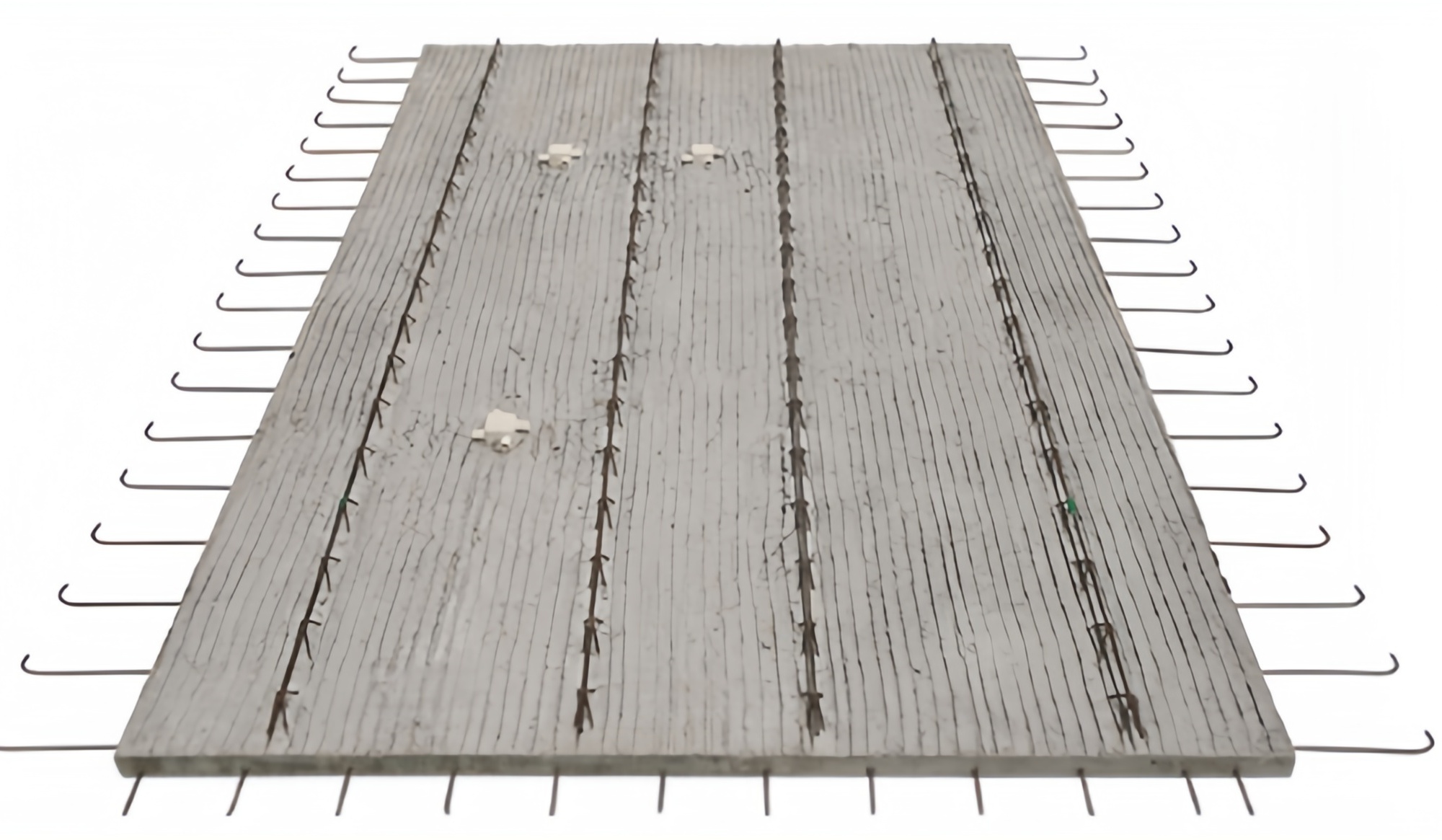
A lot of the concrete you see on a project never touches a mixing drum until it reaches the pour. Precast beams, columns, and wall panels show up on a flatbed already cured, stripped, and often stamped with a pour date. The benefit is fairly obvious: the plant controls the cure, the forms get reused, and the site crew can set pieces in place without waiting on weather or batch timing. The trade-off shows up in joints, tolerances, and transport weight. A panel cast off-site has to be lifted, braced, and connected, which means the anchor points and bearing surfaces need more thought than they would in a straight cast-in-place pour.
What gets poured on-site is usually the stuff that has to be monolithic: footings, slabs, shear walls, and any connection that ties the structure together. This concrete arrives as raw material in a mixer and only becomes a building component after it is placed, vibrated, and cured in the actual formwork. On-site pours let the crew adjust slump, place rebar around field conditions, and avoid the dimensional limits that come with trucking finished pieces down the highway. The downside is that the site becomes a temporary concrete plant. Batching, finishing, and curing all happen in the open, so temperature swings, wind, and access for pump lines shape the result as much as the mix design does.
Customs, Docs, and Handling Without the Guesswork
Every shipment has its own paper trail, and a single overlooked field can hold cargo at the border for days. We start by mapping the exact documents your freight needs based on origin, destination, and product type, then flag friction points before they become delays. Tariff codes, consignee details, and valuation notes get checked early, so clearance doesn't depend on last-minute guesswork.
Instead of handing you a stack of forms and wishing you luck, we file, review, and correct everything in one pass. You receive a plain-language summary of what was submitted, why it matters, and when to expect release. If an officer asks for supporting paperwork, it's already prepared and ready to send, not buried in an email thread from two weeks ago.
The payoff is fewer holds, fewer storage fees, and far less time refreshing a tracking page. Handling shifts from the part of shipping you dread into a predictable step between pickup and delivery, one that quietly happens without endless follow-ups.
The Hidden Delays That Factory Precast Removes
On a typical site, the schedule rarely falls apart because of the big-ticket items. It stalls in the gaps: a pour delayed by overnight frost, rebar inspections that push a follow-on trade by two days, formwork that ties up the crane longer than planned. Factory precast quietly strips those gaps out of the sequence. Panels are formed, poured, cured and finished under a roof while the site is still being excavated, so weather and trade stacking stop dictating the critical path.
There is also the less obvious waiting built into cast-in-place work. You wait for concrete to reach a strength that the engineer will accept. You wait for carpenters to return and strip forms. You wait for the next subcontractor to become available even though the previous task finished late. Precast changes that rhythm because the curing happens offsite, away from the daily friction of the job. By the time a panel arrives, it is already a finished piece of the building, not another task that has to age in place.
That shift matters most on tight urban sites where storage is limited and tower crane time is measured in minutes. Instead of sequencing a dozen small steps in a narrow footprint, the team lifts a component into position and moves on. The delay that nobody accounts for in a spreadsheet is exactly what factory precast removes from the field.
Same Component Specs Across Different Countries
When a manufacturer publishes the same component specs for different countries, it usually means the core hardware remains unchanged across regions. The chipset, sensor array, battery capacity, and internal layout are typically identical, with only software tweaks or regulatory certifications varying by market. This consistency helps buyers compare devices more confidently, knowing that performance benchmarks from one country can often be applied to the same model sold elsewhere.
That said, identical specs do not always guarantee identical behavior. Regional power delivery standards, network band support, and even pre-installed firmware can influence how a component performs in daily use. A phone with the same camera module may produce slightly different image processing results because of localized software tuning. Similarly, a laptop with the same processor might run at different sustained speeds depending on ambient temperature expectations or power adapter wattage shipped in a particular country.
For buyers and reviewers, the practical takeaway is to treat cross-market spec sheets as a reliable baseline rather than an absolute guarantee. Check the fine print for regional variations in connectivity, charging accessories, and software features. When those variables are minimal, the shared component list becomes a strong indicator of real-world longevity and repairability, since replacement parts and technical knowledge can transfer more easily across borders.
How Exporters Turn Global Supply Into Local Assembly
Exporters often begin with a finished product designed in one market and built for another, but the shift toward local assembly changes that logic entirely. Instead of shipping fully assembled units across borders, they break the final step into smaller, manageable kits. This allows a shipment of components to clear customs under different tariff codes, sometimes reducing duties or bypassing restrictions that apply to complete goods. The exporter stops being a distant factory and starts behaving like a supply partner who hands over the last mile of production to someone closer to the end customer.
The real work happens long before the first screw is tightened locally. Exporters need to rethink packaging, labeling, quality control, and even the order of assembly instructions. A kit that arrives with a missing bracket or an unclear torque spec can stall an entire local operation. That forces the exporter to simplify designs, standardize fasteners, and create visual guides that work across language gaps. What used to be a single assembly line in one country becomes a distributed process where the final touch is performed by a smaller workshop, a local distributor, or even a retail partner's back room.
This approach also reshapes inventory and cash flow. Instead of holding large stocks of finished goods that might sit unsold, exporters can store compact component kits that are easier to ship, store, and reorder. Local assemblers can adjust final configurations based on regional preferences or immediate demand without waiting for a new ocean freight cycle. The exporter gains flexibility, the local partner gains a revenue stream, and the customer receives a product that feels less like a foreign import and more like a locally finished item.
FAQ
A dependable exporter brings more than molds and concrete. They understand shipping constraints, produce to consistent tolerances, and usually have experience adapting designs to fit container or flat-rack limits. That means fewer surprises when components arrive on site.
Construction schedules are tighter, and local labor or casting space is often limited. Buying finished precast elements from an exporter allows a contractor to skip site forming and curing, while receiving parts that have already passed factory checks.
Many handle reinforcement detailing, embedded plate placement, protective wrapping, customs documentation, port handling, and load sequencing. Some also provide lifting points, temporary bracing notes, and installation guidance so the site team does not have to solve those details alone.
Instead of coordinating batching plants, formwork, steel fixing, and curing on a congested site, the project team can order finished components against a delivery schedule. Procurement becomes more predictable, and site work shifts toward assembly rather than casting.
No. Exporters commonly produce hollow-core slabs, stairs, beams, columns, wall panels, retaining units, utility vaults, and architectural facade elements. Custom shapes, reveals, and cast-in fittings can usually be incorporated before the elements leave the factory.
Buyers typically request mix designs, material certificates, curing records, dimensional reports, and test results. Many exporters also arrange third-party inspection, provide batch numbers on each element, and photograph loading stages so the product can be traced back if a question arises.
Weight, size, and crane access all shape the shipping method. Exporters may use flat racks, open-top containers, breakbulk vessels, or roll-on/roll-off options. They also plan routes around port restrictions and road limits, and try to sequence deliveries so cranes can lift directly from the truck to the structure.
Look at their finished project history, production floor space, curing capacity, quality certifications, and experience with similar element sizes. Ask for references from projects with comparable regulations, and if the order is large, request a trial piece or sample panel before committing to full production.
Conclusion
Managing precast supply across borders used to mean juggling half a dozen local fabricators, each with its own tolerances, curing habits, and paperwork quirks. A single export partner collapses that list. The same component drawings, mix designs, and finish standards follow the order from one country to the next, so a beam cast in one plant matches a panel produced three ports away. That consistency reaches the site before the trucks do: customs entries, certificates of origin, packing lists, and handling instructions are prepared as part of the shipment rather than treated as an afterthought. When a crane crew unloads, they already know what they are lifting, what it weighs, and where it belongs.
The real difference shows up in the schedule. On-site pouring depends on weather, curing time, formwork, and the availability of skilled labor, all of which can quietly add weeks. Factory precast removes those variables because the concrete has already reached strength in controlled conditions before it leaves the yard. What arrives on the truck is closer to a finished assembly kit than a batch of raw materials: columns, beams, wall panels, and hollow-core slabs are tagged, sequenced, and ready for erection. Exporters make that handoff feel local by coordinating delivery windows, lifting plans, and even storage layouts with the site team. The result is less guesswork on the ground and fewer idle crews waiting for one missing piece to show up on a slow boat.
Contact Us
Contact Person: Quanhui Nian
Email: [email protected]
Tel/WhatsApp: 8618070545691
Website: https://www.getoglobal.com/