

Professional Distillery Equipment: Essential Tools for Craft Spirits Production
2026-05-10
Crafting exceptional spirits is both an art and a science—and the right equipment makes all the difference. From copper stills to fermentation tanks, every piece plays a crucial role in shaping flavor, aroma, and quality. At DYE, we understand that distillers need more than just tools; they need precision, reliability, and innovation. This guide explores the essential equipment that defines the craft, helping you elevate your production from grain to glass.
Still Selection: Pot, Column, or Hybrid?
Choosing the right still shape is less about picking a winner and more about matching the tool to the spirit you want to create. A pot still, with its simple, bulbous body and swan neck, is the artisan’s friend—it retains heavy, flavorful compounds, giving whiskies and dark rums their robust, oily character. Run it twice or with a thumper, and you’ll coax out more nuance, but expect a lower ABV and a spirit that screams of its raw ingredients. It’s the slow, intentional choice for distillers who chase texture and tradition.
Column stills flip the script entirely. By stacking plates or packing material, they create a continuous, efficient process that strips out impurities to deliver a clean, high-proof neutral spirit. Vodkas, gins, and white rums thrive here because the goal is purity, not personality. The trade-off is clear: you sacrifice the heavy esters and grain-forward punch for something crisp and repeatable. If your recipe relies on delicate botanicals or you need volume without variation, a column is your workhorse.
Then comes the hybrid approach—a growing middle ground for those who don’t want to choose. By pairing a pot with a short column or modular plates, you can dial in just the right amount of reflux to tweak flavors on the fly. It’s the answer for craft distillers making everything from bold single malts to floral gins under one roof. You get to flex between heavy, medium, or light profiles without swapping gear, giving you a creative edge that a one-trick still simply can’t match.
Copper’s Influence on Spirit Character
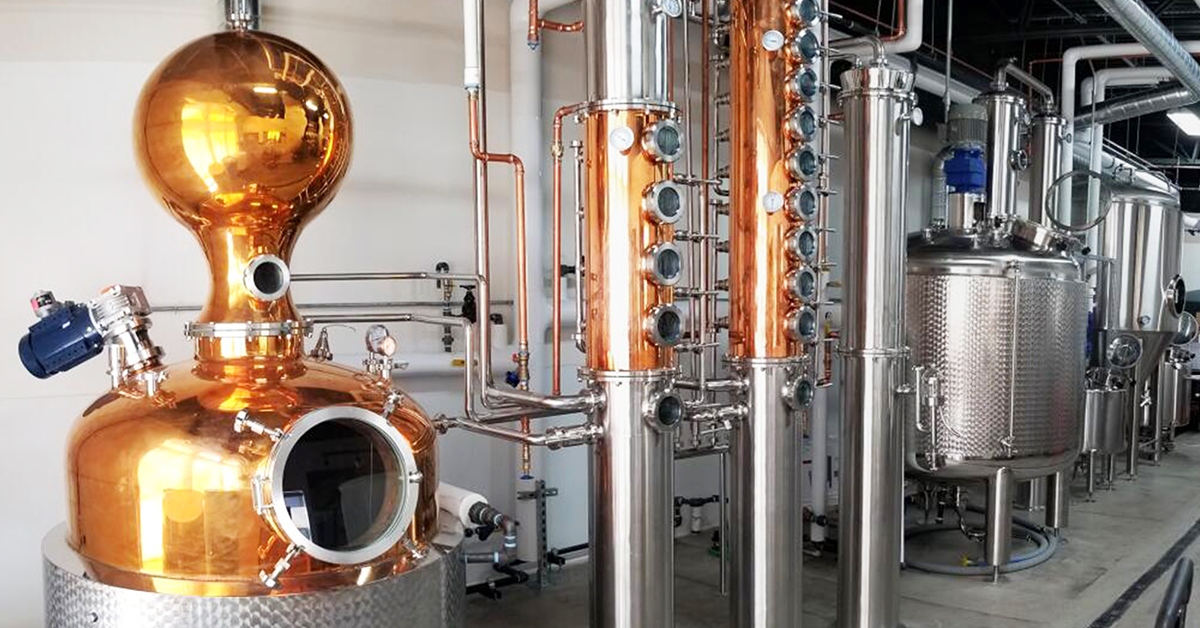
Copper has long been intertwined with the soul of spirits, quietly steering their flavor without ever demanding the spotlight. Its presence in the still—whether as a pot, a condenser, or even a simple pipe—invites a gentle chemical dance. Sulfur compounds, those unwanted notes of rotten eggs or burnt rubber, cling to copper like old friends, leaving the spirit cleaner and brighter than before. This isn’t just science; it’s an unspoken pact between metal and mash, one that generations of distillers have trusted without overthinking.
Beyond purging off-flavors, copper nudges a spirit’s character into richer territory. It encourages the formation of esters, those fleeting whispers of fruit and flowers that transform raw alcohol into something worth savoring. A copper still doesn’t simply refine—it coaxes out layers that would otherwise stay hidden, turning harsh grain or fruit fermentations into velvety, aromatic expressions. Each fold and seam in the metal holds memories of countless runs, subtly shaping the liquid’s journey, sometimes adding a faint metallic kiss that aficionados chase like a ghost.
But copper’s role isn’t static; it evolves with every batch, aging into a darker, more reactive surface that changes how a spirit matures. In pot stills, the contact time and surface area become a distiller’s quiet signature, influencing whether a whisky lands with bold spice or a soft, rounded warmth. Even in continuous columns, copper plates stir a dialogue between vapor and metal, balancing efficiency with artistry. It’s a relationship that refuses rush orders, reminding anyone who listens that the best spirits carry a whisper of their copper origins, even when it’s never mentioned on the label.
Beyond the Boil: Fermentation Vessel Design
Fermentation often begins with a good boil, but the vessel shapes the entire journey from wild yeast capture to complex flavor development. Traditional designs like wide-mouthed ceramic crocks encourage the kind of slow, ambient exposure that brings depth, while narrow-necked glass carboys protect delicate brews from oxidation. The material matters too—stoneware breathes gently, stainless steel offers neutrality, and wood can contribute its own microflora. Choosing the right form means understanding how surface area, airlock geometry, and thermal mass steer the microbial conversation.
Modern fermentation vessels borrow from industrial design but are increasingly shaped by artisan insights. Conical fermenters, for instance, simplify yeast harvesting and reduce trub contact, echoing commercial scalability while staying approachable for home users. Some hybrids incorporate spigots, thermowells, and even built-in sampling ports that minimize disturbance to the pellicle or krausen. The evolution is toward minimal intervention—engineered shapes that let the fermenter observe and guide without disrupting the evolving ecosystem inside.
Perhaps the most overlooked aspect is the vessel’s role in managing pressure and gas exchange during secondary fermentation. From airlocks that bubble with quiet rhythm to silicone membranes that flex before releasing CO₂, these details can mean the difference between a delicate effervescence and a messy blowout. Beyond mere containment, the best vessels create a stage where lactic acid bacteria and yeast perform their intricate dance, protected from oxygen but not stifled—a balance that turns raw ingredients into something alive and transformative.
The Cold Side: Condenser and Chiller Options
Heat rejection marks the cold side of any vapor-compression cycle, and the hardware you choose here shapes both capital outlay and long-term operating costs. Whether you’re dealing with a modest commercial setup or a heavy industrial process, the condenser’s job is straightforward—dump the absorbed heat outdoors—but the way it gets done splits into a handful of practical routes. Air-cooled units rely on ambient air blown across finned coils, simple to install and low on water usage but sensitive to hot weather. Water-cooled condensers, paired with cooling towers, hold steadier condensing pressures and open doors to higher efficiency, though they demand makeup water, chemical treatment, and more involved maintenance. Then there are evaporative condensers that merge the two concepts, spraying water over coils while fans pull air through, packing performance into a smaller footprint at the cost of a bit more complexity.
The choice ripples through the whole system. If you opt for air-cooled, you might save on upfront plumbing but watch your compressor work harder on scorching afternoons, chewing extra kilowatts. A water-cooled shell-and-tube or plate heat exchanger, on the other hand, typically delivers lower head pressures and a cooler running compressor, extending service life and trimming energy bills—provided you can stomach the water treatment regime and the tower’s freeze protection in colder climates. Evaporative condensers shine where space is tight and humidity is moderate, often cutting fan power and pump loads compared to separate tower-and-exchanger setups. But they need diligent scale control and shouldn’t be forced into fully enclosed plant rooms without careful ducting. Each type writes its own maintenance schedule and noise profile, factors that matter as much as nameplate efficiency when you’re sitting in the plant listening to the thing hum day after day.
On the chiller side, the pairing of condenser and compressor sets the real operating envelope. Scroll compressors mated to air-cooled condensers dominate the sub-200-ton packaged chiller market, offering a decent balance of simplicity and part-load behavior. Screw compressors with water-cooled condensers step into the mid-range, handling larger capacities and often playing nicer with variable-speed drives for process loads that wander. Centrifugal chillers, almost always water-cooled, grab the high-efficiency spotlight in big plants, leveraging low-lift conditions and magnetic bearings to push full-load IPLV numbers that make bean counters smile. Yet a beautifully engineered centrifugal chiller paired with an undersized, poorly maintained cooling tower will still limp along. The real art lies in matching the cold-side components to the heat rejection environment, operating schedule, and available utilities. Sometimes a hybrid approach—using air-cooled chillers for winter base load and firing up a water-cooled unit for the summer peak—saves more money than any single technology could alone, even if it looks unconventional on paper.
Precision Processing: Automation and Monitoring
Automation has redefined the boundaries of precision processing, turning once-manual adjustments into a symphony of real-time sensor feedback and adaptive control. Rather than relying on preset paths, modern systems read subtle shifts in material behavior and tool wear, correcting micro-deviations before they propagate. This closed-loop orchestration ensures dimensional tolerances are held not just during setup but throughout entire production runs, quietly eliminating the slow drift that traditional methods often missed until final inspection.
Monitoring, often overshadowed by the allure of automation, serves as the unseen backbone of consistent output. Multi-axis vibration analysis and high-frequency spindle load tracking paint a rich picture of process health, flagging anomalies like chip re-cutting or bearing fatigue long before they surface as scrap. These insights feed directly into maintenance schedules, shifting the paradigm from reactive fixes to predictive stewardship—a subtle but powerful evolution that keeps machines running within micron-level constraints without fanfare.
The fusion of these two domains spawns a self-correcting ecosystem where every cut, grind, or EDM pulse contributes to a growing knowledge base. Adaptive algorithms learn not from generic datasets but from the specific fingerprint of a shop's environment, compressing setup times and eliminating the trial-and-error that once defined high-mix production. It’s this quiet convergence—automation handling the execution while monitoring guards the outcome—that turns precision processing from a skilled art into a resilient, repeatable science.
Post-Run Protocol: Cleaning and Care
Right after your run, peel off those sweaty clothes as soon as you can. Trapped moisture against your skin is a fast track to irritation or breakouts, especially if you're prone to what runners jokingly call “bacne.” A quick rinse in cool water helps wash away the salt and grime before they settle into pores. Don't forget your shoes: pull out the insoles and let them air-dry away from direct heat, which can warp the cushioning. This small habit can double the lifespan of your favorite pairs.
Once you're clean, pay attention to what your body just went through. A few minutes of gentle stretching while your muscles are still warm can prevent that awful next-day stiffness. Your skin will also thank you for slathering on a lightweight, fragrance-free moisturizer—running tightens and dries it out, especially in cold air. This is also the perfect time to hydrate from the inside out; down a glass of water before you even think about coffee. Treat this whole routine as a non-negotiable reset, not a chore.
FAQ
At minimum, you'll need a mash tun for converting starches, fermentation vessels to let yeast work its magic, and a still—either pot or column—to separate alcohol. Don't overlook a heat source, cooling system, and collection vessels. A hydrometer and thermometer are critical for monitoring, too.
Pot stills typically leave more congeners and flavor compounds behind because they run in batches and provide less rectification. The result is a richer, more textured spirit—ideal for whiskey or rum. Column stills, with their stacked plates, strip the distillate cleanly, yielding a lighter, purer ethanol perfect for vodka or gin.
Yeast strains have narrow sweet spots—too hot and they stress out, producing off-flavors; too cold and they stall. During distillation, precise heat input determines separation efficiency and can separate heads, hearts, and tails cleanly. Ignoring it leads to smeared cuts and subpar spirits.
Explosion-proof lighting and ventilation are non-negotiable because ethanol vapors are highly flammable. Grounding and bonding straps prevent static sparks. Emergency eyewash stations, spill containment, and fire suppression systems should be in place. Regular leak checks on gas lines and pressure relief valves on stills are just as vital.
Copper reacts with sulfur compounds naturally present in fermented mash, binding them so they don't carry into the distillate. This results in a cleaner spirit without unwanted cabbage or rubber notes. Plus, copper’s excellent heat conductivity allows more even heating, reducing scorching and improving overall yield.
After each run, rinse thoroughly to remove acidic backset that can pit metal. Every few months, do a deep cleaning with a citric acid or specialized still cleaner to dissolve copper oxide and scale. Annually, inspect gaskets, seals, and heating elements. Passive parts like condensers need a check for hard-water buildup too.
Start by reverse-engineering your weekly spirit output. Factor in wash volume, typical fermentation time, and how many turns you can manage. Optimally, a fermenter should hold four to seven days of production volume while allowing headspace for foaming. Multiple smaller tanks offer more flexibility in experimenting with recipes than one huge vessel.
A mash tun is where milled grain meets hot water to activate enzymes that break starches into fermentable sugars. It typically has an insulated vessel, a stirring rake to prevent dough balls, and a false bottom to separate sweet wort from spent grain. Temperature ramps and rests are carefully programmed based on the grain bill and desired sugar profile.
Conclusion
Selecting the right still is the cornerstone of any craft distillery, with pot, column, and hybrid designs each steering spirit character in distinct ways. Pot stills lend a rich, full-bodied texture ideal for whiskey and rum, while column stills deliver cleaner, higher-proof output that suits vodka or gin. Hybrid stills bridge these worlds, offering flexibility through modular features. Material choice matters deeply—copper’s role goes beyond tradition, actively removing sulfur compounds and fostering a rounder, more complex flavor profile. Fermentation vessels are equally foundational; open or closed tanks with precise temperature control shape the wash that eventually meets the still, so their design directly influences consistency and yield.
Once distillation is underway, the cold side of the operation—condensers and chillers—dictates efficiency and nuance, from rapid knockdown to gentle cooling that preserves delicate aromatics. Modern setups integrate automation and real-time monitoring, allowing distillers to track cuts, pressure, and temperatures with surgical precision, reducing human error while expanding creative control. Yet all this innovation requires diligent post-run care: thorough cleaning and maintenance protocols prevent off-flavors and extend equipment life. In a craft setting, these tools aren’t just machinery; they’re partners in the pursuit of distinct, memorable spirits, where every choice—from still design to sanitation—leaves its mark on the final pour.
Contact Us
Contact Person: Ada Xu
Email: [email protected]
Tel/WhatsApp: 0577-86806088
Website: https://www.dayuwz.com/