

Smart Corrugated Rotary Die Making Equipment Enhances Packaging Precision and Efficiency
2026-10-31
Most packaging defects trace back to cutting tools that can't keep up with modern line speeds. ADEWO's smart corrugated rotary die making equipment attacks that problem at the source, using sensor-driven feedback to hold tolerances that were once considered impossible. The result? Less material waste, fewer jam-ups, and a packaging process that finally feels engineered instead of improvised. Curious how it works? Keep reading to see the mechanics behind the precision.
Smarter Die Making for Tighter Tolerances
Achieving tight tolerances in die making has always been a balancing act between tool wear, thermal expansion, and material variability. Traditional methods rely heavily on operator experience and post-process inspection, which often means accepting small deviations that compound across a multi-station die. Smarter approaches replace this with in-process feedback: sensors embedded near critical cutting edges track temperature and deflection in real time, allowing the machine to adjust feed rates or spindle speeds before a tolerance is breached. This shift from reactive correction to proactive control keeps punch and die clearances consistent, even during long production runs.
Data from each machining cycle feeds into a model that learns how a specific die behaves under different loads and temperatures. Instead of applying generic offsets, the system predicts where errors will occur and compensates at the toolpath level. For example, when roughing a large die shoe, the model might anticipate thermal growth in the afternoon shift and automatically tighten finish passes to hold bore positions within a few microns. This kind of adaptive machining reduces the need for manual rework and lets shops take on tighter-spec jobs without adding extra inspection steps.
The end result is not just a die that measures in spec on the surface plate, but one that performs reliably under stamping conditions. Tighter clearances mean less burr formation and better part quality downstream, while lower scrap rates come from eliminating the trial-and-error that usually accompanies first-article approval. For toolrooms, going smarter is less about replacing skilled machinists and more about giving them the feedback they need to push tolerances further than ever before.
How Rotary Technology Cuts Corrugated Waste
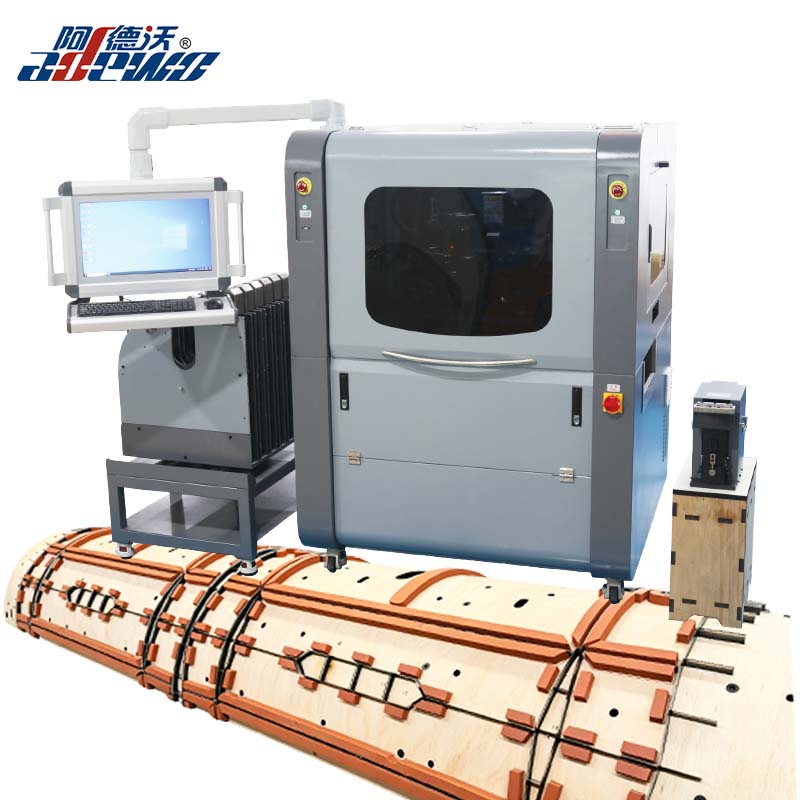
Rotary die-cutting changes the waste equation by replacing the start-stop motion of flatbed systems with a continuous rotating cylinder. This steady motion keeps the corrugated board under constant control, so sheets don't shift or skew between cuts. The result is a tighter registration tolerance and far fewer misfed or misaligned blanks that would normally end up in the scrap bin.
Much of the waste in corrugated converting comes not from cutting itself, but from the setup between jobs. Rotary technology reduces this by letting operators swap out flexible dies in minutes, with automatic anvil adjustment and pre-programmed job settings. Shorter makeready means fewer test sheets are run through the machine just to dial in the cut depth, which directly cuts into the pile of corrugated waste generated during changeovers.
Vacuum-assisted sheet transport adds another layer of waste reduction. Instead of relying on pinch rollers that can crush flutes or mark the board, rotary systems hold the sheet flat against a moving belt. This prevents edge damage and jams that often force operators to throw away partially processed sheets. When combined with real-time pressure monitoring, the rotary cutter only applies as much force as needed, avoiding over-penetration that weakens the corrugated structure and creates unusable product.
Precision Without the Bottleneck
Precision often comes with a hidden cost: the more carefully you check each step, the slower the whole process becomes. But that trade-off isn't inevitable. When you design a workflow that keeps the human in the loop only where judgment truly matters, you can get the accuracy you need without turning every task into a queue. The trick is to let automated checks handle the obvious errors, while a few well-placed manual reviews catch the subtle ones that machines miss.
Think of a quality control line where every item is inspected by hand. It's precise, but the line crawls. Now imagine the same line with a simple sensor that flags only the items most likely to fail. The inspector focuses on those few, and the rest move through untouched. The result is the same defect rate, but throughput triples. That's precision without the bottleneck: you don't lower your standards; you just stop wasting attention on what doesn't need it.
In practice, this means writing clear rules for when a task gets escalated and when it proceeds automatically. A good escalation rule is specific enough to catch real problems, yet broad enough to avoid false alarms that would still force a manual review. The goal isn't to remove people from the process; it's to give them only the cases where their judgment adds genuine value. When that balance is struck, teams deliver faster without feeling like they're cutting corners.
Intelligent Tooling for Fast-Changing Packaging Runs
Intelligent tooling changes how packaging lines handle frequent product switches. Instead of manual changeovers that eat hours, tooling with embedded sensors and quick-release mechanisms lets operators reconfigure formats in minutes. The result is less downtime and fewer errors when a line moves from one container size to another.
For short runs, traditional hard tooling often forces a choice between speed and flexibility. Intelligent systems read RFID tags on each tool set and automatically adjust guides, fill levels, and label positions to match the new SKU. This removes the need for trial-and-error setup and keeps small batches profitable.
Maintenance also becomes proactive. Tooling records usage cycles and flags wear before it causes jams or misalignment. With that data, plants can schedule tool swaps during planned stops rather than reacting to breakdowns in the middle of a tight production window.
The Shift Toward Self-Correcting Die Systems
Tooling has always demanded patience, but the latest generation of die systems quietly removes the guesswork from alignment and wear. Instead of stopping production for manual checks, these dies read their own contact patterns, adjust clearances in real time, and keep a running record of every adjustment. It feels less like a machine correction and more like the tool has learned where it hurts.
The shift is most visible in high-mix stamping environments, where a single setup might run dozens of small batches. Older dies would drift out of spec and leave the operator chasing burrs or splits. Self-correcting designs use embedded sensors and actuated pads to nudge the forming surfaces back before a defect ever reaches the part. Maintenance shifts from reactive grinding to reviewing a short list of suggested interventions, and scrap rates drop without anyone having to champion a new program.
Where Automation Meets Corrugated Craft
Automation rarely replaces the nuances of corrugated work outright—it sharpens them. On a modern line, cutting and scoring happen in tight synchronization, yet the operator still reads the board's warp and adjusts pressure on the fly. The result feels less like mass production and more like an extension of the hands-on craft, just with faster feedback loops.
Take custom inserts or short-run retail displays. Digital die-cutting and automated folding can switch between profiles in minutes, but deciding where a crease should land or how much flute crush is acceptable often comes down to a practiced eye. That blend of machine consistency and human judgment is what keeps a corrugated plant nimble without losing the tactile quality buyers expect.
The real shift isn't toward fully automated boxes—it's toward tools that let craftspeople do more with less repetition. When a sensor flags a slight misalignment, the line doesn't just stop; it gives the crew enough information to correct the next sheet. In that exchange, automation stops being a threat and starts behaving like a quiet assistant on the floor.
FAQ
The system relies on high-resolution optical sensors and closed-loop feedback to continuously correct die positioning. Cutting tolerances stay within 0.1 mm even at elevated speeds, which translates into uniform panel dimensions and cleaner edges.
Automated registration and recipe preloading cut job changeovers from roughly 30 minutes down to under 5. Operators no longer manually align dies or adjust pressure, so switching between box designs becomes nearly seamless.
Yes, it adapts pressure and speed based on real-time flute recognition. The machine reads board thickness and flute type, then adjusts cutting depth and dwell time automatically, keeping throughput steady across B, C, E, and even micro-flutes.
Continuous tracking of cutting force, material tension, and edge wear detects anomalies the moment they appear. The system either self-corrects or alerts the operator before defective sheets accumulate, cutting scrap rates by a measurable margin.
Predictive algorithms analyze vibration, temperature, and motor load patterns to flag bearing wear or dull blades well in advance. Maintenance becomes planned and brief instead of reactive, avoiding unexpected line stoppages.
Typically no, because these units use modular controls and standard communication protocols like OPC UA or EtherCAT. They can interface with common MES and ERP systems directly, often completing integration within a few days rather than weeks.
Accurate cutting dimensions ensure that folding, gluing, and stacking run smoothly without jams or misfeeds. This reduces rework and manual sorting downstream, boosting overall line efficiency and final box consistency.
Conclusion
Modern corrugated packaging has long struggled with the tension between precision and throughput. The latest generation of smart rotary die making equipment resolves that by embedding real-time sensing and adaptive control directly into the tooling. Tolerances that once seemed impossible are now routine, while the continuous rotary motion eliminates the stop-and-start bottleneck of flatbed systems. Because the die cutters adjust pressure, registration, and speed on the fly, waste from misaligned blanks or crushed flutes drops sharply. The rotary action itself produces cleaner cuts with less edge crush, and intelligent scrap stripping further reduces material loss. This is not just a faster machine—it is a tool that learns from each run, storing settings and fine-tuning itself to the specific board grade and flute profile.
That self-correcting capability changes how plants handle fast-changing packaging runs. Instead of treating die changes as a trade-off between speed and accuracy, operators can switch jobs in minutes and trust the system to maintain consistent quality. Sensors monitor blade wear and compensate automatically, so the hundredth sheet matches the first. Automation here does not replace the craft of corrugated converting; it amplifies it by handling the repetitive adjustments and letting skilled workers focus on layout, ink coverage, and customer requirements. The result is a production line where precision no longer creates a bottleneck, waste stays under control, and short-run agility becomes a genuine competitive advantage rather than an operational headache.
Contact Us
Contact Person: KAELYN LEE
Email: [email protected]
Tel/WhatsApp: +86 15012673758
Website: https://www.china-adewo.com