
Stainless Steel Casting Manufacturer Produces Durable Custom Metal Parts
2026-10-19
Every failed metal part tells a story—usually one of shortcuts in casting. At Zhaoyuqi, stainless steel casting isn't just about pouring molten metal; it's about engineering custom parts that shrug off corrosion, impact, and years of hard use. So what separates a durable casting from a disposable one? The answer lies in details most manufacturers overlook. This post pulls back the curtain on how it produces stainless steel components that consistently outlast the competition—and how you can spec them for your next project.
Melted, Molded, and Made to Last
The name says it all: material gets reduced to a flowing state, then pressed into a form that refuses to quit. We're not talking about fragile reproductions or quick-turnaround gimmicks. This process locks in detail while the substance is still molten, so every seam, texture, and edge survives years of handling without softening or chipping away.
What sets it apart is the way heat and pressure work together. Most methods leave weak points where layers meet or where air gets trapped. Here, the liquid fills every cavity in one continuous pour, then cools into a single, dense piece. Tap it with your knuckle and you'll hear a solid ring, not a hollow clack. That's the sound of cohesion.
Durability isn't a marketing claim; it's a physical consequence. Once the form sets, it doesn't need coatings or touch-ups to stay intact. Scratch it, drop it, leave it in the sun—the body keeps its shape and color because there's nothing layered to peel away. That's why these pieces outlast trends and end up in workshops, kitchens, and toolboxes for decades rather than seasons.
Your Geometry, Our Grain Structure
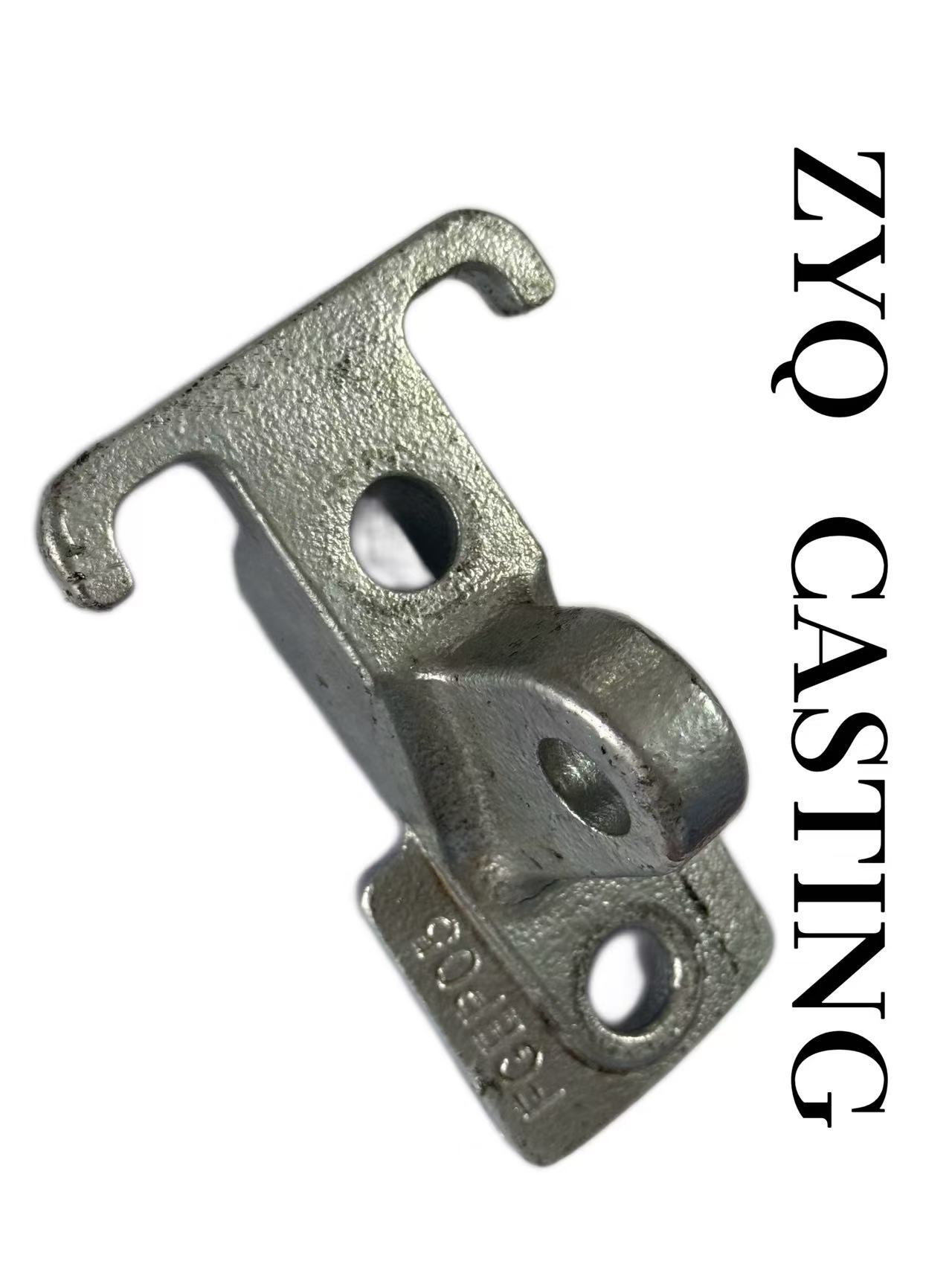
In most manufacturing workflows, geometry and grain structure are treated as separate problems. You design a shape, then hope the material behaves predictably inside it. Here, the two are fused from the first layer. Your geometry sets the thermal path, and the grain structure follows it like a fingerprint—local curvatures, wall thicknesses, and overhangs each leave their mark on how grains nucleate and grow.
That means a thin vertical fin can be driven toward a columnar structure that follows the build direction, while a bulky interior section can be nudged toward a fine equiaxed pattern. The process reads the part's local cross-section and adjusts heat input, travel speed, and cooling on the fly. No post-processing trick, no generic recipe—just a direct response to the shape you actually drew.
The result is not just a cosmetic difference. Fatigue-prone corners can be given a more forgiving grain boundary network. Load paths can be aligned with elongated grains for higher stiffness along a specific axis. Instead of fighting the material, you let your geometry write the internal architecture. Your geometry, our grain structure—one continuous decision, not two separate compromises.
When Off-the-Shelf Won't Cut It
There comes a point in most projects where the ready-made option stops fitting the shape of the problem. The interface feels cramped, the workflows force you into someone else's logic, and every workaround adds another layer of friction. You're not fighting the tool exactly, but you're also not building with it. That's often the first real sign that a bespoke build is worth the conversation.
Custom development tends to get painted as the expensive path, but that misses the cost of constant compromise. When a platform's assumptions no longer match how your team actually operates, the hours spent configuring, bridging, and apologizing for the mismatch start to stack up. A tailored system doesn't just remove those frictions; it lets the software grow in the same direction as the business, instead of dragging the business back toward the software's defaults.
The Unseen Strength of Stainless
Most people see stainless steel as just a shiny surface, but its real toughness hides where the eye can't reach. A microscopically thin layer of chromium oxide forms on the metal's face, sealing out moisture and oxygen before they can bite into the iron underneath. This invisible shield repairs itself whenever scratched, which is why a scratched stainless railing doesn't rust like a scratched car door. Beneath that surface, the metal's crystal lattice is laced with nickel and molybdenum, letting it flex and absorb stress without snapping. It's a quiet kind of strength—one that works in the background, resisting corrosion and fatigue long after the shine fades.
Compare that to ordinary carbon steel, which needs paint or oil to survive a damp day. Stainless carries its protection built-in, not added on. That's why it holds up in places where failure isn't an option: surgical tools that get autoclaved hundreds of times, seawater pumps that never see dry land, bridge joints that swallow thermal expansion every summer. The strength isn't just about hardness—it's about endurance without drama. A stainless bolt doesn't announce itself the way a titanium part might, but it quietly keeps two structures mated for decades, even when the environment throws salt, acid, or freezing cycles at it.
There's another layer to this unseen strength that rarely gets mentioned: stainless steel's ability to be reborn without losing its character. Almost every grade can be melted down and re-formed into new beams, wire, or cookware, and the chromium oxide layer simply rebuilds itself on the new surface. That means a handrail in a hospital might have once been part of a dairy tank or a subway car. This hidden longevity means less mining, less waste, and less energy spent replacing corroded parts. The strength of stainless isn't just in the moment you lean on it—it's in the decades of service it gives before quietly returning to the furnace for another life.
Tolerances That Survive the Field
Real-world mounting surfaces are rarely flat, and temperatures swing more than lab data suggests. That is why tolerances are not just numbers on a print—they are a survival strategy. A shaft that fits perfectly at 20°C might seize at -10°C or rattle loose after a few thousand cycles of vibration. The tolerances that survive the field are the ones designed with that messiness in mind, not the ones optimized for a clean CAD model.
Consider a bearing seated in an aluminum housing. The bore expands faster than the steel outer ring, so a tight interference fit at room temperature can become a slip fit under operating heat. Designers who have seen premature failures know to widen the tolerance band asymmetrically—not to be sloppy, but to keep the preload inside a functional window across the whole thermal range. That kind of thinking comes from field returns, not from tolerance stack-up software.
There is also the hidden dimension of time. Corrosion, wear debris, and micro-movement slowly change what a clearance actually is. A tolerance that looks generous on day one can become a press fit by year three. Surviving the field means asking not just “does it assemble today?” but “does it still do its job after two seasons of rain, dust, and load reversals?” The best tolerances are the ones you never notice because the parts keep doing exactly what they should, long after the prototype phase is forgotten.
From Prototype Pour to Production Ready
Moving from a rough prototype to a production-ready product isn't just about scaling up the batch size. It's about rethinking every assumption made during those early experimental pours. What worked in a controlled lab setting often falls apart on the factory floor, where temperature shifts, humidity, and operator variability introduce variables you never planned for. The key is to treat the prototype not as a blueprint, but as a rough sketch—something to be redrawn with real-world constraints in mind.
The transition demands a shift in mindset from 'can we make this work once?' to 'can we make this work ten thousand times without failure?' That means auditing every material, checking supplier consistency, and stress-testing the design against edge cases nobody considered during the first successful pour. It's less glamorous than the initial breakthrough, but far more valuable. Production readiness is earned through boring, repetitive verification—not through a single heroic prototype.
Finally, document everything you'd normally ignore. The exact pouring angle, the ambient temperature, the humidity level, the batch number of the resin—these details feel trivial during prototyping, but they become critical when a production run goes sideways and you need to trace the root cause. Strict documentation isn't bureaucracy; it's the difference between a product that works by luck and one that works by design.
FAQ
Most shops focus on 304 and 316 grades, but many also pour 17-4 PH, 2205 duplex, and heat-resistant alloys like 310. The choice depends on the part's exposure to chemicals, temperature swings, or mechanical stress.
It starts with solidification modeling to avoid internal shrinkage and porosity. Then heat treatment and passivation are applied to restore corrosion resistance and relieve stress, which directly extends service life in demanding settings.
Yes, many now use rapid tooling or 3D-printed patterns to cut lead times for runs as low as five or ten pieces. This lets engineers test a design before committing to expensive production tooling.
Food processing, marine hardware, chemical pumps, and medical device frames are common. Any application where parts face washdowns, salt spray, or aggressive cleaning agents tends to justify the material cost.
Investment casting works well for thin walls and fine surface detail, while shell molding or sand casting suits larger, heavier components. The key is matching the method to the tolerance and finish your assembly actually needs.
Reputable foundries run a mix of dimensional inspection, dye penetrant or X-ray testing, and pressure tests if the part holds fluids. Material certificates with actual chemistry and mechanical properties should come standard.
The chromium content forms a self-healing passive layer that blocks rust, unlike carbon steel or aluminum which rely on coatings. For chloride exposure, a grade like 316 or duplex is usually worth the upgrade.
Avoid sharp internal corners that trap impurities, and maintain a uniform wall thickness where possible to prevent hot tears. Draft angles of one to two degrees also help the pattern release cleanly without damaging the mold.
Conclusion
There is a particular moment in the foundry when the arc flattens, the slag is skimmed, and a controlled pour fills a cavity that was never meant to be generic. That is where a stainless steel casting manufacturer starts delivering what off-the-shelf components cannot: a part whose grain structure follows the part's own geometry rather than fighting it. By adjusting riser placement, gating, and cooling rates, the material's internal architecture is aligned to carry stress where the design actually demands it. The result is not merely a shape copied from bar stock; it is a solidification pattern shaped by load paths, wall transitions, and field realities. Small radii, hidden bosses, internal waterways, and asymmetrical flanges all come out of the mold with the same deliberate intent, because the metal was melted, molded, and allowed to freeze under conditions tuned to that specific geometry. The unseen strength of stainless is less about the alloy label and more about how solidification, heat treatment, and finishing work together to remove the compromises a machinist accepts when starting with a standard extrusion or forging.
That same discipline applies when the drawing carries tolerances that will be tested by vibration, thermal swings, or abrasive slurries rather than by a clean inspection bench. A custom casting house can hold critical datums through the transition from prototype pour to production-ready runs, because the tooling is built around the part's functional surfaces, not the other way around. When off-the-shelf won't cut it, the difference shows up in the details: a sealing face that stays flat after welding, a lug that doesn't crack after repeated torque, a thin wall that holds pressure without porosity. These outcomes come from gating and venting choices made long before the first pour, then proven through low-volume prototypes that expose where shrinkage or distortion actually occurs. By the time the process is locked, the casting tolerances survive the field because they were never just about meeting a print; they were about anticipating how the metal would behave from liquid to solid to machined assembly, and designing every step to keep that behavior predictable.
Contact Us
Contact Person: Nico Yin
Email: [email protected]
Tel/WhatsApp: 8618561567088
Website: https://www.ductileironparts.com/