

Substantial Hydraulic Rotary Union: Design and Performance for Demanding Industrial Applications
2026-07-10
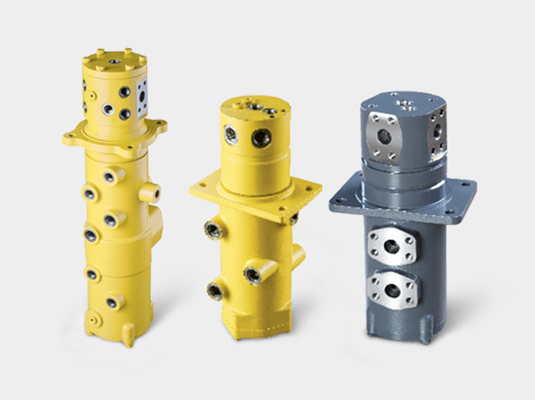
In demanding industrial settings where hydraulic systems operate under extreme pressure, heat, and constant rotation, even a minor component failure can bring entire operations to a standstill. The substantial hydraulic rotary union sits at the heart of these systems, tasked with reliably transferring fluid between stationary and rotating parts while withstanding punishing conditions. Yet, not all rotary unions are built alike—design flaws or material compromises can lead to leaks, wear, and costly downtime. This is where MOFLON redefines performance, with engineering that anticipates real-world stresses and delivers unmatched durability. In this post, we'll unpack the critical design principles behind high-endurance rotary unions and explore how MOFLON's innovative approach meets the challenges of today's most rigorous industrial applications.
Built Tough: Engineering the Core of Heavy-Duty Rotating Unions
The inner workings of a heavy-duty rotating union are a masterclass in material science and precision machining. At the heart of the design are bearing-grade alloys and hardened steel components that maintain their integrity under extreme radial and axial loads. These aren't off-the-shelf parts; each seal face is lapped to a microscopic flatness, ensuring a fluid-tight barrier even when pressure spikes beyond 5,000 PSI. The housing is typically forged as a single piece, eliminating weak points where traditional castings might crack from vibration or thermal shock. It's this refusal to compromise on raw materials that allows the union to thrive in gritty environments—from steel mill roll cooling to offshore drilling mud lines—without succumbing to galling or premature wear.
Beyond brute strength, the engineering focus shifts to the interface between stationary and rotating elements. A proprietary balance ratio is engineered into the seal geometry, using fluid pressure itself to maintain an optimal gap between sealing surfaces. This pressure-balanced design reduces friction drastically, allowing shaft speeds that would cause lesser unions to overheat and seize within hours. Paired with large-diameter thrust bearings and specially profiled runoff grooves, the core can handle dry-running conditions during startup without immediate damage. The result is a union that doesn't just survive high RPMs and pressure simultaneously—it does so while delivering consistent media flow, cycle after cycle, with leak rates measured in single-digit milliliters per hour.
Durability is further ensured through advanced surface treatments that go far beyond simple chrome plating. The sealing faces receive diamond-like carbon coatings or ceramic-to-ceramic contact pairs, tested to withstand abrasive slurries that would quickly erode conventional stainless steel. Temperature extremes are managed by integrating cooling jackets directly into the bearing housing, while the fluid paths are contoured to minimize turbulence and prevent cavitation erosion. Every unit is assembled under cleanroom conditions and subjected to dynamic test runs that simulate years of field service. The outcome is a rotating union core that can be buried in a mining conveyor pulley or mounted on a 24/7 packaging machine, performing relentlessly without requiring frequent interval replacements or constant monitoring.
Fluid Flow Without Friction: Sealing Innovations That Last
Imagine a pump that never fights itself—where fluid glides without the usual drag. That’s the quiet revolution underway in seal design. Instead of brute-force contacts that wear and waste energy, new seals use engineered surfaces and responsive materials to lift or align perfectly, leaving behind the era of constant friction.
We’re seeing things like laser-textured faces that trap a micro-film of fluid, turning the seal itself into a nearly frictionless bearing. Some designs borrow from nature—think of how a lily pad repels water yet stays anchored. Others employ smart polymers that swell or relax just enough to keep the gap consistent, no matter the pressure spikes. The result isn’t just less heat and lower bills, but a seal that effectively outlasts the machine it protects.
Field data tells the real story: in remote gas wells and subsea valves, these innovations are translating into maintenance intervals that stretch years longer. One operator in Patagonia cut power consumption by 18% simply by retrofitting legacy compressors with non-contacting shaft seals. It’s a quiet kind of breakthrough—no fanfare, just a genuine shut-off of energy loss and a seal that’s still tight, long after old-school equivalents would have failed.
From Steel Mills to Offshore Rigs: Where Reliability Is Non-Negotiable
In the unforgiving environments of steel mills and offshore rigs, failure is measured in more than just dollars. A single breakdown can halt entire supply chains, expose crews to danger, or trigger environmental disasters. These places operate under extremes—intense heat, corrosive saltwater, relentless vibration—where equipment doesn't just need to perform; it absolutely cannot falter.
Reliability here isn't a feature to be listed in a brochure. It's built into every weld, every line of code, every maintenance protocol. Engineers working on blast furnaces or deepwater drills know that redundancy and brutal testing are the only paths to trust. There’s no room for “good enough” when a pump failure thousands of feet below the surface takes months and millions to fix.
What keeps these industries moving is a quiet obsession with preventing the unpredictable. Advanced monitoring systems sniff out subtle anomalies before they become catastrophic events. Materials are chosen not just for strength but for their stubborn refusal to degrade under sustained punishment. In these sectors, a reputation for reliability is earned one flawless shift at a time—and once lost, it rarely returns.
Material Mastery: Selecting Alloys and Coatings for Extreme Conditions
When environments push past standard engineering thresholds, selecting the right alloy or coating isn’t just a design decision—it’s a survival strategy. Whether it’s the searing heat of a turbine blade, the corrosive bite of deep-sea saltwater, or the relentless abrasion inside a mining crusher, the interplay between base metal and surface protection defines component life. We look beyond generic stainless steels, evaluating how elements like molybdenum, tungsten, or cobalt shift phase stability and creep resistance at temperature. The real skill lies in matching microstructural demands to real-world stressors, often blending mechanical properties with electrochemical compatibility.
Coatings, on the other hand, are our first line of defense—engineered barriers that can transform a simple substrate into an exotic performer. Thermal spray ceramics like yttria-stabilized zirconia create thermal insulation that lets jet engines run hotter, while physical vapor deposition of titanium nitride brings wear resistance to cutting tools working at high RPMs. It’s not enough to just pick a coating material; application technique matters equally. The bond strength, porosity, and residual stress from the deposition process will make or break the system in the field. We often layer solutions—a ductile undercoat to absorb shock, followed by a hard overlay to resist erosion.
Ultimately, true material mastery means abandoning off-the-shelf answers. It involves a deep read of failure modes: is the part cracking from thermal fatigue or failing from sulfide stress corrosion? Combining computational thermodynamics with hands-on testing, we dial in compositions that address the exact corrosive agents and load spectra present. Small adjustments—a slight boost in chromium, a precise post-weld heat treatment—can push a material’s performance from hours to years. In these niche applications, experience and a tenacious curiosity are what transform good ideas into reliable assets.
Performance Under Pressure: How Design Shields Against Leaks and Wear
When a system operates under high stress, the smallest imperfection in a seal can lead to catastrophic failure. Thoughtful design integrates multiple barriers, using materials engineered to deform just enough to fill microscopic gaps without losing elasticity over time. This balance is what keeps aggressive fluids contained even as pressure cycles fluctuate wildly.
Wear from constant friction is another enemy. Modern solutions employ surface textures that trap lubricant, creating a hydrodynamic film that separates moving parts. Coupled with strategic contouring that distributes stress evenly, these seals outlast traditional designs by a wide margin, performing reliably where others would quickly degrade.
Beyond the Blueprint: Real-World Testing for Zero-Downtime Operations
Blueprints and design documents often promise seamless failovers and resilient architectures, but the gap between theory and production is where outages are born. Real-world testing drags those assumptions into the light, exposing the brittle edges that look solid on a whiteboard. Whether it's a sudden traffic spike, a degraded database connection, or an entire availability zone vanishing, only live fire drills reveal how a system actually behaves under stress.
Tools like chaos engineering and disaster recovery rehearsals aren't about breaking things for sport—they're about building confidence through controlled disruption. Injecting latency, killing pods, or yanking permissions in a monitored environment lets teams observe recovery mechanisms in action and fine-tune automation that never gets exercised during normal operations. This hands-on validation is what turns a paper promise of zero downtime into a lived reality.
The real difference shows up when a team stops treating these tests as occasional events and starts embedding them into the delivery pipeline. By making failure injection a routine part of deployment, every release carries a proven track record of resilience. That cultural shift—away from hoping the system holds and toward knowing it will—is what keeps services running when the unexpected inevitably arrives.
FAQ
A substantial hydraulic rotary union is a heavy-duty fluid coupling designed to transfer hydraulic oil or other media between a stationary source and a rotating component. Unlike compact, lighter-duty versions, these units are built with larger diameters, robust bearing systems, and reinforced seals to handle higher pressures, greater flow rates, and more intense mechanical loads typically found in demanding industrial settings.
Key design elements include multi-passage configurations for simultaneous transfer of multiple fluids, hardened steel or stainless steel construction for corrosion and wear resistance, high-capacity thrust and radial bearings, and specialized sealing technologies such as spring-loaded lip seals or mechanical face seals that maintain integrity even under high speeds, temperatures, and vibration.
It relies on precision-machined sealing surfaces and dynamic seal designs that compensate for pressure fluctuations and thermal expansion. Seals are often housed in balanced arrangements to minimize the pressure differential across them, and labyrinth or drainage features may be included to safely divert any incidental leakage away from critical machinery.
They are essential in heavy industries such as steel mills for continuous casting machines, offshore drilling equipment, large-scale hydraulic machinery, mining excavators, marine deck cranes, and paper mills – anywhere that large rotating drums or machinery require uninterrupted hydraulic supply under tough conditions.
Engineers focus on maximum operating pressure, rotational speed (RPM), permissible temperature range, number of independent flow passages, port sizes, and the type of hydraulic fluid. Equally important are expected service life, ease of maintenance, and the union's ability to cope with side loads or thrust forces from the connected equipment.
Predictive maintenance is best, using vibration analysis or temperature monitoring to detect early signs of seal wear or bearing deterioration. Scheduled inspections should check for any fluid discoloration, visible seal leakage, or unusual noise. Replacing seals and lubricating bearings at manufacturer-recommended intervals prevents unplanned downtime, especially in continuous-process environments.
Conclusion
Substantial hydraulic rotary unions are engineered to deliver uninterrupted fluid transfer under the harshest industrial conditions, where failure is simply not an option. The design begins with a rugged framework capable of withstanding severe mechanical loads and thermal swings, forming a bulletproof core that holds precision components in exact alignment. Inside, sealing technology has been rethought from the ground up—advanced face materials and hydrodynamic features create a nearly frictionless interface that sheds heat and resists wear even at elevated pressures and speeds. This is complemented by careful material selection: high-performance alloys and specialized coatings, from tungsten carbide to diamond-like carbon, are chosen to combat corrosion, galling, and erosion in environments ranging from chemical processing to subsea operations. Every element, from bearing preload to seal geometry, is tuned to maintain a leak-tight envelope without sacrificing rotational freedom.
Beyond the blueprint, these rotary unions prove their worth in real-world deployments where downtime translates directly into lost revenue. In steel mills, they channel high-temperature hydraulic oil through continuous casting machines without a stutter. Offshore, they endure salt spray and platform vibration while keeping critical functions alive. The design inherently manages pressure spikes and side loads, using balanced sealing arrangements and fluid film control to prevent catastrophic leaks. Before reaching the field, each unit undergoes rigorous testing—pressure cycling, thermal shock, and extended endurance runs—to validate performance over years of service. It's this blend of robust construction, innovative seals, material science, and thorough validation that makes substantial hydraulic rotary unions indispensable in operations that never afford a second chance.
Contact Us
Contact Person: Xiangpin Li
Email: [email protected]
Tel/WhatsApp: 86 186 1706 8578
Website: https://www.moflon.com