

Top 10 First Aid Kit Manufacturers for Reliable Safety and Emergency Preparedness
2026-10-08
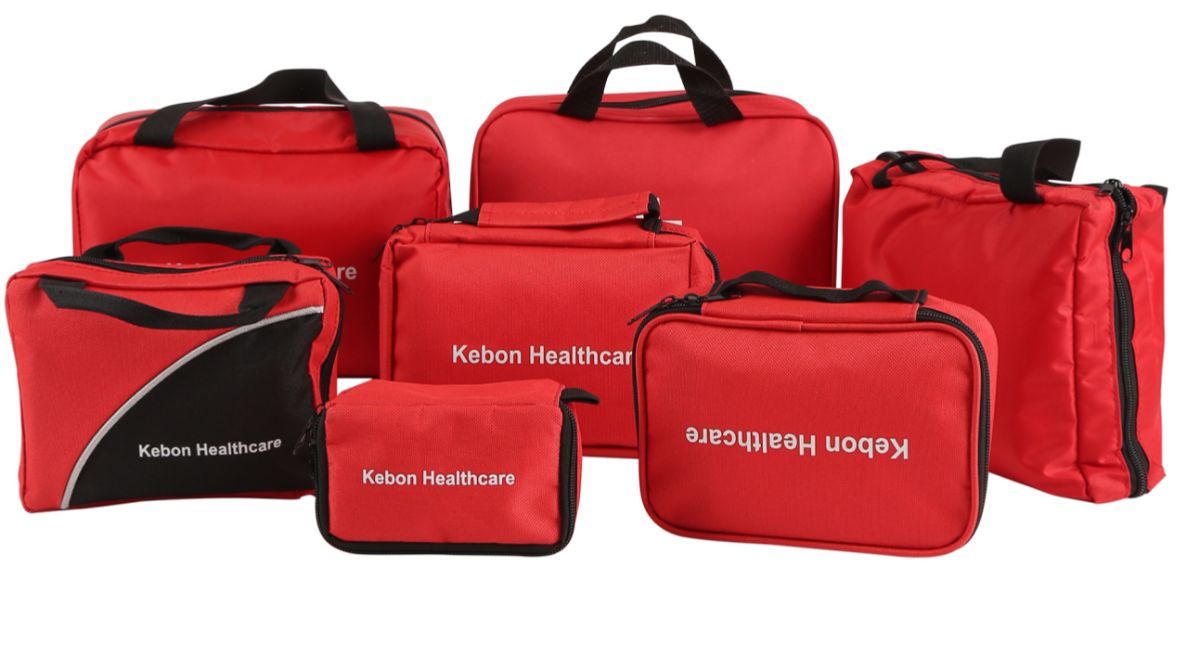
When an emergency strikes, the quality of your first aid kit can mean the difference between a close call and a crisis. That’s why we’ve compiled a list of the top 10 manufacturers who consistently deliver reliable safety solutions—no fluff, just gear you can trust when it matters most. Among them, Kebon stands out for its practical designs and durable components, but you’ll want to see how all these brands compare before you stock your home, vehicle, or workplace. Ready to find the kit that won’t let you down?
The Hidden Quality Signals Top Manufacturers Don’t Advertise
Most purchase managers flip straight to the spec sheet, but that sheet rarely shows how a plant handles lot-to-lot variation in raw material hardness. A top-tier supplier will quietly maintain a shadow testing program: pulling random units off the line after 10,000 cycles, measuring internal rejection rates that never reach marketing, and keeping calibration records on their gauges that prove a ±0.002 mm tolerance doesn't drift by Thursday afternoon. These are the numbers that show up only in a defect lawsuit, never in a brochure.
Watch what happens when you ask for a small custom change. The best manufacturers absorb the cost of a new fixture or a revalidation run without broadcasting it, because their real reputation is built on repeat industrial clients who have stayed with them for twenty years—clients who know a supplier's true quality by the absence of last-minute air freight of replacements and by packaging that still keeps moisture out after six weeks in a humid container.
Why Real-World Testing Beats Marketing Claims
Marketing sheets promise the moon: a laptop that lasts a full day, a waterproof jacket that shrugs off storms, a phone camera that nails every low-light shot. But step outside the demo room and those claims often wobble. Real-world testing strips away the controlled lighting, the ideal temperatures, and the fresh-out-of-the-box settings. It puts products in ordinary hands—people who stuff them into backpacks, children who drop them on pavement, commuters who use them in drizzle and dust. That’s where the polished numbers start to crack.
Lab measurements are useful, but they rarely reflect how people actually live. A battery benchmark run at half brightness with Wi-Fi off says little about a day of video calls on a patchy connection. Real-world testing embraces that messiness: the variable signal strength, the accumulated pocket lint, the third-party apps draining resources in the background. When testers use a device for weeks rather than hours, small irritations surface—ports that loosen, hinges that squeak, software that slows after updates. These details never make it into a spec sheet, yet they define whether you’ll love or loathe the product.
Independent, hands-on testing also gives a clearer picture of value. A budget vacuum might post stellar suction numbers on hard floors, but in a home with pet hair, area rugs, and chair legs, those numbers fail. Real-world trials reveal the compromises: shorter runtime, clogged brushes, awkward corner reach. They also uncover quiet overperformers that ignore flashy advertising. That’s why buyers increasingly trust long-term reviews, community forums, and side-by-side comparisons over glossy campaigns. Marketing tells you what a product can do under perfect conditions; real-world testing shows what it will do for you.
Smaller Shops, Bigger Impact: Rethinking Manufacturer Size
The assumption that bigger always means better has quietly shaped manufacturing for decades. Yet a growing number of small workshops are proving that limited floor space doesn't limit what they can achieve. Freed from layers of management and rigid production lines, these compact operations pivot quickly, experiment without enormous capital risk, and stay unusually close to the people who actually use their products. It's less about doing everything, more about doing the right things with remarkable precision.
What small shops sacrifice in volume, they gain in attention. A ten-person team can walk a part from design sketch to finished prototype in a single afternoon because decisions don't travel through five departments. That responsiveness often leads to better problem-solving, fewer wasted materials, and a deeper sense of pride in the work itself. When a client calls with a strange request, the answer isn't a quote from a catalogue but a conversation about what's possible. That kind of relationship is hard to scale, and maybe that's the point.
Customization as a Core Safety Strategy, Not an Add-On
Treating customization as an afterthought leaves gaps that can quietly erode trust. When safety measures are bolted on late, they feel like friction rather than protection. Teams waste effort reconciling conflicting defaults, and users pick up on the inconsistency. Making customization central from the start flips that dynamic. It forces you to define what safe means for your specific context, rather than accepting a generic baseline that might not fit the way people actually work.
This approach also changes how you handle feedback. Instead of hunting for a single perfect configuration, you build systems that let different teams tune controls without breaking core safeguards. The result is less time spent arguing about permissions and more time focused on real risks. Customization stops being a checkbox for compliance and becomes the mechanism that keeps safety relevant as your product evolves.
In practice, this means designing guardrails that are inspectable and adjustable by the people closest to the problem. A review queue that can be scoped per project, an alert threshold that respects local noise levels, a policy override that logs its own reasoning — these are not conveniences. They are how safety survives contact with messy, real-world use.
The Expiry Date Trap That Quietly Weakens Emergency Kits
Most people build an emergency kit, tuck it in a closet, and assume it's ready. But time works against that assumption. Adhesive bandages dry out and refuse to stick. Batteries leak before the flashlight ever gets used. Painkillers lose their strength in the bottle. It's not neglect, it's the quiet decay of things that were never opened.
The real danger shows up when you finally need the kit. A storm knocks out power and the backup batteries are dead. Someone cuts a hand and the antiseptic wipe is dried to a thin, useless sheet. Old water develops a flat, stale taste that makes you question every sip. Rotating items twice a year takes only a few minutes, but it's what separates a genuine safety net from a box of expired hope.
How Customer Feedback Loops Drive Continuous Kit Improvements
Real improvement rarely starts in a conference room. It starts in the unguarded moments after someone uses your kit—when a customer notices a latch that sticks, a pocket that sits just wrong, or a missing piece they assumed would be there. Those small frustrations, voiced in reviews, support tickets, or casual emails, are the raw material for change. The trick is not just collecting them, but closing the loop: taking what you heard, making a concrete tweak, and then telling that same customer, "We fixed this because of you." That single act turns a passive buyer into an active collaborator.
Most kit builders make the mistake of treating feedback as a fire hose—lots of noise, occasional signal, and a tendency to ignore anything that isn't repeated five times. But the most useful insights often come from a single, detailed observation. Maybe a photographer mentions that the zipper on the battery pouch catches on the weather seal. That one comment, if routed to the right person, can trigger a redesign of the pouch opening in the next production run. The loop works best when feedback is seen not as criticism, but as free prototyping advice from people who actually use the kit in the wild.
The continuous part matters more than the individual fix. A kit that improves based on feedback builds a quiet reputation: customers learn that their voice carries weight, so they share more, and each cycle makes the kit a little more dialed-in. Over time, those small adjustments compound—a better strap here, a reinforced corner there—until the kit feels less like a product and more like a co-creation. That's the real payoff of a feedback loop: you're not just reacting to complaints, you're building a kit that keeps getting smarter with every person who uses it.
FAQ
Focus on whether the kits meet ANSI or OSHA standards, the variety of contents included, and the company's reputation for quality. A manufacturer that offers restocking services and has clear expiry date labeling is usually a safer bet.
Brands like Johnson & Johnson, 3M, Cintas, First Aid Only, Lifeline, Adventure Medical Kits, Surviveware, and North American Rescue often appear in reputable lists. Each has a strength, such as workplace compliance, outdoor durability, or tactical readiness.
They design the kits to align with guidelines like ANSI Z308.1 or OSHA requirements, and they frequently update the contents as standards change. Many also consult medical professionals to review item selection and quantities.
You can find compact personal kits for vehicles or backpacks, as well as large industrial stations for factories and warehouses. Some brands specialize in marine, camping, or tactical kits, while others offer general-purpose options for homes and offices.
Yes, several leading brands allow you to customize the contents based on your specific needs, such as adding burn care items for a kitchen or eye wash for a lab. This is especially common for businesses that must address unique workplace hazards.
A good rule is to check every three to six months and replace any expired or used items. Some manufacturers offer subscription refill services or clearly marked expiration dates to simplify this process.
Top-tier manufacturers invest in higher-quality materials, provide clear instructions and labeling, and often include better organizational features like color-coded compartments. They also tend to have stronger customer support and warranty policies, which matters when you need replacement parts quickly.
Many do. For example, Cintas and 3M often offer workplace training resources, online guides, or even on-site training as part of their service packages. This helps ensure your team knows how to use the kit effectively during an emergency.
Conclusion
Ranking first aid kit makers often misses what actually keeps people safe when an emergency unfolds. The most dependable manufacturers rarely advertise their strongest traits: batch-level quality checks, materials that hold up under heat and moisture, and packaging designed to be opened with one hand. Real-world testing reveals more than glossy spec sheets ever could, which is why smaller workshops sometimes outperform industry giants. These compact operations can pivot quickly, using feedback from paramedics, outdoor guides, and ordinary households to refine tape adhesion, bandage stretch, or scissors that won't rust. Their size doesn't limit impact; it often sharpens it.
Customization has quietly become a safety requirement rather than a luxury. A kit built for a desert hiking team is useless if it mirrors a daycare center's supplies. The better manufacturers treat kit design as an ongoing conversation, not a static catalog item. Meanwhile, the expiry date trap continues to weaken many emergency kits: sterile pads lose sterility, adhesive degrades, and antiseptic wipes dry out. Makers who print clear rotation reminders or offer modular replacement packs earn trust over time. Those who close the loop by acting on real customer experiences—fixing zipper failures, resealing weak pouches, or swapping out underperforming items—end up delivering kits that actually work when seconds count.
Contact Us
Contact Person: Andy Yu
Email: [email protected]
Tel/WhatsApp: +86 19858933676
Website: https://www.kebonfirstaid.com