

Top 10 Knife Gate Valves for Reliable Flow Control
2026-07-22
When it comes to managing demanding slurry, viscous, or abrasive media, a dependable knife gate valve can make all the difference between smooth operations and costly downtime. In this guide, we’ve handpicked the top 10 knife gate valves that deliver unmatched reliability in flow control across industries—from mining and wastewater to pulp and paper. Among the standout performers, THT has carved a niche with its precision engineering and robust sealing technology, ensuring zero leakage even under the harshest conditions. Whether you're upgrading existing infrastructure or specifying for a new project, our curated list will help you navigate the options that truly deliver on longevity and performance. Dive in to discover which valve can best safeguard your process and slash maintenance headaches.
Why Knife Gate Valves Excel in Demanding Conditions
In industries where thick slurries, viscous fluids, or solids-laden media are the norm, standard valves often fail prematurely. Knife gate valves, however, are purpose-built for these punishing environments. Their defining feature—a sharp, beveled gate—slices through material that would clog or damage other valve types, ensuring a tight shut-off even when dealing with fibrous pulp, heavy sludges, or abrasive particulates. This cutting action isn't just a novelty; it drastically reduces the torque required to operate the valve and minimizes seat wear, making it a reliable workhorse in mining, wastewater treatment, and pulp and paper facilities.
Beyond their slicing capability, the design of knife gate valves eliminates common failure points. The body is typically streamlined and free of cavities where media could accumulate, harden, or cause corrosion. Many models feature replaceable seats and packing, allowing for in-line maintenance without removing the valve from the pipeline—a crucial advantage when downtime is measured in lost revenue. Whether handling scalding liquids or abrasive ores, these valves maintain integrity through robust materials like hardened stainless steel, Ni-Hard, or elastomer-lined bodies that shrug off erosion and chemical attack.
Another reason they thrive in tough conditions is their bidirectional sealing and low-pressure drop. When fully open, the gate retracts completely out of the flow path, preventing turbulence and pressure loss that can cripple process efficiency. For services involving frequent cycling or emergency shut-offs, pneumatic or hydraulic actuators can be added, enabling rapid, dependable operation. This combination of simplicity, durability, and adaptability makes knife gate valves a go-to solution wherever reliability under stress is non-negotiable.
Key Features That Ensure Dependable Flow Shutoff
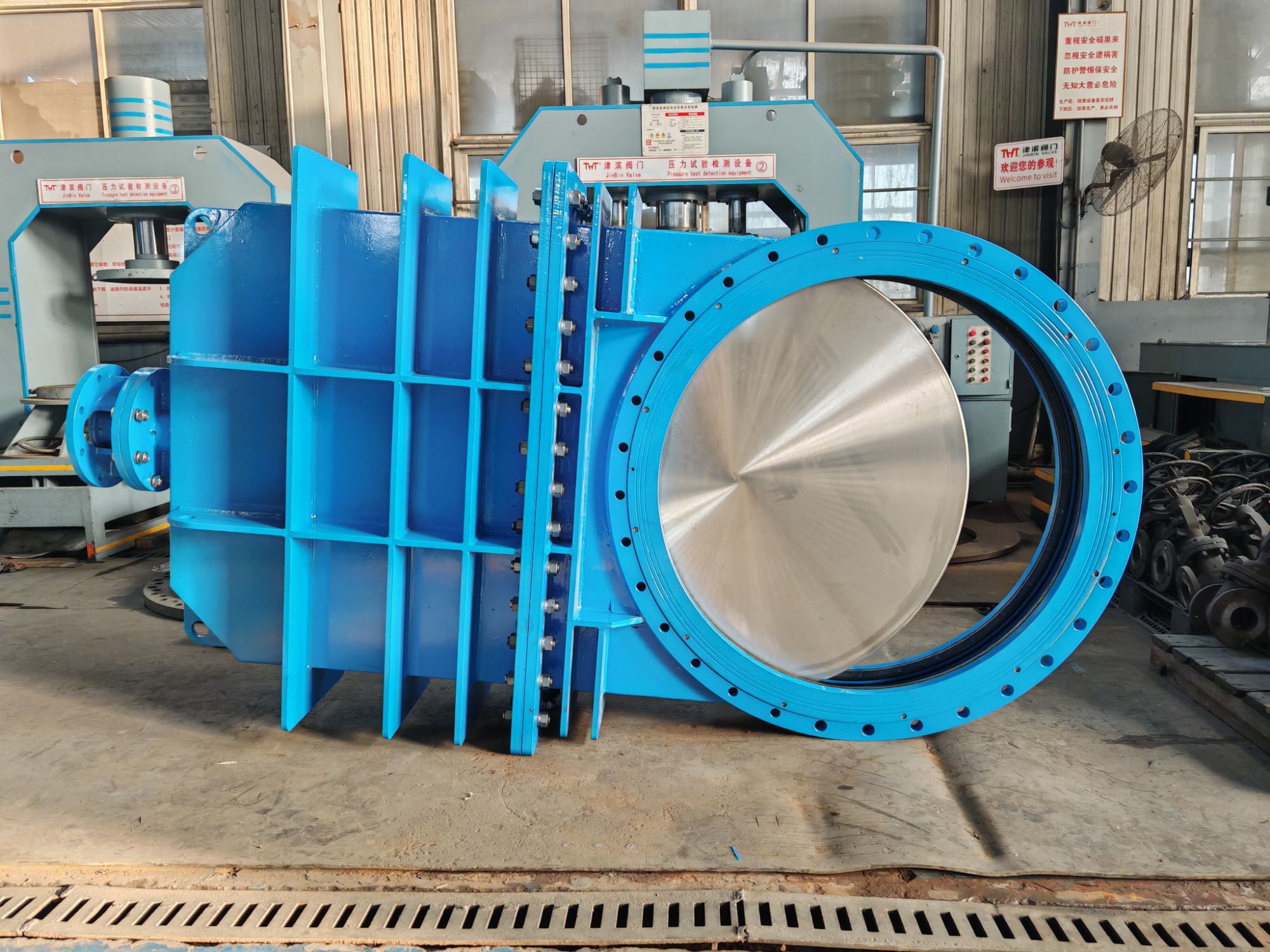
At the heart of reliable isolation lies a precision‑engineered sealing mechanism built to handle erratic pressure spikes and fine particulates without losing grip. The seat and disc interface uses a self‑aligning geometry that compensates for minor pipeline shifts, so the contact patch remains consistent even after thousands of cycles. Combined with a live‑loaded packing system, the design actively adjusts to thermal swings, preventing micro‑leaks at the stem before they ever start.
Actuation matters just as much as the trim itself. A direct‑mount quarter‑turn drive eliminates intermediary linkages that introduce slack, converting every ounce of input torque into predictable disc movement. The valve’s internal travel stops are machined into the body, not bolted on as an afterthought, which means the shutoff position is physically defined by the metal envelope — not a fragile external bolt that can loosen over time.
Long‑term integrity is further reinforced by material choices that deliberately err on the side of toughness. The sealing faces are often stellited or coated with chromium carbide to resist wire‑drawing and erosion, while the body castings incorporate heavier wall sections around the seat pocket to avoid distortion under high clamping loads. These are the kinds of details that separate a valve which merely passes a hydro test from one that still drops tight after a decade in service.
How to Match Valve Materials to Your Media
Selecting the right valve material starts with understanding what’s flowing through your pipes. For water and neutral fluids, brass or bronze resists corrosion and keeps costs low—unless your water has high chlorine, which can eat away at these alloys over time. In those cases, stainless steel offers a longer service life without breaking the bank.
When acids or solvents come into play, plastic valves like PVC, CPVC, or PVDF keep aggressive media in check without metallic contamination. Temperature changes everything—polypropylene works fine at ambient heat, but bring steam or hot oils into the equation and you’ll need alloys with the thermal fortitude to handle it, such as carbon steel or high-performance nickel grades. Chemical compatibility charts are your best friend here; they map fluid properties directly to material resilience so you can avoid premature failures.
Consider the dirtiest media as well. Slurries and abrasive powders demand hardened internals or ceramic-coated surfaces to resist erosion, while sanitary processes call for electropolished stainless steel that discourages bacterial growth. If you’re dealing with unpredictable pH swings or mixed waste streams, err on the side of higher-grade materials like Hastelloy, since the initial investment often pays for itself by dodging frequent replacements. Ultimately, the valve material and the media should work in tandem—not against each other—to keep your system running smoothly.
Where Knife Gate Valves Outperform Other Types
Handling tough slurries, thick stock, and wastewater full of solids is where the knife gate valve really pulls ahead. Its sharp-edged gate cuts straight through dense media and built-up sediment, seating tight even when the line is packed with debris. That means fewer clogs and less downtime compared to globe or ball valves, which struggle to close fully once particulates wedge into their seats.
You’ll see this advantage most in mining, pulp and paper, and chemical plants—anywhere abrasive or fibrous flows could grind down a standard valve in weeks. The design keeps the sealing surfaces out of the flow path until the final moment of closure, so wear and tear drop dramatically. A spring-loaded or beveled gate edge can push aside ropey solids that would leave an ordinary gate valve hanging half-open.
They also shine in high-cycle applications. When you’re isolating a line ten times a day, the simple, slim build of a knife gate valve means lighter weight, faster actuation, and a lot less air to move if it’s pneumatic. Plus, the full-bore opening lets pigs and scrapers pass through for line cleaning—a feature a pinch valve can’t match, and a butterfly disc only blocks. In these gritty, repetitive jobs, the knife gate isn’t just an alternative; it’s the only choice that holds up.
What to Look for in a High-Performance Valve
When assessing a valve’s performance, material integrity often gets overlooked in favor of flashy specs, but it’s the quiet anchor of reliability. A truly capable valve uses alloys or polymers that resist not just corrosion, but the subtle erosion from suspended particles that wears down seats and seals over time. Look beyond the datasheet to the manufacturing process—precision casting and rigorous post-machining inspections prevent micro-porosity and cracks that become leak paths under thermal cycling. If the material can’t maintain its shape and surface finish after a few thousand cycles, no amount of clever design will save it.
Flow capacity and pressure recovery are routinely cited, yet the real differentiator is how a valve behaves at partial opening. Many high-performance claims fall apart when you look at the installed characteristic curve—does the valve provide linear modulation, or does it churn the fluid into cavitation long before the flow rate meets demand? Smart engineers test with actual line conditions, not just idealized water tables, because a small change in trim geometry can turn a smooth operator into a noise-producing, energy-wasting bottleneck. Silence and stability at 30% stroke often reveal more than any full-open benchmark.
Actuation and feedback mechanisms separate the competent from the exceptional. A high-performance valve integrates seamlessly with control systems, offering direct position sensing and predictive diagnostics that flag seal wear or stem friction before they cause a plant shutdown. The absence of backlash in the drive train, combined with rapid fail-safe response, turns a passive component into an active risk-management tool. When you eliminate the need for constant manual calibration and instead rely on embedded intelligence, real performance becomes measurable in uptime, not just catalog numbers.
Ten Reliable Knife Gate Valves Worth Considering
Finding a dependable knife gate valve can feel like a gamble when reliability is non‑negotiable. The market is flooded with options, but only a few deliver consistent shut‑off in abrasive slurries or thick, fibrous media. Through years of field observation and candid feedback from plant operators, we’ve narrowed down ten models that hold up cycle after cycle without demanding constant attention. These aren’t just spec‑sheet heroes — they’ve earned their place through grit, literally.
Each valve on this list brings a distinct edge. Some excel with a robust bidirectional seal that laughs at high‑pressure blowouts, while others use a reinforced gate and replaceable sleeves to stretch service intervals. You’ll find stainless‑steel bodies for corrosive environments alongside cast‑iron workhorses that keep costs predictable. The common thread is an honest design that accounts for real‑world abuse: solids packing, thermal swings, and the occasional accidental dry cycling.
What sets a reliable knife gate valve apart? Look for a streamlined body profile that prevents media buildup, a packing gland that can be adjusted without special tools, and manufacturers who stand behind their products with ready‑to‑ship spares. The ten valves we’re highlighting all achieve that balance of straightforward performance and smart engineering. Whether you’re dealing with mining tailings, wastewater sludge, or pulping stock, there’s an option here that matches the harshness of the line.
FAQ
Knife gate valves are designed with a sharp-edged blade that can cut through thick fluids, slurries, and solids, ensuring tight shut-off and minimal clogging. Their simple construction reduces maintenance and allows for bi-directional sealing, making them ideal for challenging environments like mining, wastewater, and pulp and paper industries.
Look for valves with reinforced body materials like cast iron or stainless steel, and ensure the gate is hardened to resist abrasion. A replaceable seat and a resilient-seated design provide extra durability. Also, consider actuation type—manual, pneumatic, or electric—based on the required cycle time and remote operation needs.
The seat provides a primary seal against leakage. Metal seats handle extreme temperatures and abrasive media but may require higher closing torque, while resilient elastomer seats offer bubble-tight sealing and are better for zero-leakage applications. Selecting the right material extends valve life and reduces downtime.
Absolutely. Many knife gate valves are specifically designed for dry powders, granules, or pellets. They feature a streamlined body to prevent material buildup, a flush port for cleaning, and a shear gate that parts through packed material. These valves maintain flow accuracy and prevent bridging in silo and hopper outlets.
Routine inspection of the gate edge for pitting and the seat for wear is key. Lubricating the stem and replacing packing before significant leakage occurs prevents flash corrosion. In severe services, coatings like nickel plating or using exotic alloys improve longevity, and flushing ports help remove deposits after each cycle.
A wafer style is lighter and sandwiched between flanges, ideal for space-constrained areas and lower pressure ratings. Lug bodies have threaded inserts that allow dead-end service and easier removal without disturbing adjacent piping. Your choice depends on system pressure, maintenance frequency, and whether isolation is needed.
Top-tier valves often include a polished gate for lower friction, a square or tangential gate guide to prevent seat damage, an enclosed yoke for safety, and a bi-directional bubble-tight seal. Additional features like locking mechanisms, limit switches, and integration with smart control systems enable precise monitoring and reliable automation.
Conclusion
Knife gate valves continue to prove their worth in industries where harsh slurries, viscous fluids, and heavy solids are the norm. Their thin, sharp gate slices through thick media with minimal resistance, making them exceptionally effective in mining, pulp and paper, and wastewater treatment. Unlike conventional valves that rely on a wedge action, the knife-edge design maintains tight shutoff even under conditions where solids would quickly wear down or jam other mechanisms. The robust construction, often featuring reinforced gates and heavy-duty yokes, handles high pressures and abrasive particles without sacrificing performance. Sealing technology plays an equally vital role: resilient elastomer seats and double-seated designs prevent leakage to atmosphere, a critical requirement in environmentally sensitive operations. By eliminating internal cavities where debris can accumulate, these valves avoid the clogging issues that plague many alternatives, ensuring a clear passage and dependable isolation even after thousands of cycles.
Material selection becomes decisive when fluids are corrosive or abrasive. Stainless steel bodies and gates withstand aggressive chemicals, while hard-faced alloys or ceramic coatings extend service life in extreme wear applications. For high-temperature streams, premium graphite packing and metal seats keep the valve tight. In terms of performance, knife gate valves consistently outperform ball, butterfly, and globe valves where solids handling and through-conduit clearance are needed—their ability to open fully without encroaching on the flow path minimizes turbulence and erosion. When evaluating a high-performance valve, look beyond the data sheet: examine the gate surface finish, the seal design’s ability to self-clean, and the ease of packing adjustment. A reputable manufacturer will offer testing documentation and field-proven references rather than generic claims. The curated selection of ten reliable knife gate valves highlights designs that excel in these very areas, from lighter-duty variants with UHMWPE liners to heavy-duty models with hardened gates. Each candidate was assessed based on field reports, material innovation, and long-term operational reliability, giving engineers a practical starting point for flow control that doesn’t compromise when conditions get tough.
Contact Us
Contact Person: Su Zhang
Email: [email protected]
Tel/WhatsApp: +86-25219206
Website: https://www.tht-valve.com/