

Top Circuit Breaker Choices for Reliable Home Electrical Protection
2026-07-26
Ensuring your home’s electrical system is safe and dependable starts with one crucial decision: picking the right circuit breaker. With so many options on the market, finding the top circuit breaker choices for reliable home electrical protection can feel overwhelming. That’s where trusted brands like Chang Song make the difference—offering solutions that blend robust safety features with long-lasting performance. Whether you’re upgrading an old panel or wiring a new build, this guide breaks down what really matters, so you can choose with confidence.
Why Your Circuit Panel Deserves More Attention
Most homeowners rarely think about their circuit panel until something goes wrong—a breaker trips, lights flicker, or an appliance won’t turn on. But this unassuming metal box is the heart of your home’s electrical system, silently managing the flow of power to every outlet, switch, and device. Ignoring it can lead to inconvenient outages at best, and serious safety hazards like electrical fires at worst. Giving your panel a little proactive attention isn’t just about avoiding headaches; it’s about protecting your family and your property.
Beyond safety, a well-maintained circuit panel can actually improve your daily life. Outdated panels or overloaded circuits often cause subtle issues you might blame on something else: dimming lights when the AC kicks on, frequently tripped breakers in the kitchen, or chargers that seem to take forever. These are signs your panel is struggling to keep up with modern demands. Upgrading or simply reorganizing circuits can restore steady power, extend the life of your electronics, and even make your home more energy-efficient.
It’s also worth considering that your circuit panel is a long-term investment. If you’re planning to add a home office, a workshop, or an electric vehicle charger, your current panel might not be ready. Taking the time to understand its capacity and condition now can save you from costly emergency repairs later. A little attention today means you’re not left powerless when you need electricity most.
Key Features That Separate Standard Breakers from Smart Protectors
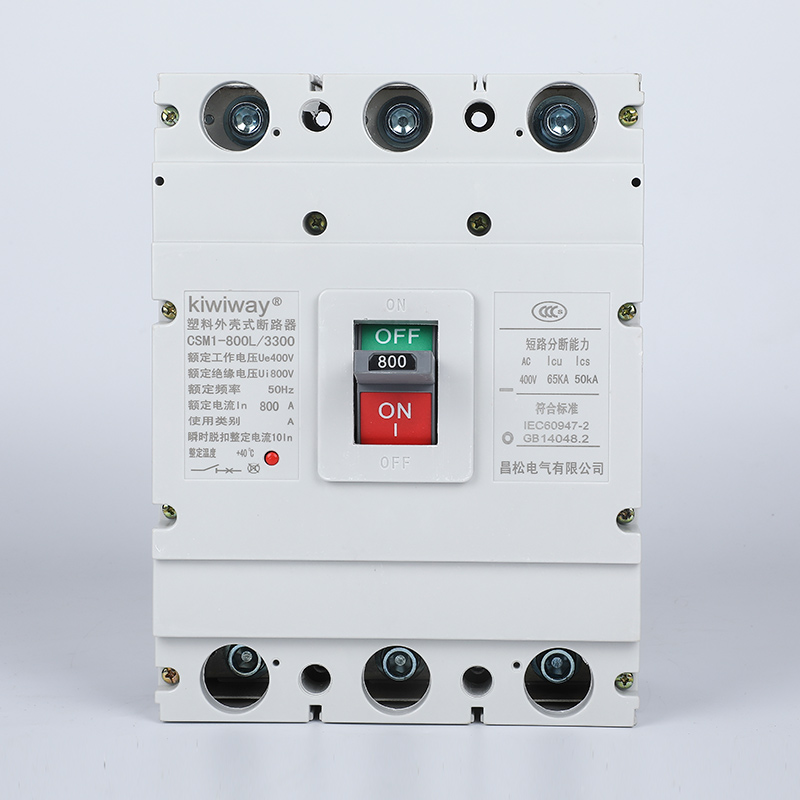
Traditional circuit breakers are designed with a simple mission: interrupt the flow of electricity when current exceeds safe levels. They rely on basic thermal or magnetic trip mechanisms that have changed very little over decades. This reactive approach means they only act after a fault occurs, leaving connected devices exposed to the initial surge and offering no insight into the cause of the trip. They are binary devices, either on or off, with no middle ground and no way to communicate their status or history.
Smart protectors, by contrast, embed continuous monitoring and analysis into the core of the protection function. They measure real-time parameters like current, voltage, power factor, and temperature, using this data to detect anomalies before they develop into full-blown faults. This proactive stance allows them to issue early warnings, log events for later diagnosis, and even distinguish between harmless inrush currents and genuine overloads. Instead of simply cutting power, they offer a range of responses, from momentary surge absorption to controlled disconnection, based on the nature and severity of the disturbance.
Connectivity sets smart protectors further apart. They integrate with building management systems, industrial IoT platforms, or simple mobile apps, enabling remote status checks, energy consumption tracking, and automated documentation of electrical events. This transforms a panel of anonymous breakers into an intelligent network of sensors that helps facility managers predict maintenance needs, reduce downtime, and optimize energy usage—all while maintaining the essential safety function of disconnecting under true fault conditions.
A Closer Look at AFCI and GFCI Technologies
Circuit protection has evolved dramatically since the introduction of the basic fuse. While standard circuit breakers guard against overloads and short circuits, they fall short when it comes to personal safety. This gap led to the development of two specialized technologies: Arc Fault Circuit Interrupters (AFCIs) and Ground Fault Circuit Interrupters (GFCIs). Though both are designed to prevent electrical hazards, they target fundamentally different threats. Understanding how each device works—and where they belong in a modern electrical system—is essential for anyone seeking to meet code requirements and reduce the risk of electrical fires or shocks.
GFCIs react to current imbalances as small as 4–6 milliamps, a sensitivity that stems from their mission: protecting people from lethal shocks. When electricity flowing out on the hot wire does not return fully on the neutral—because it has found an alternate path, such as through a human body to ground—the GFCI trips within a fraction of a second. You will find these devices in kitchens, bathrooms, garages, outdoors, and anywhere moisture might create a path to ground. AFCIs, on the other hand, listen for the unique signatures of arcing faults. Series arcs, caused by a broken wire or loose connection, and parallel arcs, caused by damaged insulation between conductors, generate high-frequency noise that AFCI circuitry can detect. By interrupting the circuit before an arc can ignite surrounding materials, AFCIs address a leading cause of residential fires.
The distinction between these technologies matters during installation and troubleshooting. While combination-type AFCIs offer some ground-fault protection of equipment (30 mA trip level), they are not a substitute for the 5 mA personnel protection of a GFCI. The NEC has progressively expanded AFCI requirements to most living areas, while GFCI mandates cover zones where skin contact with grounded surfaces is likely. Contractors and homeowners alike should pay attention to the fact that nuisance tripping—often blamed on “sensitive” devices—usually points to an actual wiring defect, a shared neutral, or an appliance with inherent leakage. Regular testing, using the built-in test buttons, remains the simplest way to confirm that these silent guardians are ready to respond when a fault occurs.
How to Match Breaker Capacity with Your Home’s Actual Load
Start by listing every appliance and device you plan to run on the circuit, noting their wattage or amperage from the nameplate. Don't rely on guesses—a microwave's label might say 1500 watts while the actual surge can briefly exceed that. Add up the continuous loads (anything running for three hours or more) and factor in intermittent use items like vacuums or power tools. This gives you a realistic demand figure, not just a theoretical maximum.
The breaker should be sized to 125% of the continuous load plus 100% of the non-continuous load, per electrical code. For instance, if your total continuous draw is 16 amps and you have a 4-amp intermittent load, you need a breaker rated for at least (16 x 1.25) + 4 = 24 amps, meaning a standard 25A or 30A breaker depending on wire gauge. Never oversize the breaker just to stop tripping—that's a fire hazard because the wiring might overheat before the breaker trips.
Consider real-world usage patterns too. A bedroom circuit might have a high wattage heater plugged in only during winter, so you size for that worst-case scenario but understand the circuit handles lighter loads most of the year. Also check your panel's total capacity; adding a large new breaker could overload the main service. An electrician can do a load calculation to ensure the whole system remains balanced and safe, especially if you're adding multiple high-draw circuits.
Brands That Electricians Rely On for Long-Term Safety
Seasoned electricians know that safety isn’t just about following codes—it’s about trusting the tools and components they use every day. When a panel or breaker is installed, it needs to perform reliably for decades, often in harsh conditions. That’s why many pros stick with names that have proven themselves on thousands of job sites. Brands like Schneider Electric, Siemens, and Eaton aren’t just popular because of marketing; they’ve built their reputation on consistent quality, rigorous testing, and a deep understanding of electrical safety standards. These manufacturers design their products to withstand overloads, resist corrosion, and minimize arc flash risks, which makes them a natural choice for installations that won’t be touched for years.
It’s not just about the big players, though. Smaller, specialized brands also win loyalty by addressing niche safety concerns. For instance, companies that focus on surge protection or ground-fault circuit interrupters often become the go-to for electricians working in flood-prone areas or industrial settings. What matters most is track record: electricians share stories about which breakers trip consistently, which panels haven’t warped after a decade, and which connectors haven’t loosened under vibration. This word-of-mouth is more powerful than any spec sheet, and it’s why certain brand names get passed down from master to apprentice.
Ultimately, the brands electricians rely on for long-term safety are those that treat reliability as a non-negotiable standard. They don’t cut corners on materials or skip testing phases just to hit a price point. Instead, they backward-engineer their products from worst-case scenarios, ensuring that when a fault occurs, the equipment fails safely—or doesn’t fail at all. This commitment is why you’ll see the same trusted logos in homes built 40 years ago and in the newest smart buildings. For the electrician, choosing such a brand isn’t just about convenience; it’s a professional responsibility that protects both their reputation and the lives of the people who will depend on their work.
Simple Steps to Verify Your System’s Whole-House Protection
Start by taking a walk through your home and noting every electrical panel, surge protector, and major appliance. Look for any telltale signs of wear: discolored outlets, buzzing sounds from the breaker box, or flickering lights that no one has gotten around to fixing. These small clues often point to deeper vulnerabilities that a casual glance might miss.
Next, grab a notepad and list out your critical electronics—computers, entertainment systems, smart home hubs—and check whether they’re plugged into outdated power strips or directly into wall outlets. Whole-house protection works at the source, but if individual points of entry are left exposed, a nearby lightning strike or utility surge can still find its way in through phone lines, coaxial cables, or even your garage door opener circuit.
Finally, consider scheduling a professional load test if you’ve recently added high‑demand devices like EVs or heat pumps. A qualified electrician can measure ground resistance and confirm that your surge suppression is actually clamped at safe levels, rather than just assuming it is. This step turns guesswork into certainty, giving you real peace of mind when the next thunderstorm rolls through.
FAQ
Reliability comes down to quick fault detection, durable components, and consistent performance under varying loads. Look for models with high interrupting ratings and thermal-magnetic trip mechanisms that can handle both overloads and short circuits without nuisance tripping. Quality manufacturing and compliance with safety standards also play a huge role.
Match the amperage to the circuit's wire gauge and expected load. For example, 15-amp breakers suit most lighting and general outlet circuits with 14-gauge wire, while 20-amp breakers are used for kitchen or bathroom outlets requiring 12-gauge wire. Always check local codes and appliance requirements; oversizing a breaker without proper wiring creates a fire hazard.
If you have experience with electrical work and your panel has a main disconnect, you might handle a simple swap safely—but mistakes can be deadly. For adding new circuits, upgrading to AFCI/GFCI types, or any work involving the service entrance, it's wise to hire a licensed electrician. They'll ensure proper torque, bus bar condition, and code compliance.
Standard breakers protect against overcurrent and short circuits. GFCI (Ground Fault Circuit Interrupter) breakers shut off power when they detect current leaking to ground, preventing shocks in wet areas. AFCI (Arc Fault Circuit Interrupter) breakers detect dangerous arcing that can start fires. Many modern homes use combination AFCI/GFCI breakers for bedrooms, living areas, and kitchens.
Smart breakers offer real-time energy monitoring, remote trip/reset, and alerts for abnormal usage. They're particularly valuable if you want to track consumption by circuit, integrate with home automation, or receive immediate notifications about electrical issues. The premium is justified for tech-savvy homeowners or for troubleshooting without opening the panel constantly.
Siemens, Eaton (Cutler-Hammer), Square D by Schneider Electric, and Leviton all have solid reputations. Siemens and Square D QO series are praised for their robust design and wide availability. Eaton's CH line is known for superior materials. Leviton's smart breakers bring modern connectivity. The best choice often depends on your panel brand, as mixing can void warranties or cause fit issues.
Most breakers last 20-30 years but should be inspected every 3-5 years for signs of wear, overheating, or corrosion. If a breaker trips frequently, feels hot to the touch, or shows discoloration, replace it immediately. After major electrical surges or panel moisture exposure, have a professional assess all breakers. Regular thermal imaging scans can catch problems early.
Conclusion
Keeping a home’s electrical system safe isn’t just about flipping a switch—it begins with the circuit panel, a component many overlook until a breaker trips or lights flicker. A quality panel, properly maintained, ensures that power flows smoothly and, more importantly, that faults are interrupted before causing damage. The difference between a basic breaker and a modern smart protector lies in the ability to detect nuanced electrical anomalies, such as arc faults that can lead to fires, and to respond in milliseconds. AFCI (Arc Fault Circuit Interrupter) technology monitors circuits for telltale signs of arcing, while GFCI (Ground Fault Circuit Interrupter) safeguards against shock hazards by cutting power when current leaks to ground. These aren’t just upgrades; they represent a fundamental shift in residential safety, addressing risks that standard thermal-magnetic breakers can miss entirely. Investing time to understand what’s inside the panel—and why it deserves regular inspection—can mean the difference between a minor inconvenience and a catastrophic failure.
Matching a breaker’s capacity to your home’s actual load is another critical step, one that requires moving beyond guesswork. An overloaded breaker that constantly trips is a symptom of a deeper mismatch, and simply upgrading to a higher amperage without verifying wire gauge can create a fire hazard. Electricians consistently rely on manufacturers like Eaton, Siemens, and Square D because these brands combine rigorous testing with intuitive design, making both installation and long-term reliability more predictable. But even the best breaker is only as effective as the system it protects, so periodic checks become essential: testing AFCI and GFCI breakers monthly, looking for signs of heat damage around the panel, and ensuring that surge protection covers incoming service lines. A whole-house approach means coordinating these elements so that a fault in one area doesn’t cascade. It’s a blend of smart product selection and simple, consistent habits that keeps a home truly protected.
Contact Us
Contact Person: Tonglun Chen
Email: [email protected]
Tel/WhatsApp: 8618906642555
Website: https://www.cncsele.com