

Top Shuttle Rotomolding Machine Benefits Every Manufacturer Should Know
2026-11-16
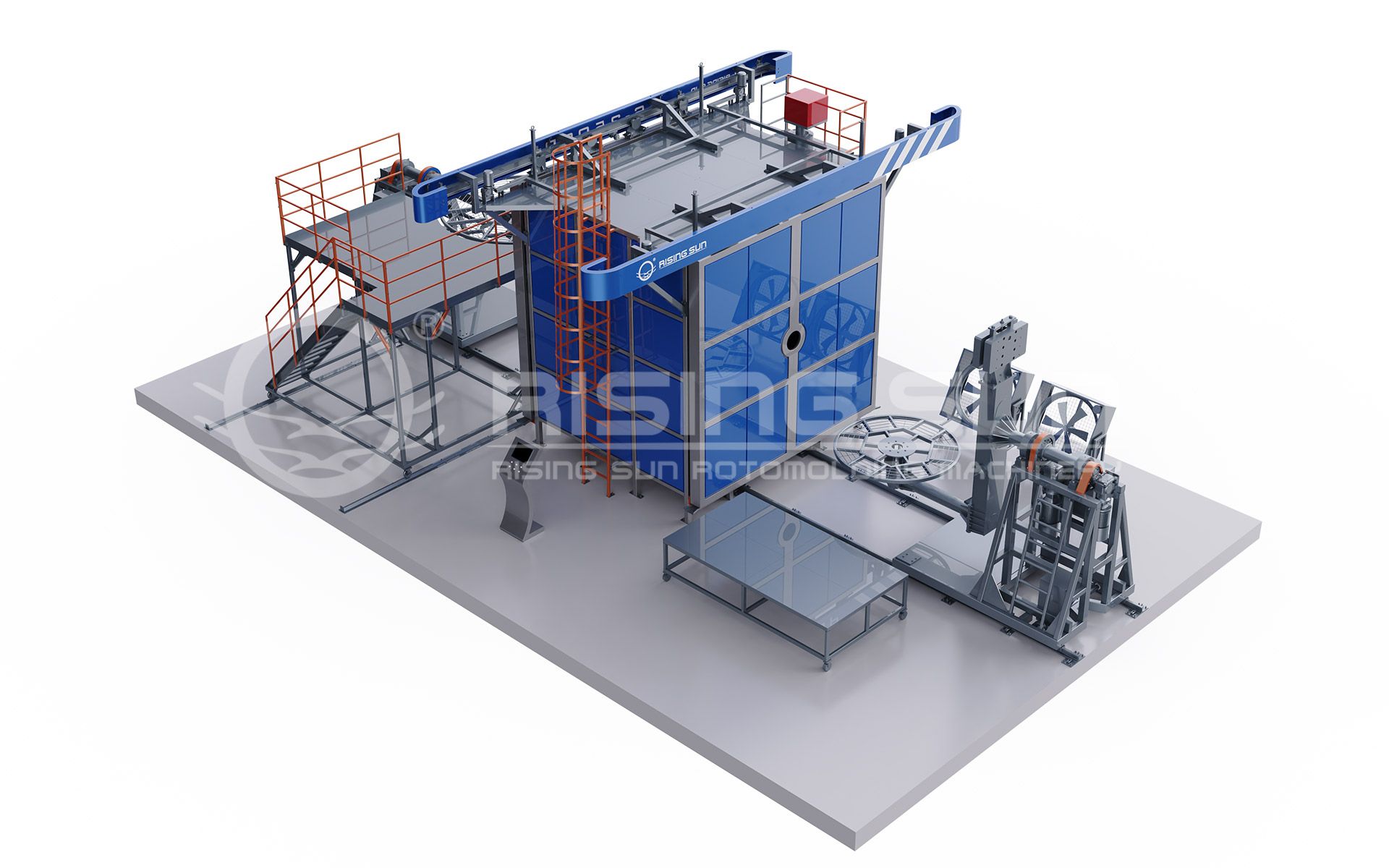
Not all rotomolding machines are created equal—especially when floor space, cycle time, and part consistency start cutting into margins. If your team is still working around carousel or open-flame setups, a shuttle rotomolding machine may be the upgrade that changes how you schedule jobs and scale output. This guide breaks down the benefits that matter most on the production floor: faster changeovers, tighter temperature control, flexible loading and unloading, and fewer labor bottlenecks. At Rising Sun, we have seen how the right shuttle system can turn a congested production line into a repeatable, profit-driving process. Here is what every manufacturer should know before their next equipment decision.
Lower Energy Draw Without Slowing Production Cycles
Cutting energy on a running line usually fails when the first move is to slow machines down. A cleaner target is the auxiliary load that idles against the main cycle. Air compressors can drop to a lower band during part changes, hydraulic power units can reduce pressure holds, and exhaust fans can back off when a station is unoccupied. Those changes pull real kilowatts out without adding a single second to the takt time.
Fixed-speed motors are another quiet source of waste, especially where flow is controlled by valves or dampers. Swapping to a variable frequency drive lets the motor follow the actual demand of the process instead of running flat out and throttling the surplus. On cooling loops, conveyors, and extraction lines, the cycle stays exactly the same because production speed is untouched; the drive simply trims energy during the gaps in each motion.
Thermal zones often hold more heat than the product needs at any given moment. Splitting the control into preheat, dwell, and standby profiles keeps ramp-up aggressive but lowers output once the zone reaches setpoint. The oven or mold still hits temperature on schedule, so the part sees the same thermal history, while the power draw settles into a lower steady state. The result is a quieter utility profile and a cycle time that does not move.
Tighter Wall Thickness Control on Complex Mold Shapes
Holding wall thickness within a narrow band on a deep-draw part or a multi-axis contour is rarely a single-variable problem. The material tends to thin at sharp radii and thicken where flow slows, so the real work happens in how the tooling is sectioned and how the melt is directed. Adjusting gate position, local steel temperatures, and venting can compensate for much of that variation before any downstream trimming is needed.
On complex shapes, the usual flat-spec approach falls short because a uniform nominal wall often fights the part geometry. Instead, the mold is tuned around the flow path. Areas with long fill distances get slightly adjusted wall stocks, while corners are relieved or pre-warmed to avoid pinch-off. Pin and core alignment also matters more than it appears. A few microns of drift at the parting line can turn a borderline wall into an out-of-spec condition.
The payoff shows up in fewer sink marks, more consistent assembly fit, and less material wasted in overpacking. It also shortens process development time because the tool arrives closer to production conditions rather than relying on repeated sampling loops.
Why the Shuttle Layout Uses Less Floor Space Than Carousel Systems
Carousel systems look compact on paper, but their actual footprint changes once you account for turning radius, access clearance, and the oval path the stored items travel. Horizontal carousels especially leave a dead zone in the center, while vertical versions still need room at both the load and pick faces. Shuttle layouts avoid that geometry entirely: rows of racking sit close together, and the shuttle moves straight along a rail. The operating aisle can stay far narrower because there is no rotating mass that needs swing clearance.
The real saving comes from removing movement corridors that do not store anything. In a carousel, every tray or bin has to travel through the same loop, so the floor plan reserves space for that rotation even when only one item is being picked. A shuttle system commits nearly all of its footprint to storage depth and vertical height. The shuttle enters a lane, retrieves a tote, and brings it to a fixed pick station, so there is no wide turning zone and no unused core left behind.
That contrast becomes sharper as throughput rises. Carousel clusters often need multiple units with enough space between them to prevent operators from getting in each other's way. Shuttle rows, by comparison, can be packed into tighter blocks with fewer front-end buffers. When floor space is the limiting factor, the shuttle layout usually has the advantage because it treats depth as usable cubic storage rather than reserving it for rotation.
Faster Mold Changeovers That Keep Short Runs Profitable
Short runs fall apart when a mold change eats more time than the press actually spends making parts. The fix usually isn’t a faster crane or a bigger maintenance crew. It’s treating the changeover as a production operation with its own tooling, sequence, and timing. Magnetic platens, quick-disconnect water lines, and pre-staged bolts next to the press remove the small delays that quietly turn a 45-minute swap into a two-hour ordeal.
A useful approach is to split the work into things that can happen while the machine is still running and things that must wait until it stops. Heating the next mold on a preheat station, loading the setup cart, and confirming the correct knock-out pattern all belong in the first group. Once the press opens, the crew should only be doing tasks that genuinely require the machine to be down.
What makes the savings stick is a clear standard. Photograph the finished setup, tape a laminated step list to the clamp side, and record the actual time after every change. When problems are measured instead of argued about, repeat jobs often drop from hours to under thirty minutes, and short runs become viable without padding the quote with changeover fees.
More Consistent Part Density Across Multi-Station Cycles
Achieving uniform part density across multi-station cycles often comes down to how evenly material feed, pressure, and thermal conditions are maintained at every station. Small drift in fill time or cooling rate can produce parts that look identical on the outside but vary measurably in internal compaction. By tightening station-to-station parameter control, the density spread narrows without slowing the overall cycle.
The practical benefit shows up most clearly in high-volume production where parts from the first cavity and the last cavity need to perform the same way. Instead of accepting density variation as a normal byproduct of multi-cavity tooling, the process is adjusted so each station sees a nearly identical pressure profile and material cushion. This reduces rejects, improves dimensional stability, and gives downstream assembly fewer surprises.
Over longer runs, operators tend to notice fewer mid-shift corrections because the process no longer depends on one ideal station to carry the rest. Monitoring shifts from chasing individual bad cavities to verifying that all stations remain inside a tight density band. That consistency translates directly into better mechanical properties and more predictable part behavior in the field.
Safer Loading Access That Cuts Operator Strain and Downtime
Clambering onto a trailer or mixer with an armful of tools often means balancing on a wet tire, grabbing whatever bracket is within reach, and hoping the next step holds. Replacing that routine with a properly positioned access platform changes the task entirely. Wide slip-resistant treads, continuous handrails, and a level landing at the top let operators move between ground and equipment without twisting knees or overreaching, which is where a lot of soft-tissue injuries quietly begin.
The operational benefit shows up in less obvious places. When access is awkward, people improvise, and improvised climbs tend to damage hoses, latches, and lightweight panels that were never meant to be used as footholds. A guarded stair or angled ladder with a self-closing gate reduces those small impacts that accumulate into cracked guards and broken steps. Fewer repair calls for non-core components means scheduled loading stays on track instead of stalling while maintenance patches avoidable damage.
Once the route feels natural, crews stop taking shortcuts. Rather than stretching across a gap or hopping down from a top rail to save time, they use the platform because it is the easier path, not because they are being watched. That consistency reduces near misses and strain-related absences, and it keeps loading operations moving at a steady pace instead of stopping for an injury report or an unplanned fix.
FAQ
A shuttle machine moves the mold between separate heating and cooling chambers on a rail system. This gives you more control over each phase, so you can run different cycle times without waiting for one big arm to rotate through every station.
Shops that produce large parts, short runs, or frequently change mold sizes see the biggest gains. The independent stations let you load and unload one side while the other is still cooking or cooling, which keeps labor moving instead of waiting around.
Because heating and cooling are split into dedicated zones, you are not repeatedly heating and cooling the same large oven area. This setup often reduces energy waste, especially when you run smaller batches or need longer cooling times for thick parts.
Yes, mainly through better cooling control. You can cool the mold more evenly and for exactly as long as the part needs, which helps cut down on warping, sink marks, and internal stress in the final product.
Generally yes. The open access on the shuttle bed makes mold changes faster and safer compared to reaching inside a fixed carousel arm. Many users report shorter setup times and less downtime between different products.
Shuttle machines often have a compact linear layout that fits well in narrower facilities. You can also place them side by side more easily, and because the stations are separated, one operator can manage two machines without walking long distances.
It can, but the strongest fit is usually medium to low volume with varied part sizes. For very high volume of a single simple part, a dedicated carousel might still be faster. The shuttle shines when flexibility and changeover speed matter more than raw cycle count.
The rail and shuttle drive system need regular inspection, and you should keep the transfer area clean from plastic dust and debris. However, with fewer moving parts than a large carousel, many shops find routine maintenance simpler and less expensive over time.
Conclusion
Shuttle rotomolding machines have quietly changed the math for manufacturers that need precision without burning extra power. The heating and cooling phases are arranged so the oven does not have to be kept at full temperature across a huge rotating carousel; instead, the shuttle carriage moves the mold through controlled stations, which trims energy draw while cycle timing stays tight. That same station-to-station control shows up in wall thickness on complex shapes. Because the mold moves on a linear path and can rotate at set positions, resin distribution is easier to hold within a narrow range, even around deep ribs or varying cross-sections. On top of that, the footprint is smaller than a carousel line. A shuttle setup stacks its working zones along a straight or parallel path, so a manufacturer can fit production into a bay that would never accommodate a rotating multi-arm system.
Short-run work becomes realistic because mold changeovers do not require the same heavy handling or long reset windows. The shuttle carriage can bring the mold to a clear access point, and the station design allows tooling to be swapped while another mold is already moving through the next phase. Multi-station cycles also stay more uniform from first part to last; since each carriage follows the same timed sequence, density inside the part tends to repeat more reliably than on systems where arm speed or oven exposure drifts. Operator access adds another practical advantage. Loading and unloading happen at a dedicated position with better ergonomics, so workers are not reaching across a hot carousel or working at awkward angles. Less strain means fewer slow shifts and fewer interruptions, which keeps throughput steadier over a full production day.
Contact Us
Contact Person: Sharon Zhu
Email: [email protected]
Tel/WhatsApp: 8615712666272
Website: https://www.risingsunroto.com