

Top Woven Geotextile: Unveiling the Strongest Fabrics for Modern Engineering Projects
2026-05-31
When it comes to modern engineering, the strength beneath the surface often determines the longevity of massive structures. From stabilizing roads to reinforcing retaining walls, woven geotextiles are the unsung heroes of infrastructure. But not all fabrics are created equal—some stand out for their unmatched tensile power and filtration performance. In this post, we’ll explore the top woven geotextile options that are reshaping construction landscapes worldwide. Along the way, we’ll highlight how trusted suppliers like WEN FENG STONE bring these advanced materials to your projects with reliability and expertise.
How woven geotextiles redefine load distribution in heavy infrastructure
In heavy infrastructure projects, the ground often struggles to cope with intense, sustained loads. Woven geotextiles enter the scene as a tensile layer that effectively spreads stress across a wider area, preventing localized failure. Unlike traditional granular separation methods, these high-strength fabrics interlock with surrounding soils through friction and mechanical bonding, creating a composite system that redistributes weight before it reaches deeper, weaker strata. This proactive reinforcement reshapes the load path, turning a potentially unstable base into a unified, resilient platform.
Beyond simple separation, the woven structure acts like a snowshoe for heavy machinery and structural fills. By bridging soft spots and varying stiffness zones, it mitigates differential settlement that can crack pavements or destabilize embankments. In projects ranging from port yards to railway lines, this engineered distribution reduces aggregate thickness requirements while enhancing long-term performance. Designers are finding that by integrating these geotextiles, they not only solve immediate bearing capacity issues but also future-proof infrastructure against the strain of repetitive and dynamic loading cycles.
The hidden role of high-tenacity fabrics in coastal protection
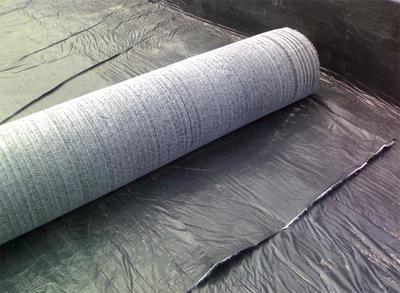
High-tenacity fabrics often go unnoticed in coastal defense systems, yet they form the backbone of many resilient structures. These engineered textiles, made from materials like polypropylene or polyester, are buried beneath sand dunes, wrapped around breakwaters, or layered under riprap to absorb wave energy and prevent erosion. Their flexibility allows them to conform to shifting shorelines, while their tensile strength—often exceeding 100 kN/m—resists tearing even under extreme storm surges. Unlike rigid concrete, these fabrics work with the natural dynamics of the coast, quietly stabilizing sediment and buying time for ecosystems to adapt.
One of the most critical but hidden applications is in geotextile tubes and containers, which are filled with sand or dredged material and placed as core layers in artificial reefs or revetments. The fabric acts as a filter, allowing water to pass while retaining fine particles—this stops internal erosion that would otherwise weaken the structure from within. Additionally, high-tenacity fabrics are used in scour aprons around bridge piers and offshore wind turbine foundations, where they are laid on the seabed to prevent currents from carving out cavities. Their durability in saline, UV-exposed environments hinges on specialized coatings and UV stabilizers, making them a silent workhorse that extends the life of coastal infrastructure without visual intrusion.
Beyond large-scale engineering, these fabrics play a role in habitat restoration by supporting vegetation growth on restored dunes. Non-woven, needle-punched variants create a matrix that holds moisture and seeds, helping marram grass or mangroves take root. Over time, the fabric degrades or becomes fully integrated into the landscape, leaving behind a self-sustaining barrier. While policy and public attention focus on visible barriers like seawalls, the hidden contributions of high-tenacity fabrics continue to shape how we live with changing coastlines—proving that sometimes the most effective solutions are the ones you never see.
Why modern road construction depends on tensile strength you never see
Beneath the smooth asphalt of every modern highway lies a hidden network of steel and synthetic fibers that quietly transforms brittle concrete into a flexible, resilient foundation. While drivers only see the dark surface, it’s this embedded tensile strength that absorbs the constant pull and stretch from heavy traffic, temperature swings, and ground movement. Without it, roads would crack and crumble within months, but instead they endure decades of punishment largely unnoticed.
Concrete alone is strong under compression, yet surprisingly weak when pulled apart. That’s where reinforcing materials step in—thin steel bars or polymer meshes laid within the pavement act like tendons in a body, carrying tension forces so the concrete doesn’t have to. Modern designs carefully calculate how much invisible reinforcement is needed at every curve, joint, and bridge approach, turning a fragile slab into a durable artery that keeps commerce moving.
The evolution is ongoing: advanced fiber-reinforced polymers and post-tensioning techniques now allow thinner, longer-lasting road sections that would have been unthinkable just a generation ago. This unseen layer of tensile strength shapes everything from airport runways to winding mountain passes, proving that the most vital part of our roadways is often the one we never directly encounter.
Unpacking the puncture resistance that safeguards landfill liners
Landfill liners sit at the base of every modern waste containment site, bearing the weight of thousands of tons of refuse. The daily ritual of dumping sharp, irregular objects—broken concrete, twisted metal, glass shards—creates an unforgiving environment. Without robust puncture resistance, these liners would quickly tear, allowing leachate to seep into the surrounding soil and groundwater. The ability to withstand point loads and sharp edges isn't just a design feature; it's the primary defense layer that keeps toxic liquids from escaping.
Engineers rely on thick high-density polyethylene (HDPE) geomembranes, often doubled with geotextile cushions, to distribute stress and absorb impacts. But thickness alone isn't enough. The real protection comes from the material's elongation capacity and tear propagation resistance. When a jagged piece of debris presses down, the liner stretches and deforms rather than splitting open. Laboratory tests like the ASTM D4833 index puncture test recreate these scenarios, forcing a standardized probe through the material to measure its breaking point. Field conditions, however, are far messier—mix of angular stones, hydrostatic pressure, and repetitive loading—so designs exceed lab thresholds by wide margins.
What often gets overlooked is the role of installation quality and long-term aging. Even the most puncture-resistant liner can be compromised by poor subgrade preparation or careless backfill placement. Over time, oxidative degradation and stress cracking can reduce the material's resilience, making it more susceptible to sharp objects that once posed no threat. That's why regular inspections and maintenance of the protective cover layers are just as critical as the initial material selection. In landfills, puncture resistance is never a static property; it's a dynamic balance between material science, construction practices, and ongoing vigilance.
Woven vs nonwoven: choosing the right backbone for soil stabilization
When stabilizing soil, the decision between woven and nonwoven geotextiles often feels like picking between a scalpel and a butter knife—both cut, but one is clearly more suited for precision. Woven fabrics, with their crisscross pattern of high-strength yarns, deliver exceptional tensile strength and low elongation, making them the go-to for applications where reinforcement is non-negotiable, like under roads or retaining walls. Nonwovens, on the other hand, rely on a random arrangement of fibers bonded together, which gives them superior drainage and filtration properties. It’s not about one being better universally; it’s about matching the material’s inherent personality to the specific demands of the soil and the project.
Consider the load-bearing scenario: a woven geotextile acts like a tightly strung net, immediately gripping the aggregate and distributing stress across a plane, effectively locking soil particles in place. This is critical when you’re dealing with soft subgrades that need to be kept separate from a stone base to prevent intermixing. Nonwoven fabrics, however, excel in subsurface drainage situations where water needs to pass through while soil is retained. Their fuzzy, felt-like structure creates a tortuous path that traps soil but lets water escape, preventing clogging in drains or erosion control blankets. A common mistake is using a nonwoven where stress and deformation are high—it might stretch too much and fail to stabilize the structure.
The real art is in reading the site’s subtext: if you see standing water and need separation plus drainage, a heavy-duty nonwoven might be your backbone. But if you’re reinforcing a steep slope or building a mechanically stabilized earth wall, the dimensional stability of a woven geotextile is irreplaceable. Sometimes, a project even demands both—a woven for strength and a nonwoven for filtration, layered like a sandwich. By tuning into these nuances, you avoid the one-type-fits-all trap and instead engineer a solution that feels almost intuitive, as if the ground itself dictated the choice.
The next frontier: smart geotextiles with embedded sensing capabilities
Imagine a geotextile that doesn't just reinforce soil, it listens to it. Embedded with hair-thin optical fibers and micro-sensors, these fabrics can map strain, moisture, and temperature across entire embankments in real time. A highway base course suddenly becomes a nervous system, signaling where water is pooling or where shear forces are building long before a visible crack appears. This shift from passive layer to active monitor flips the script on infrastructure maintenance, making it predictive rather than reactive.
The real magic happens when the data leaves the fabric. Tiny wireless nodes woven into the grid transmit readings to cloud platforms where machine learning algorithms hunt for subtle patterns—a slow drift in pH near a retaining wall, a barely perceptible creep in a slope. One project in the Netherlands used these smart textiles to safeguard a dike, and the system flagged an internal erosion pathway that conventional piezometers missed. That's the power of embedding intelligence directly into the ground: you're no longer guessing, you're witnessing.
Durability was once the stumbling block, but newer encapsulation techniques now shield the electronics from alkaline soils and crushing pressures. Self-powered units that harvest energy from traffic vibrations or thermal gradients are coming out of the lab, meaning these geotextiles could lie dormant yet vigilant for decades. It's a quiet revolution—turning the earth itself into a data interface, one woven layer at a time.
FAQ
Woven geotextiles are created by interlacing high-tenacity synthetic yarns, giving them a tight, uniform structure. This design excels at providing high tensile strength and low elongation, making them ideal for separation and reinforcement. In contrast, non-wovens are felt-like and better suited for filtration and drainage, while knitted versions offer more stretch but less force distribution.
They shine in projects that demand load distribution and soil stability, such as underneath roads, highways, and railways to prevent subgrade mixing. You’ll also find them reinforcing retaining walls, stabilizing soft ground for embankments, and creating firm bases in parking lots and container yards.
Focus on key mechanical properties: grab tensile strength, elongation, and tear resistance. Match these to your site’s soil characteristics, expected loads, and drainage needs. Also check the fabric’s permeability and pore size to ensure it works with your soil without clogging. Always cross-reference with project-specific design specifications and standards like AASHTO or ISO.
Yes, modern woven geotextiles are engineered for longevity. Polypropylene types resist acids and alkalis, while polyester ones often have better creep resistance. Both are typically UV-stabilized for exposure during installation. Under soil cover, they resist biological attack and most chemicals found in soils, ensuring decades of reliable performance.
Innovations include high-strength composite yarns that blend materials for tailored stiffness and flexibility, geotextiles with integrated drainage cores, and smart fabrics that allow for strain monitoring. There’s also a push toward bio-based or recycled content without sacrificing strength, along with improved coating techniques that enhance durability in aggressive soils.
By extending the life of roads and civil structures, they reduce the need for frequent repairs and resource-intensive reconstruction. They can minimize the amount of aggregate required in base layers by enabling thinner, more efficient designs. Some are now manufactured from recycled polymers, and their light weight lowers transportation emissions compared to traditional soil reinforcement methods.
Look at resistance to installation damage, as this is the first real-world test. Then consider UV stability if exposed, chemical compatibility with the surrounding soil, abrasion resistance in high-flow areas, and creep performance under sustained loads. A strong quality control program that includes endurance testing, like long-term creep rupture tests, gives confidence in decades-long performance.
Even the strongest fabric can fail if improperly placed. Overlaps must be sufficient (often 12–24 inches), seams need to be sewn or joined according to the design, and the fabric must lie flat without wrinkles or excessive tension. Proper anchoring, protection against sharp aggregates, and immediate covering prevent damage. A well-executed installation ensures the geotextile performs at its rated capacity.
Conclusion
In the realm of modern civil engineering, woven geotextiles have emerged as the silent backbone of ambitious infrastructure projects, redefining how loads are distributed and landscapes are stabilized. These high-tenacity fabrics, crafted through precise interlacing of synthetic yarns, bring unmatched tensile strength to applications where failure is not an option. From sprawling highway networks to coastal defense systems, their ability to channel stresses efficiently prevents rutting, cracking, and subsidence—challenges that constantly threaten the longevity of heavy-duty pavements and embankments. Beneath the asphalt, unseen but essential, woven geotextiles act as a tensioned membrane, locking aggregate in place while permitting water to drain, a dual function that preserves structural integrity even under relentless traffic loads.
Beyond roadways, these fabrics play a covert yet critical role in environmental protection. In landfill engineering, puncture-resistant woven liners absorb the sharp impacts of rubble and refuse, guarding against leaks that could contaminate groundwater. Along vulnerable coastlines, specially engineered high-tenacity weaves reinforce revetments and breakwaters, dissipating wave energy and resisting saltwater degradation. The ongoing debate between woven and nonwoven geotextiles finds resolution in soil stabilization contexts, where the directional strength of wovens provides a sturdy, filtration-friendly framework that nonwovens cannot match. Looking ahead, the next frontier weaves intelligence into the very threads—smart geotextiles with embedded sensors that monitor strain, moisture, and temperature in real time, alerting engineers to potential failures before they escalate. This evolution from passive reinforcement to active monitoring underscores why top woven geotextiles continue to anchor the unseen strength of modern engineering marvels.
Contact Us
Contact Person: Jennifer LEE
Email: [email protected]
Tel/WhatsApp: 8618553418999
Website: https://vip.e-baixing.com/wenfengshitong